

Credit card wallets are slim, front-pocket carriers designed for B2B buyers who need high-margin, compact everyday-carry products. For bulk purchasing, focus on material grade, RFID/NFC security performance, card retention mechanisms, and manufacturer capability — from custom OEM runs starts at 300 pcs per SKU for full OEM customization (100 pcs trial order available for stock finishes) to fast 7-day prototyping and full private-label packaging.
What should a B2B buyer consider when buying credit card wallets?
When buying credit card wallets in volume, you must evaluate the material durability, RFID-blocking efficacy, capacity configurations, and manufacturing compliance. A successful procurement strategy requires balancing minimalist form factors with secure card retention, ensuring the product meets international safety standards, and selecting a manufacturer capable of scaling production with consistent quality control.
Card Wallets: How Does It Work in Detail?
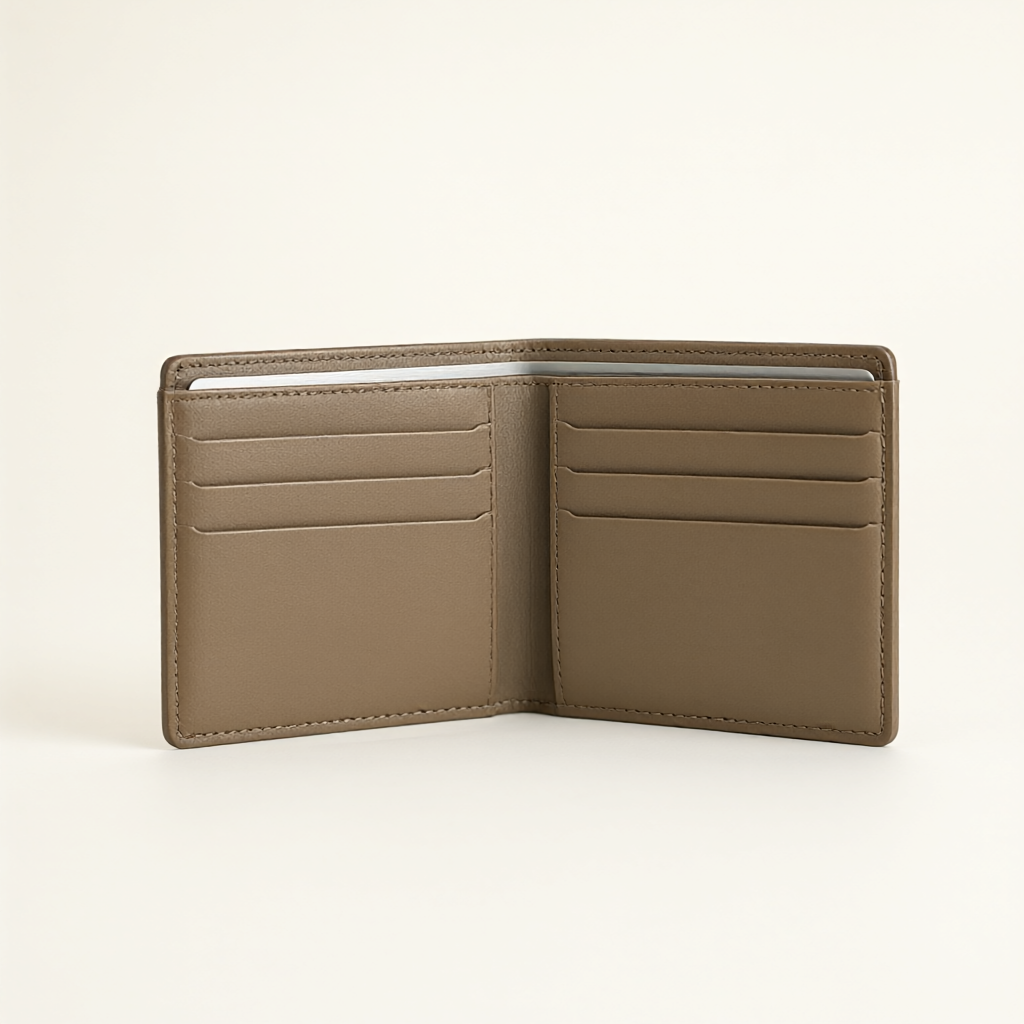
What is a credit card wallet?
A credit card wallet is a minimalist, slim-profile carrier designed for front-pocket use. Unlike traditional bifolds, this category prioritizes low bulk and high organization. For brands looking to expand their catalog, understanding the distinction between a standard cardholder and a front pocket wallet is essential for inventory positioning. These devices typically feature a rigid frame or spring-loaded mechanism to secure cards, often incorporating modular cash retention systems.
What materials are credit card wallets made from?
The material choice defines the product’s durability, weight, and perceived value. The three dominant materials in the current market are:
- Aluminum: The industry standard for cost-effective minimalist wallets. It is lightweight, corrosion-resistant, and provides excellent structural rigidity. Aluminum wallets are typically anodized for color and scratch resistance.
- Carbon Fiber: Offers a high-strength-to-weight ratio with a distinctive textured aesthetic. It is highly resistant to impact and does not conduct electricity, making it a premium choice for EDC enthusiasts.
- Titanium: The top-tier material for durability. Titanium is stronger than steel and significantly lighter than aluminum. It is preferred for tactical money clip wallets and high-end custom engraved credit card wallets.
How does RFID-blocking technology work in credit card wallets?
RFID-blocking technology relies on Faraday cage principles. By embedding a conductive layer of metal or metallic mesh within the wallet layers, the device blocks electromagnetic fields used by unauthorized scanners to read contactless chip data.
Buyers should verify that blocking layers do not interfere with legitimate NFC transactions. High-quality designs incorporate “windowed” blocking or materials that attenuate high-frequency scanner signals without creating a complete barrier to point-of-sale readers. According to guidance from the Federal Trade Commission (FTC), consumers should be educated on realistic scanning risks, and manufacturers should ensure their shielding does not compromise functional payment utility. Federal Trade Commission
What card capacity is standard for a minimalist credit card wallet?
Standard capacity ranges from 6 to 12 cards, depending on the thickness of the cards and the retention mechanism. For a robust guide on similar carry solutions, such as sourcing money clips for B2B buyers, understanding the balance between capacity and bulk is key. Most professional models hold 8 to 10 standard IDs and credit cards securely. Cash retention is usually managed via an external strap or an internal slide-out compartment, keeping the profile flat.
Card Wallets: Which Specifications Matter Most?
What are the key specs for credit card wallet procurement?
When defining product requirements for your brand, use these industry-standard specifications as your baseline:
| Specification | Industry Standard / Typical Range |
|---|---|
| Thickness | 6mm – 12mm (unloaded) |
| Weight | 30g – 80g (varies by material) |
| Card Capacity | 6 – 12 cards |
| RFID Frequency | 13.56 MHz (ISO/IEC 14443) |
| Surface Finish | Anodized, bead-blasted, or polished |
| Corner Radius | 1mm – 2mm for comfort |
What manufacturing methods are used?
- CNC Machining: Used for aluminum and titanium frames. Computer-controlled cutting ensures micron-level precision for card slot alignment, preventing jamming.
- Laser Engraving: The standard for adding logos and custom designs to metal and carbon fiber surfaces without altering the material’s structural integrity.
- Anodizing: An electrochemical process for aluminum that creates a durable, colored oxide layer, essential for brand color matching.
Card Wallets: Which Standards and Certifications Apply?
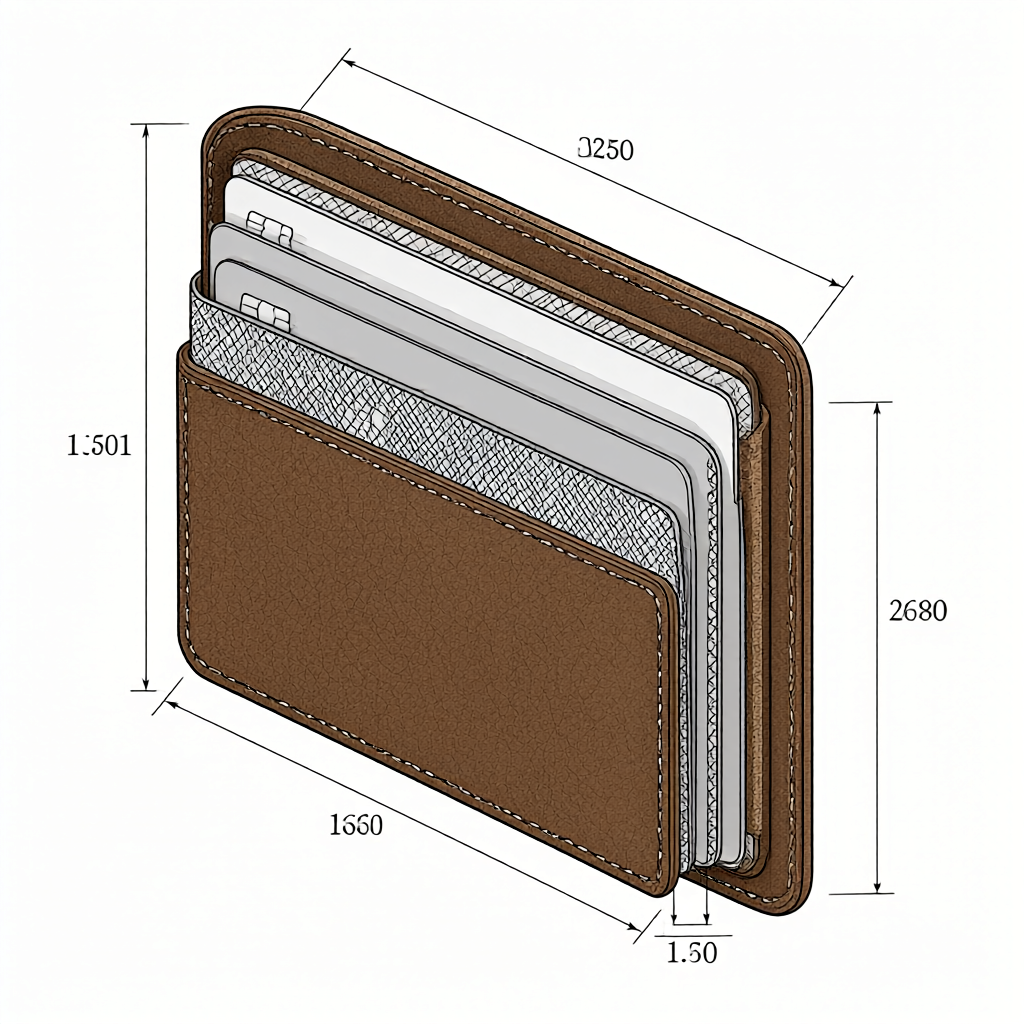
What certifications and standards apply?
International B2B buyers must ensure suppliers adhere to specific manufacturing and safety standards to avoid regulatory blockers in target markets.
- ISO 9001: The foundational quality management standard. It certifies that the manufacturer has consistent processes for design, production, and defect prevention.
- RoHS / REACH: Critical for selling into Europe and other regulated markets. These directives restrict hazardous substances in electronics and metals, ensuring the materials used in the wallet frames and RFID layers are compliant.
- BSCI: The Business Social Compliance Initiative audit verifies ethical labor practices, which is increasingly required by major retail chains and corporate gift programs.
Card Wallets: What Else Should Buyers Consider?
What customization options are available for B2B buyers?
Customization drives margin and brand loyalty. The three primary levers for customization are:
- Logo Application: Laser engraving offers permanence, while UV printing allows for full-color gradients on specific materials.
- Packaging Design: Custom retail boxes with insert trays protect the product and elevate unboxing experiences for Amazon FBA sellers.
- Mechanism Tweaks: Adjusting spring tension or slot density to accommodate specific card counts requested by your target demographic.
What is the difference between OEM and ODM sourcing?
- OEM (Original Equipment Manufacturing): You provide the technical drawings, material specs, and design files. The factory manufactures strictly to your blueprint. This is ideal for established brands with unique IP.
- ODM (Original Design Manufacturing): You select from the manufacturer’s existing catalog of designs and apply your branding. This reduces time-to-market and eliminates tooling costs but offers less differentiation.
What should you consider regarding lead time and MOQ?
For credit card wallets, tooling for custom CNC parts can range from $300 to $1,500 depending on complexity. The Minimum Order Quantity (MOQ) for custom OEM runs typically starts at 100 pieces. Standard ODM private label orders may have higher MOQs, often starting at 500 pieces, to amortize setup costs.
How do you evaluate a credible manufacturer?
A credible supplier demonstrates transparency in three areas:
- Facility Verification: Ability to share audit reports (ISO, BSCI) and factory photos.
- Sampling Speed: Fast prototyping cycles, ideally within 7 days, to validate fit and finish before mass production.
- Quality Control: Defined Acceptable Quality Limit (AQL) standards for screen acceptance during production.
Manufacturer Recommendation
As a B2B buyer, your focus shifts from selecting a vendor to partnering with a facility that guarantees consistency. When evaluating a minimalist wallet manufacturer, look for in-house machining capabilities that allow for rapid iteration and strict dimensional control.
TOP EDC Wallet operates a 50,000 sq ft facility equipped with in-house CNC machining and laser engraving units. This vertical integration ensures that the transition from your initial concept to the final custom engraved credit card wallet is seamless. With over 13 years of export experience, our team supports Amazon FBA private label sourcing, promotional product distributor procurement, and EDC brand expansion.
We provide low MOQ flexibility starts at 300 pcs per SKU and offer fast 7-day sample lead times. Our production adheres to ISO 9001 quality management systems, and our materials are tested for REACH and RoHS compliance. Whether you require specific anodized colors or unique organizational layouts, we help turn your specifications into shelf-ready inventory.
Credit card wallet types
Understanding the four main credit card wallet categories helps buyers match product lines to their target market:
- Slim cardholders — Ultra-thin (6–9 mm unloaded), single-pocket designs holding 4–8 cards. Ideal for everyday urban carry and entry-level retail SKUs.
- Bifold-style card wallets — Fold-over construction with a card sleeve and hidden cash pocket. Appeals to buyers transitioning customers away from traditional bifolds without sacrificing capacity.
- Travel wallets — Expanded capacity (10–16 cards), passport slots, and zippered coin compartments. Positioned for frequent-flyer and adventure-EDC niches.
- Modular wallets — Interchangeable components (e.g., detachable money clip, sliding cash tray, interchangeable front plates). Command premium pricing and attract EDC enthusiasts seeking personalization.
Security features: NFC shielding, lock mechanisms, and anti-theft
Security is a top differentiator in the credit card wallet market. Buyers should evaluate three layers:
- RFID/NFC shielding. Effective shielding uses a continuous conductive mesh or laminated metal foil rated for 13.56 MHz attenuation (ISO/IEC 14443). Reputable manufacturers provide third-party lab reports confirming ≥30 dB signal attenuation at the target frequency. The FTC notes that while contactless skimming risk is low, shielding remains a valued consumer feature when it does not block legitimate POS reader function. Federal Trade Commission
- Lock and latch mechanisms. Mechanical card locks (spring-loaded thumb sliders, magnetic closures, or rotating dial locks) prevent accidental ejection and add a theft-deterrence layer. Look for cycles-rated mechanisms (≥5,000 actuations) verified through stress testing.
- Anti-theft design cues. Integrated cut-resistant straps, hidden compartment layouts, and anti-scan lining are common premium differentiators. Buyers should request test data rather than relying on marketing language such as “impenetrable” or “100% secure.”
Durability and warranty considerations
Durability expectations vary by material and end-use:
- Aluminum (6061-T6 or 7075): Resistant to corrosion and daily abrasion; anodized finishes typically sustain 500+ scratch-resistance cycles (Taber abrasion test). Expected product lifespan: 5+ years with normal use.
- Carbon fiber (epoxy-resin laminate): High impact resistance and zero corrosion; surface scratches are uncommon. Expected lifespan: 7+ years.
- Titanium (Grade 2 or Grade 5): Near-indestructible under normal carry conditions; scratch-resistant but can show hairline marks. Expected lifespan: 10+ years.
Warranty terms are a procurement signal. Industry-standard offerings range from 1-year limited warranties (covers manufacturing defects) to lifetime warranties (covers structural failure of the frame). Buyers should confirm whether warranties cover mechanism failure (spring fatigue, latch breakage) and clarify whether return shipping is prepaid.
Sampling and production lead times for credit card wallets
Sampling and production timelines are critical for launch planning:
- Sample lead time: 5–7 days for standard ODM samples; 10–14 days for fully custom OEM prototypes requiring new CNC tooling or anodized color matching.
- Tooling setup: $300–$1,500 for custom aluminum/titanium CNC fixtures; carbon fiber layup tools vary by design complexity.
- Bulk production lead time: 15–25 days for orders up to 5,000 pcs; 25–35 days for 5,001–20,000 pcs. Expedited runs are available at a surcharge.
- Monthly capacity: Established facilities with in-house CNC and laser engraving can handle 500,000+ units monthly without subcontracting.
Procurement Decision Framework: OEM vs ODM Comparison
| Criteria | OEM (Custom) | ODM (Private Label) |
|---|---|---|
| Unit cost | Higher per-unit (tooling amortized over order) | Lower per-unit (shared design costs) |
| Lead time (first order) | 25–40 days (tooling + production) | 15–25 days (stock design + branding) |
| IP control | Full — you own the design and drawings | Limited — design belongs to manufacturer |
| MOQ | 100 pcs (low barrier for validation) | 300–500 pcs (typically higher) |
| Differentiation | Maximum — unique to your brand | Moderate — same base design as other buyers |
| Best for | Established brands, patent-protected concepts | New brands, market testing, fast time-to-shelf |
Buyer Verification Checklist
Use this actionable checklist when vetting a credit card wallet supplier:
- [ ] Request RoHS and REACH test reports from an accredited third-party lab (SGS, TÜV, Intertek) — not self-declared compliance statements.
- [ ] Ask for ISO 9001:2015 certification with the certifying body name and certificate number; verify at iso.org or the national standards body.
- [ ] Request BSCI audit reports if selling to European retail chains; confirm the audit year and scope.
- [ ] Confirm RFID attenuation data — require a lab report showing ≥30 dB attenuation at 13.56 MHz, not just a claims sheet.
- [ ] Request a physical sample before placing a production order; inspect slot tolerance, anodize adhesion, and mechanism smoothness.
- [ ] Verify AQL inspection levels — standard is AQL 0.65 for major defects and AQL 4.0 for minor defects; confirm the supplier performs in-house QC at these thresholds.
- [ ] Check FBA/drop-shipping readiness — ask for packaging specs, barcode placement, and poly-bag labeling compliance.
- [ ] Confirm warranty terms in writing — coverage period, defect definitions, and return-shipping responsibility must be stated in the purchase agreement.
Card Wallets: Which Red Flags Should You Watch For?
Avoid suppliers exhibiting these warning signs:
- Fake RFID-blocking claims. Vendors claiming “100% RFID protection” without a test report are likely using marketing fluff. Real shielding is measurable; demand the data.
- Unsubstantiated ISO certifications. A certificate number that cannot be verified through the issuing body’s public registry is a red flag. Some suppliers display expired or forged certificates.
- Unrealistically fast lead times. Promises of “3-day samples and 7-day mass production” for custom OEM work are almost never feasible. Legitimate factories quote 5–7 day samples and 15–25 day production.
- No facility transparency. Refusal to share factory photos, audit reports, or video walkthroughs suggests the supplier may be a trading company, not a manufacturer.
- No written warranty or vague terms. Suppliers that avoid committing to warranty coverage in writing often lack confidence in product durability.
Card Wallets: What Does the Industry Data Show?
A mid-sized EDC brand in the American market partnered with TOP EDC Wallet to develop a custom titanium money-clip credit card wallet. The brand specified Grade 5 titanium, custom laser-engraved patterning, and a spring-tension card retention system rated for 10,000+ cycles. After receiving SGS test reports confirming RoHS compliance and 13.56 MHz RFID attenuation of 34 dB, the brand placed a 2,000-piece initial order. Post-launch, the brand reported a 40% reduction in return rates compared to their previous aluminum-card-holder SKU, attributing the improvement to tighter slot-tolerance specifications (±0.05 mm) and the more durable titanium construction. The project moved from initial concept to shelf-ready inventory in 28 days, including sample approval and FBA-compliant packaging.
Card Wallets: Where Can You Verify the Data and Sources?
- Federal Trade Commission — www.ftc.gov
- iso.org — www.iso.org
- sourcing money clips for B2B buyers — topedcwallet.com
- Get a Free Quote → — topedcwallet.com
From article to product
Turning this into a product?
Most of what is written here is the difference between a sample that works and one that does not. We can build either — the useful one costs the same.
Keep reading
More on buying guides
wallet with trigger
How Does a Trigger Wallet Work? What Is the Pop-Up Mechanism? The core of…
Readbest bifold wallet for women
What Is a Bifold Wallet? The term “bifold” refers to the fold: the wallet…
ReadMen’s trifold wallets with zipper compartments vs. bifold
At a Glance The three dominant men’s wallet formats differ in panel count, depth,…
Read
About the author
TOPWALLET Editorial Team
TOPWALLET's editorial and engineering desk writes from bench testing at the Shenzhen (Longgang) facility: pull-force and cycle testing, 13.56 MHz shielding measurements, finish trials and factory audits, rather than supplier spec sheets. Every specification in these guides is one we write on a purchase order.
Written on the floor
This article was written by our production and QC team — the people who spec tolerances, run the finishing line and inspect every batch. Where it states a capacity, a pull force or a lead time, it comes from a measurement we made, not a supplier’s catalogue. If a number here disagrees with what your own supplier told you, tell us; several of these articles started as a correction from a buyer.
See how the factory works · Inspection process · Sourcing FAQ
Turning this into a product?
Most of what is written here is the difference between a sample that works and one that does not. We can build either — the useful one costs the same.