

Bifold and trifold are the two classic wallet structures, and the difference between them is not taste, it is geometry. A bifold is one fold with two panels; a trifold adds a third panel and a second fold line. That extra fold buys capacity and organization, and it costs thickness, pocket comfort, and a longer break-in. This guide compares the two structures on the dimensions that decide everyday satisfaction: capacity, how pockets are arranged, durability, and how slim each one actually wears. By the end, you should know which fold belongs in your pocket.
The Core Structural Difference
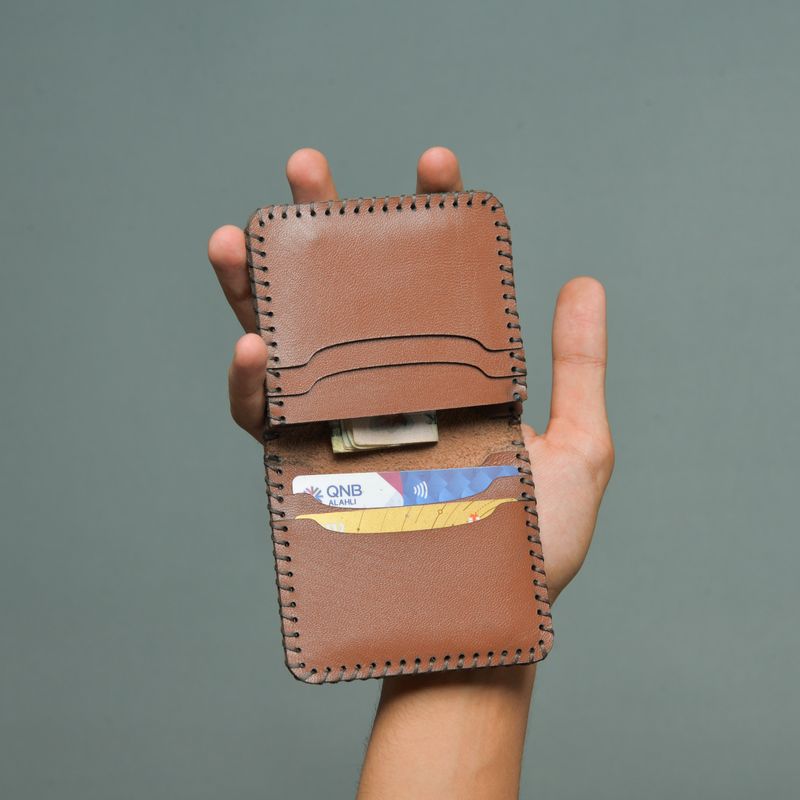
Lay both wallets flat and the difference is obvious. Open a bifold and you see two panels joined at a single spine, with card slots on both sides and a bill slot behind them. Fold it in half and every card layer stacks through the same two-thickness profile, keeping the closed shape thin and predictable.
A trifold opens into three panels with two crease lines. The third panel delivers an extra row of card pockets and often a dedicated section for receipts, coins, or a second bill area. But two folds mean a third layer of thickness when closed, and the center panel carries stress from both creases.
Bifold: Pros and Cons
A bifold closes to the slimmest double-layer profile of the two, which makes it the better front-pocket choice and the easier wallet to break in, since one fold line softens instead of two. The single spine also means less mechanical stress, so leather and stitching at the fold typically hold up longer.
The limits follow from the same geometry. A bifold has fewer usable pockets, so cards, receipts, and folded notes compete for the same space. Load it with everything you own and it distends like a sandwich, losing the very slimness you bought it for. Bifolds reward discipline: they are excellent with less and cramped with more.
Trifold: Pros and Cons
A trifold’s third panel is pure organizational headroom: an extra card bank, a compartment for notes and slips, often a coin pouch or ID window on the outer flap. If your week involves receipts, transit passes, and several cards, the trifold keeps them separated instead of stacked, a real and repeatable convenience.
The costs are physical. Fully loaded, a trifold is thicker and taller than a bifold with the same contents, and it presses more visibly through a front pocket. The double crease also means a longer break-in, because the leather must soften at two lines rather than one, and two fold points concentrate the wear that eventually ends a wallet’s life.
Capacity and Pocket Distribution
The useful difference is not how many cards either structure can hold, but how those cards are arranged and how the wallet behaves when filled.
| Comparison | Bifold | Trifold |
|---|---|---|
| Panels and folds | Two panels, one fold line | Three panels, two fold lines |
| Card slots | One bank per panel, evenly split | Extra bank on the third panel |
| Cash handling | One money slot, cash folded once | Money slot plus a compartment for slips or coins |
| Closed thickness | Thinnest practical profile | One layer thicker, plus panel stack |
| Pocket fit | Readily fits front and back pockets | Better in back pockets and bags |
| Wear pattern | Single crease concentrates movement | Two creases spread but double the fold stress |
Notice what the table does not say: neither structure is objectively more durable or more correct. The honest framing is distribution. Trifolds organize, bifolds compress. Choose whichever matches the contents you actually carry.
Durability and Break-In
Durability in a folding wallet is a game of creases. Every fold is a living hinge of leather and stitching that flexes tens of thousands of times. A bifold concentrates that movement on one line; a trifold spreads it across two, but exposes both creases to the same repeated stress. Poorly finished edges crack first on either structure.
Break-in differs in feel, not just speed. A bifold settles in quickly because one fold softens fast. A trifold starts stiff at its center panel and takes weeks of carry to fold naturally, and users sometimes mistake that stiffness for poor quality. Neither structure should be judged on day one, but if comfort from the first week matters, the bifold wins that test.
Which Structure Skews Slim
If your deck audit comes out light, a handful of cards and occasional cash, a bifold is the slimmer answer and will age like a classic. If the audit comes out heavy or mixed, cards plus receipts, coins, and notes, a trifold gets you organized pockets without requiring you to change your habits; the extra thickness is a reasonable rent for that order.
There is also a middle path worth naming. Many modern wallets drop the fold altogether, using card holders, money clips, and slim cases to size down without either trade-off. The classic trifold shows the organized end of the spectrum, the wallet collection spans the rest, and the comparison guides cover neighboring debates such as leather versus metal.
Best Bifold Wallets of 2026: What We Actually Ship
After comparing every bifold we have tooled and sampled in 2026, the short list below covers the three profiles that leave our production line most often. These are not ranked by marketing; they are the builds we see repeated across customer orders, sorted by who they suit.
| Profile | Best For | Closed Thickness | Why It Wins |
|---|---|---|---|
| Full-grain leather bifold (8–10 cards) | Everyday carry, office plus casual | ~12 mm | Breaks in fast, develops visible patina, holds 8 cards plus folded cash without distending |
| Aluminum slim bifold (4–6 cards) | Front pocket, EDC purists | ~6 mm, RFID shielded | Thinnest practical bifold, CNC anodized, never creases under load |
| Carbon fiber bifold (5–8 cards) | Weight-sensitive carry | ~5 mm, ~22 g | Stiffer than leather, zero stretch, modern look at a fraction of titanium cost |
If you only carry a handful of cards and want a wallet that disappears into a front pocket, the aluminum slim bifold is the pick. If you want something that develops character over years of daily carry, the full-grain leather bifold is the safer call. Carbon fiber sits between: modern, light, and almost zero break-in.
Best Trifold Wallets of 2026: What We Actually Ship
Trifolds sell for organization, not slimness. The two profiles below are the ones customers consistently reorder after their first sample.
| Profile | Best For | Closed Thickness | Why It Wins |
|---|---|---|---|
| Classic leather trifold (10–14 cards) | Receipts, transit passes, coin pouch | ~18 mm, dedicated ID window | Third panel solves the “everything stacked” problem; ages well with thick full-grain |
| Compact trifold (8–10 cards) | Back-pocket carry, slimmer than classic | ~14 mm, no coin pouch | Trifold organization without the bulky silhouette; best compromise for mixed carry |
If your wallet currently holds receipts, coins, and several loyalty cards, a classic leather trifold is the upgrade. If you want trifold organization but hate the bulky silhouette, the compact trifold is the middle path. Skip both if you carry under six cards — a bifold or card holder will serve you better.
FAQ
Which is better, a bifold or a trifold?
Better is a function of what you carry. Bifolds organize less but stay thinner and break in faster; trifolds hold more with dedicated pockets at the cost of thickness and stiffness. Run a quick deck audit of your monthly carry, then choose the smallest structure that fits your real load.
Do trifold wallets fit front pockets?
They can, but they ride noticeably thicker and can print through tailored trousers. If you mostly wear slim or tight front pockets, a bifold or a card holder will sit more comfortably. Trifolds shine in back-pocket or bag carry, or with relaxed-fit casual trousers.
Are bifold wallets more durable?
All else being equal, marginally yes: one fold line means less concentrated crease stress, and the closed profile protects edges better. But leather grade, stitching, and edge finishing dominate the durability equation. A premium trifold will outlast a cheap bifold every time, so buy the better build first and treat structure as a tie-breaker.
Why does my trifold feel stiff?
Two fold lines mean two sets of creases to break in, and the center panel flexes least during normal card access. Give it consistent carry and occasional light flexing near the creases, and it softens within weeks. Thicker chrome-tanned or full-grain leather takes longer, which is normal rather than defective.
Does a bifold or trifold hold more cards?
All else equal, a trifold holds more cards because the third panel adds a full bank of slots. But raw card count is a poor goal: overstuffing either structure stretches stitching and thickens the profile. Match capacity to your real usage and leave one slot free instead of chasing the largest number.
Can a trifold be considered slim?
Relative to multi-card organisers, yes, because a trifold concentrates many pockets into a small footprint. But measured in closed thickness, it is one layer heavier than an equivalent bifold. Design, leather thickness, and how full you keep it matter more than the fold count.
Related reading
From article to product
Still deciding between the two?
Send us the use case rather than the product name. Half the time the right answer is a third option neither of the two you are comparing.
Keep reading
More on wallet comparisons
Evaluating Good Wallet Brands for Bulk Procurement
Compare wallet brands and manufacturers for B2B sourcing — materials, certifications, MOQ, lead times,…
ReadWristlet Wallet vs Pink Wristlet: B2B Comparison Guide 2026
Compare minimalist metal wristlet wallets against fashion pink wristlets. Understand materials, capacity, MOQ, and…
ReadBest Leather Wallets for Men: B2B Sourcing Guide
What makes the best leather wallets for men? Compare leather grades, construction quality, RFID…
Read
About the author
Wu, Leon
Leon Wu is the senior product engineer and EDC testing lead at TOPWALLET. He has spent more than a decade on wallet design-for-manufacture, materials and quality control at the company's Dongguan facility, and writes from bench testing, pull-force and 13.56 MHz shielding measurements rather than supplier spec sheets.
Written on the floor
This article was written by our production and QC team — the people who spec tolerances, run the finishing line and inspect every batch. Where it states a capacity, a pull force or a lead time, it comes from a measurement we made, not a supplier’s catalogue. If a number here disagrees with what your own supplier told you, tell us; several of these articles started as a correction from a buyer.
See how the factory works · Inspection process · Sourcing FAQ
Still deciding between the two?
Send us the use case rather than the product name. Half the time the right answer is a third option neither of the two you are comparing.