

What Size Co?nbase Wallet Do I Need?
The right size comes down to three variables: how many cards you genuinely carry day to day, which pocket you tuck it into (front jeans, back slacks, cargo, vest), and whether you fold a bill alongside the cards. A 4-card co?nbase wallet usually measures 4.2 × 2.3 × 0.35 inches and slides into a standard front jeans pocket without stretching the fabric. A 6-to-8-card version stretches to 4.5 × 2.6 × 0.55 inches and fits more comfortably in a back or cargo pocket. Add 0.15 to 0.25 inches of thickness for a single folded bill.
How Do I Choose Between 4-Card and 8-Card Models?
Count your active cards: driver’s license, two to three payment cards, a gym or transit pass, one loyalty card. Most people carry four to six. The 4-card model keeps the loaded profile under 0.4 inches, which stays flat in a front jeans pocket. Step up to 8 cards only if the extra slots are actually used; otherwise the added thickness pulls at the pocket opening and adds half an ounce you will feel by mid-afternoon.
What Are the Standard Sizes for EDC Wallets?
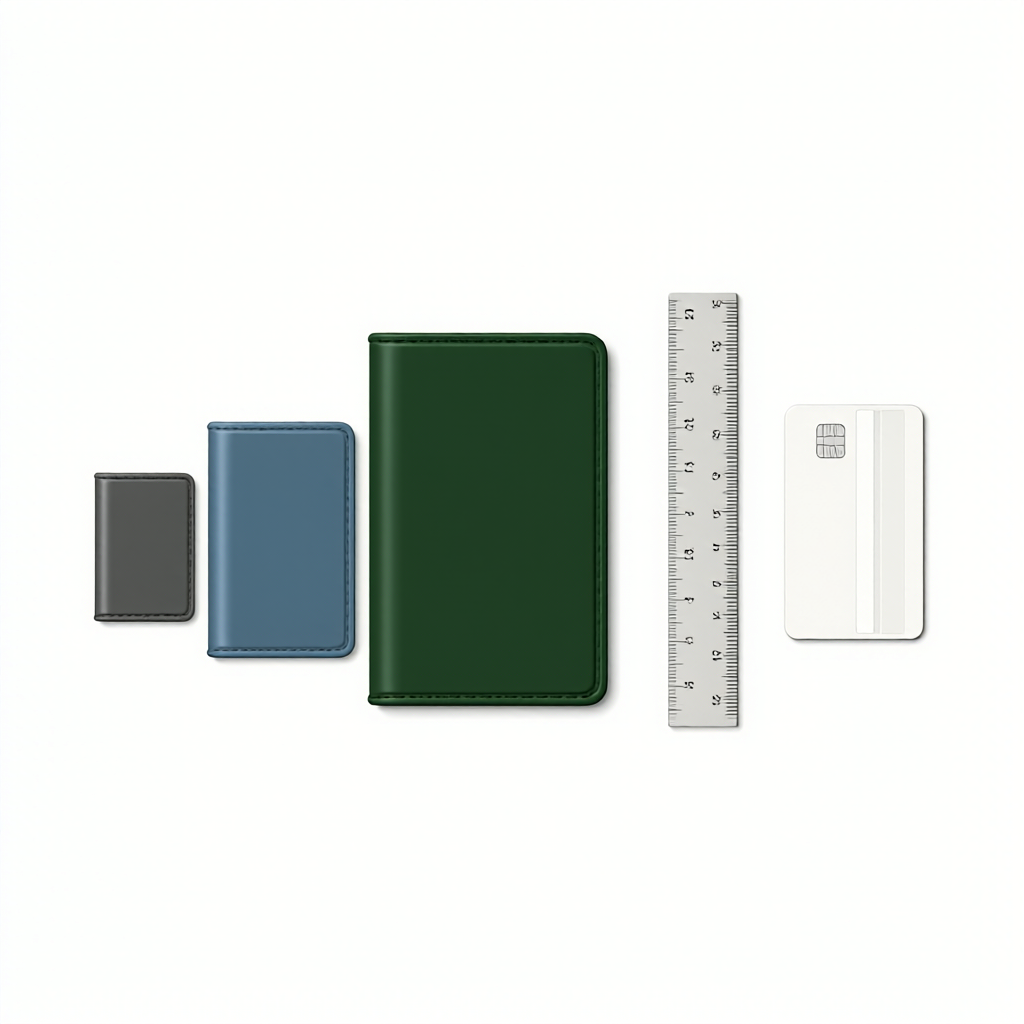
The industry works around one fixed reference: a standard credit card measures 3.37 × 2.125 inches (85.6 × 53.98 mm). Any wallet must clear at least 3.4 × 2.2 inches internally to accept that card. Compact card-only wallets cluster between 4.0 and 4.7 inches in height. Full-size bi-folds run 5.5 to 6.5 inches. The co?nbase format sits firmly in the compact range: 4.2 to 4.5 inches tall, 2.3 to 2.6 inches wide, and 0.3 to 0.6 inches thick when loaded.
For buyers browsing men’s designer wallets in brown leather or comparing options available in Canada, the co?nbase format is the opposite philosophy: no stitching, no lining, no bulk. A coach compact clutch wallet or a vintage miniwallet stretches to 6 inches or more and relies on flexible material. The rigid co?nbase shell trades material flexibility for a consistent, repeatable dimension that you can measure against your pocket once and know will fit every day.
How Do You Measure Your Pocket and Card Stack?
You need three numbers before buying. First, lay a credit card against the pocket opening and note the maximum width the fabric will stretch to without permanent deformation; most front jeans pockets clear 3.2 to 3.5 inches. Second, measure the internal height from the hem to the top of the opening; a standard 501-style front pocket gives roughly 5.5 to 6 inches, while a cargo pocket clears 7 inches or more. Third, stack your actual cards with a folded bill if you use one, and measure the combined thickness. If that stack exceeds 0.6 inches, no compact wallet will close flat; you will need a larger card case or a money clip, as outlined in our money clip selection and evaluation guide.
What Tool Should I Use to Measure?
A steel ruler or a phone-measuring app handles height and width. For thickness, a caliper gives 0.01-inch precision; a ruler is adequate if you are checking whether the loaded wallet exceeds 0.5 inches. Measure the pocket while it is on your body, not laid flat on a table, because fabric stretch changes the effective clearance by 0.2 to 0.3 inches.
What Standards and Codes Apply to Wallet Materials and Construction?
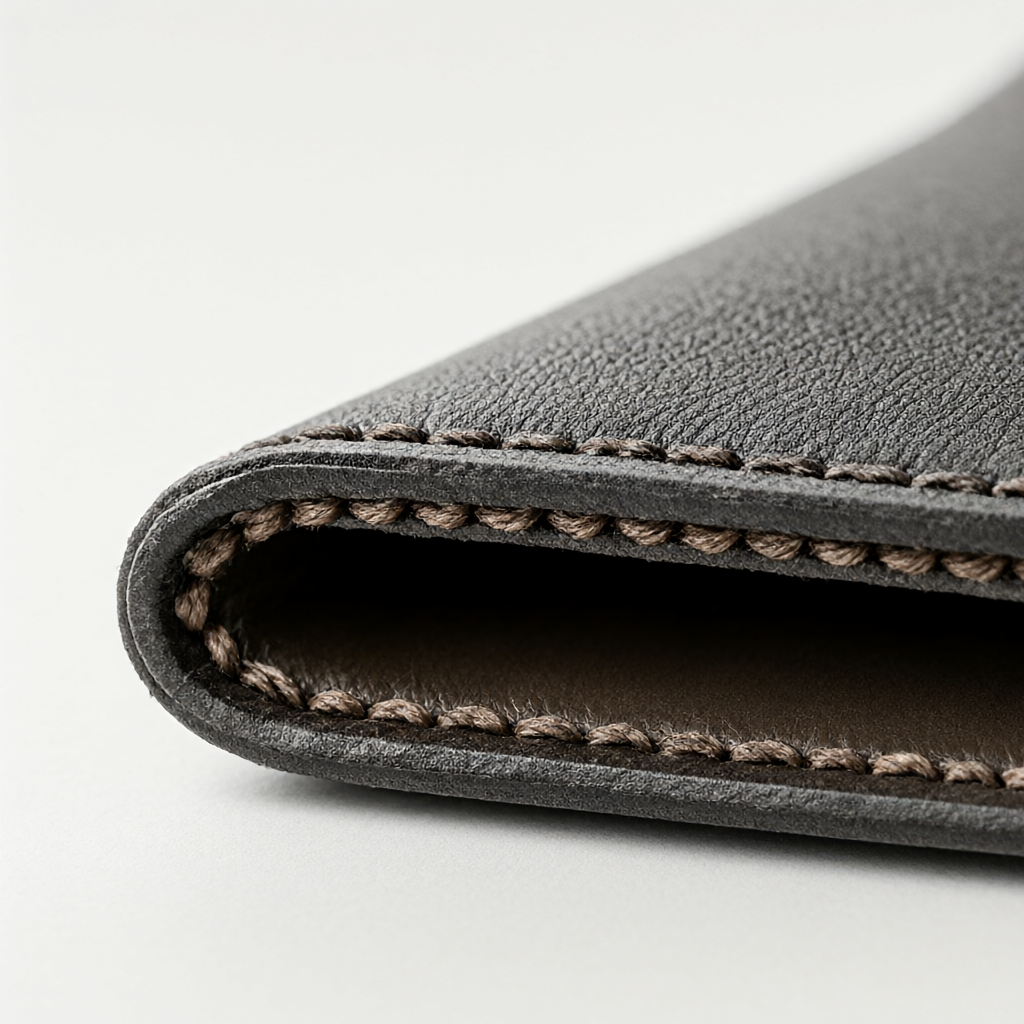
Metal EDC wallets are typically machined from 6061-T6 aluminum, carbon-fiber laminate, or titanium. Material strength and surface-finish quality are verified through mechanical-test protocols published by ASTM International, covering tensile strength, hardness, and corrosion resistance for the alloys used. Production quality management falls under ISO 9001 requirements, which govern process control, traceability, and documentation across a manufacturing run. For consumer-facing material claims, the FTC enforces labeling rules: a wallet marketed as “carbon fiber” must contain a genuine carbon-fiber layer, not a printed resin surface.
RFID-blocking co?nbase wallets add a shielding mesh (a copper or stainless-steel wire grid) that blocks 13.56 MHz contactless signals. The mesh should cover at least 90 percent of the card-pocket interior; partial coverage creates gaps where a card can still be read.
If you are also evaluating a digital wallet app—whether it is a codes wallet early-access APK, an app safe wallet, or the latest version of a card-management tool—note that app-level security (biometric locks, end-to-end encryption, tokenized card data) operates in a completely different layer than physical shielding. Apps with wallet features and security handle digital credentials; a co?nbase wallet handles the physical cards that still require a plastic or metal token. The two complement each other but do not replace each other.
Will a Co?nbase Wallet Fit My Pocket?
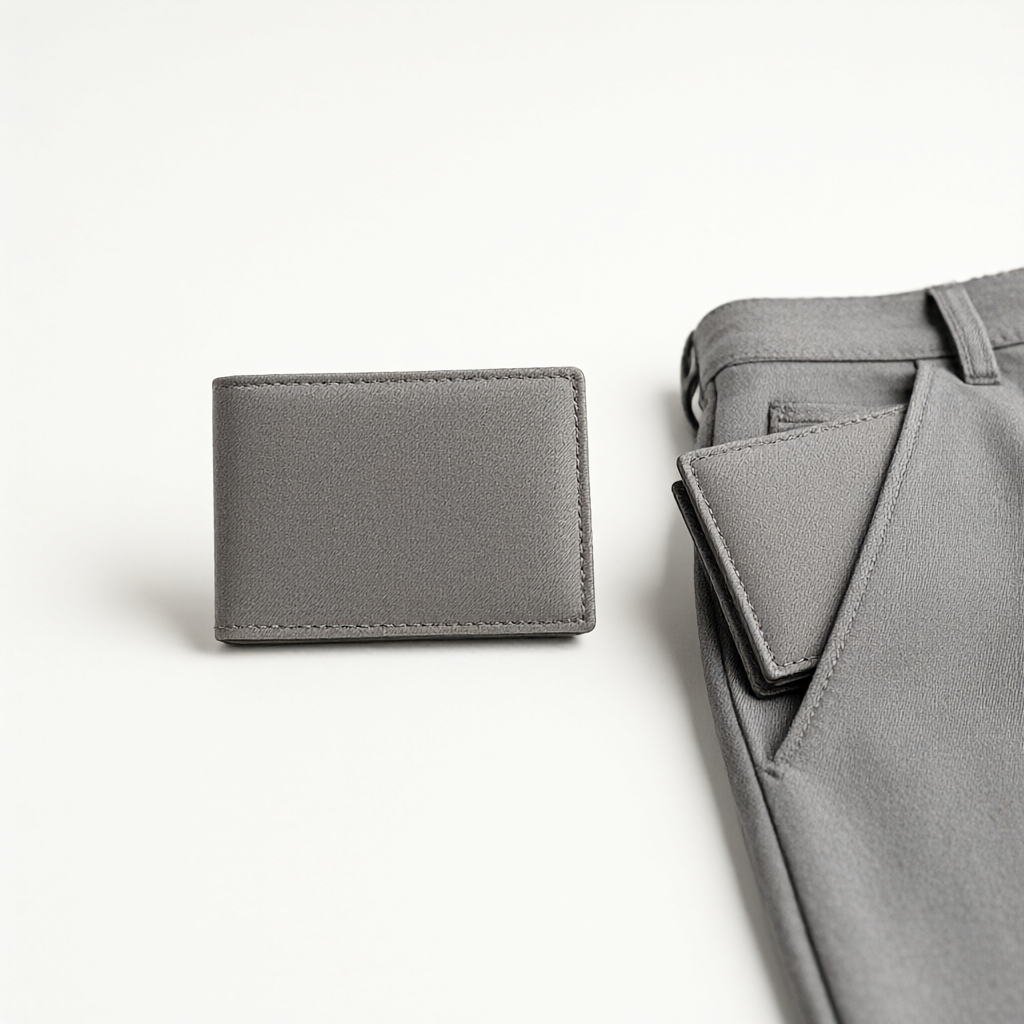
Match the wallet’s loaded thickness to your pocket’s actual clearance. A 0.4-inch wallet in a front jeans pocket will ride at the top of the opening and can shift with movement. A 0.55-inch version in the same pocket will bulge or slide out. Back pockets and cargo pockets tolerate 0.5 to 0.7 inches comfortably. If you wear slim-fit trousers, subtract 0.1 to 0.2 inches from the pocket’s measured width because the fabric is under tension when you stand.
| Feature | 4-Card Compact | 6-Card Standard | 8-Card Extended |
|---|---|---|---|
| Height (in) | 4.0 – 4.2 | 4.3 – 4.5 | 4.5 – 4.7 |
| Width (in) | 2.2 – 2.3 | 2.4 – 2.5 | 2.5 – 2.6 |
| Loaded Thickness (in) | 0.30 – 0.38 | 0.42 – 0.50 | 0.52 – 0.62 |
| Best Pocket | Front jeans, vest | Back jeans, slim cargo | Cargo, outer pocket |
| Card Size Accepted | 85.6 × 53.98 mm standard | 85.6 × 53.98 mm standard | 85.6 × 53.98 mm standard |
| Typical Weight | 0.8 – 1.1 oz | 1.1 – 1.5 oz | 1.4 – 1.9 oz |
How Do I Choose the Right Co?nbase Wallet?
Beyond raw dimensions, three practical factors shape the final decision.
Material and weight. Aluminum shells weigh roughly 1.0 to 1.5 ounces for a 6-card model. Titanium drops to about 0.9 ounces but costs 40 to 60 percent more. Carbon fiber sits in the middle at around 1.1 ounces and resists corrosion without a plating layer. If you carry a phone, keys, and a co?nbase wallet in the same pocket group, total EDC weight above 4 ounces shifts the pocket’s balance and makes the carry noticeable by the end of the day.
Finish and durability. Matte or hard-anodize aluminum finishes resist scratching; polished finishes look sharper but show marks within a week of daily use. Laser-engraved logos or initials add a personal layer without affecting fit. For a coach deep turquoise wallet or a vintage-styled miniwallet, the material story is entirely different—leather, canvas, and hardware dominate—so the sizing logic shifts from rigid dimensions to stretch and break-in.
Digital and physical overlap. Many users now pair a slim physical co?nbase wallet with a phone-based digital layer. An Apple Wallet for a man who carries transit passes, hotel keys, and payment cards on his phone reduces the physical card count by one or two. Apple Wallet icons let you reorder and access cards without opening a separate app. This split often lets you drop from a 6-card to a 4-card co?nbase model, which tightens the profile and improves front-pocket fit.
How We Meet These Standards
As a manufacturer of minimalist EDC wallets, our production line covers CNC-machined aluminum and carbon-fiber card holders, titanium money clips, and RFID-blocking metal wallets. Each batch is machined in-house, anodized and surface-finished, then laser-engraved or UV-printed for custom branding before packaging.
Our facility operates under ISO 9001 quality management and is BSCI-audited. Materials are REACH and RoHS compliant, with SGS-tested certifications on file. For brand owners, Amazon FBA sellers, and promotional distributors, we handle full customization from logo to retail box design, with a minimum order of 100 pieces and sample turnaround in 7 days.
Frequently Asked Questions
How many cards does a co?nbase wallet hold?
Most compact models hold 4 to 6 standard credit-sized cards. Extended versions accommodate 8. Any card cut to the 85.6 × 53.98 mm standard fits because the internal slot width clears at least 3.4 inches.
Can I fit a folded bill in a 4-card co?nbase wallet?
A single bill folded to roughly 3.3 × 0.6 inches adds about 0.15 inches of thickness. In a 4-card model rated at 0.38 inches loaded, the profile stretches to about 0.53 inches. The wallet still closes, but front-pocket fit tightens noticeably in slim trousers.
What is the difference between a co?nbase wallet and a standard card holder?
The co?nbase format uses a rigid single-piece shell (metal or carbon fiber) that holds cards in a stacked, fan-like arrangement. A standard card holder often uses a flexible sleeve, elastic band, or stitched leather body. The rigid shell gives faster card access and a slimmer profile; the flexible holder tolerates more thickness variation.
Do RFID-blocking co?nbase wallets block all card types?
They block 13.56 MHz contactless signals used by credit cards, transit cards, and modern ID chips. They do not block 125 kHz RFID (some older access badges) or close-range NFC if the shielding coverage is below 90 percent. Check the product spec for the frequency range and coverage percentage.
What pocket size does a 4.5-inch co?nbase wallet need?
A pocket with at least 4.7 inches of internal height and 3.4 inches of width will accommodate a 4.5 × 2.5 × 0.5-inch model. Standard front jeans pockets clear this; back pockets clear it with margin; cargo pockets are the most forgiving option.
Sources & References
- ASTM International — www.astm.org
- ISO 9001 — www.iso.org
- FTC — www.ftc.gov
- money clip selection and evaluation guide — topedcwallet.com
- Get a Free Quote → — topedcwallet.com
From article to product
Turning this into a product?
Most of what is written here is the difference between a sample that works and one that does not. We can build either — the useful one costs the same.
Keep reading
More on buying guides
wallet with trigger
How Does a Trigger Wallet Work? What Is the Pop-Up Mechanism? The core of…
Readbest bifold wallet for women
What Is a Bifold Wallet? The term “bifold” refers to the fold: the wallet…
ReadMen’s trifold wallets with zipper compartments vs. bifold
At a Glance The three dominant men’s wallet formats differ in panel count, depth,…
Read
About the author
TOPWALLET Editorial Team
TOPWALLET's editorial and engineering desk writes from bench testing at the Shenzhen (Longgang) facility: pull-force and cycle testing, 13.56 MHz shielding measurements, finish trials and factory audits, rather than supplier spec sheets. Every specification in these guides is one we write on a purchase order.
Written on the floor
This article was written by our production and QC team — the people who spec tolerances, run the finishing line and inspect every batch. Where it states a capacity, a pull force or a lead time, it comes from a measurement we made, not a supplier’s catalogue. If a number here disagrees with what your own supplier told you, tell us; several of these articles started as a correction from a buyer.
See how the factory works · Inspection process · Sourcing FAQ
Turning this into a product?
Most of what is written here is the difference between a sample that works and one that does not. We can build either — the useful one costs the same.