
Brand Playbook · 8 min read
2026 Custom Wallet Catalog: What to Look for in a Factory Line Sheet (And How to Get One)

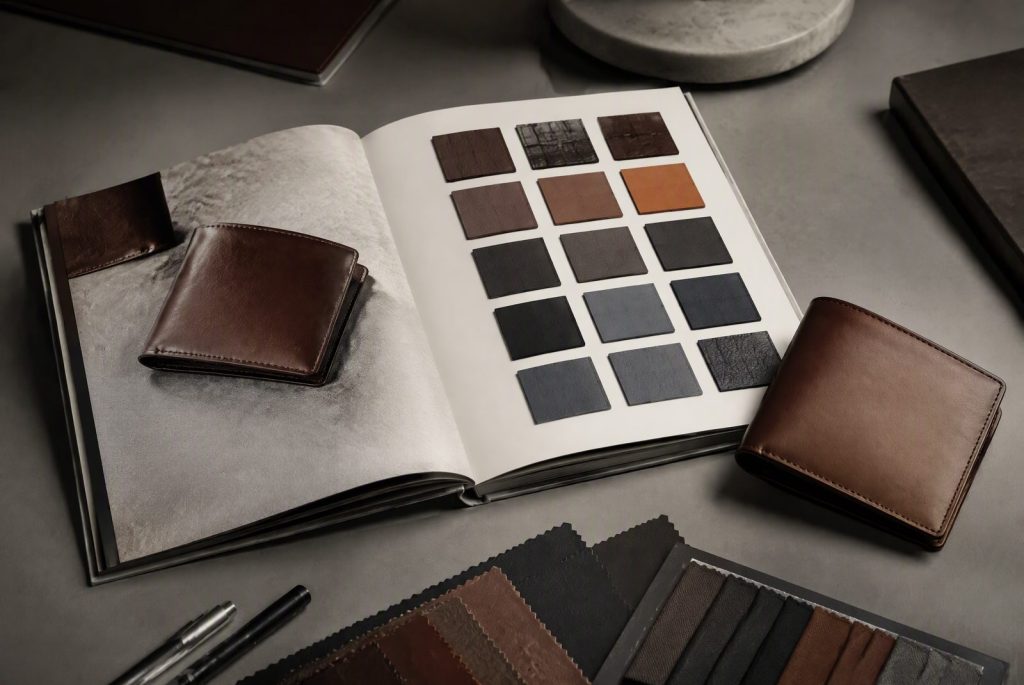
A factory line sheet is the fastest way to turn "I want a custom wallet" into a product plan: it shows what a factory builds, at what price band, with which materials and minimums — before you spend a dollar on tooling. This guide explains what a working catalog page contains, how to read each field, how to shortlist SKUs, and how drawings become samples and bulk orders. TOPWALLET facts below come from published specs (15 years of manufacturing experience, 7-day sampling, 30-day bulk production) [1]; pricing and timelines beyond that are directional estimates — confirm with your supplier.
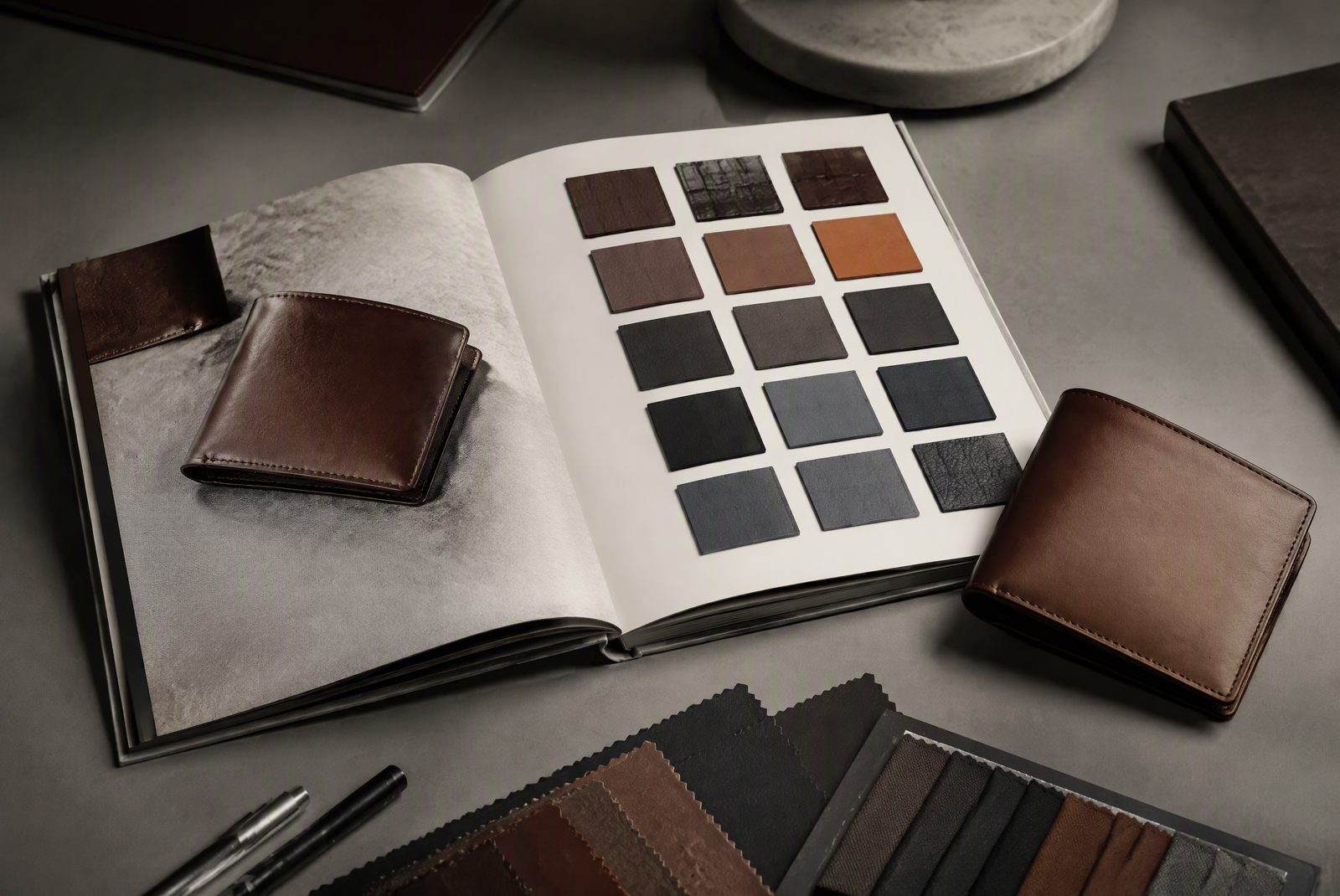
Quick Comparison: What to Read on a Factory Line Sheet
| Line Sheet Element | What to Check | Why It Matters | TOPWALLET Factory Example |
|---|---|---|---|
| Material | Full names, not marketing terms; gauge or grade where given | Material drives cost, durability, and your product story | Aviation-grade aluminum, full-grain leather, rare-earth magnet assemblies [5] |
| Construction & hardware | Stitching, hinges, clips, closure mechanism | Defines feel, failure points, and warranty risk | RFID-blocking, magnetic, pop-up, and card-protection constructions [3] |
| Card capacity & dimensions | Cards held, dimensions, weight | Determines the buyer's use case and listing specs | Stated per model in the line sheet |
| Price band | Range per model, at what volume | The number that survives after freight and packaging | Directional wholesale bands in the 2026 catalog (estimate; confirm in quote) |
| MOQ | Minimum order per SKU and per colorway | Decides whether you can test or must commit | Flexible MOQs on wholesale orders [2] |
| Sampling & production | Sample time and bulk lead time in writing | Sets your launch calendar and reorder rhythm | 7-day sampling; 30-day bulk production [3] |
| TOPWALLET factory-direct line | Manufacturer specs, QC standard, program types | One factory for stock, OEM, ODM, and private label | Four-stage QC, AQL 2.5, ISO 9001:2015; 50,000-piece monthly capacity [4][2] |
What a Wallet Catalog Page Actually Is (And Why It Works as a Lead Magnet)
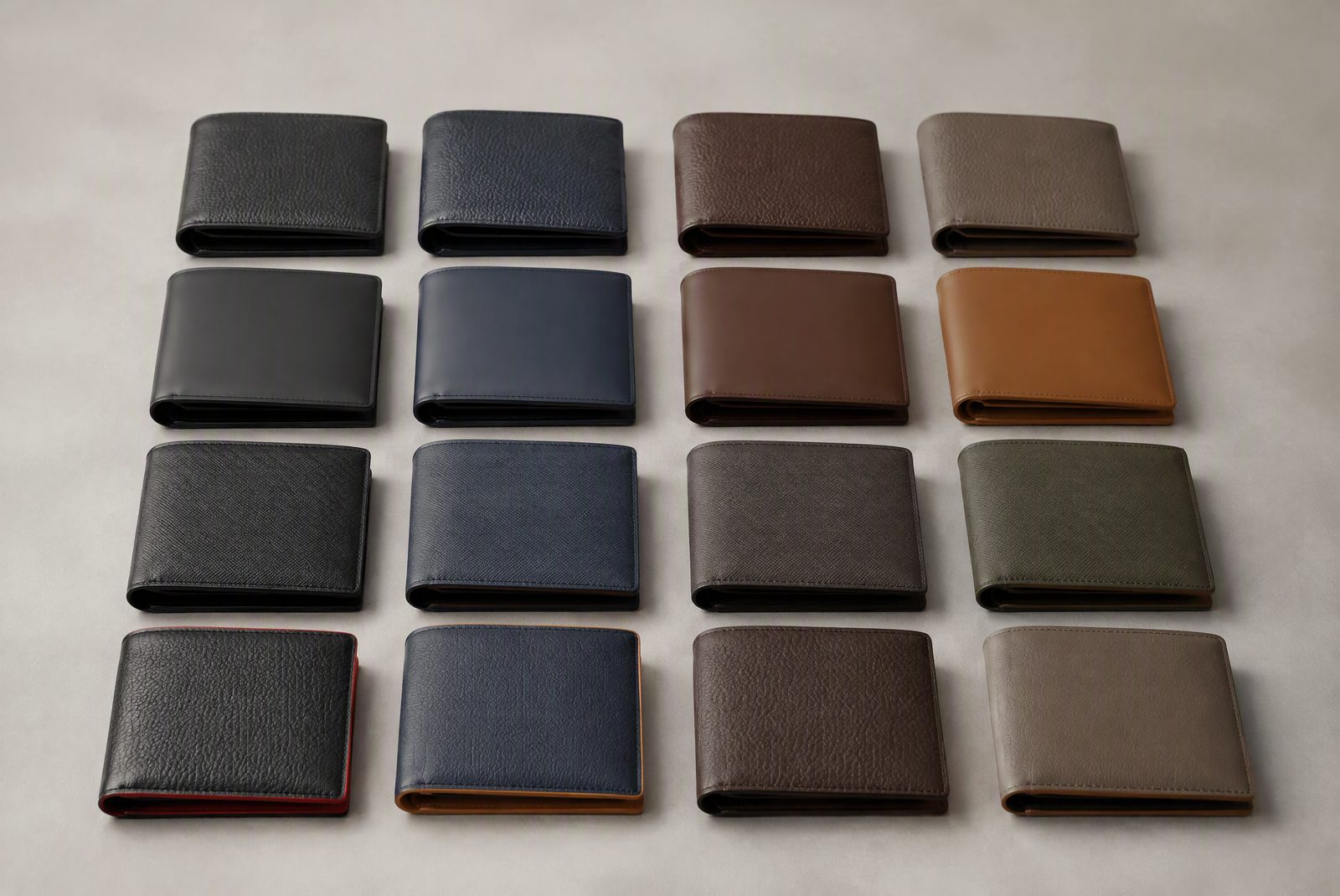
A catalog page is a working line sheet published for buyers mid-research. It is not a brochure; it is a filtered view of representative models with enough detail to shortlist: material, construction, capacity, indicative price bands, MOQs, and lead times. Its job is to convert a browsing visitor into a lead by offering a structured starting point for comparing factories.
For a buyer, a good catalog saves the email ping-pong of asking "what do you make" and waiting for a PDF. For a factory, it pre-qualifies inquiries: buyers who arrive with SKU numbers and a budget are ready to work. That is why the page earns its keep as a lead magnet — the download is the exchange, and the line sheet is the qualification tool.
How to Read a Factory Line Sheet
Material
Look for precise material names, not marketing terms. "Metal" tells you nothing; "aviation-grade aluminum" tells you the alloy class you can sell. TOPWALLET builds across aviation-grade aluminum, full-grain leather, and rare-earth magnet assemblies [5] — a coherent material system. Ask what each material changes in price and lead time; leather sourcing and aluminum milling do not share a schedule.
Construction, Hardware, and Function
The line sheet should state the mechanism behind each model: RFID-blocking layers, magnetic closures, pop-up mechanics, or card-protection frames [1]. Check hardware claims like material — hinges, clips, and magnets are the first failure points, and the spec should name them.
Card Capacity and Dimensions
Capacity is a selling spec, not trivia. The line sheet should state cards held, dimensions, and weight per model so you can map each SKU to a buyer problem — a 6-card RFID wallet, a 12-card bifold. Demand these numbers in a reusable table, not a photo caption.
Price Bands and Minimums
Price bands on a line sheet are directional; the quote at your volume is what matters. The band still shows whether the model fits your retail plan and whether the factory sells commodity volume or engineered product. Pair it with the MOQ column: a low MOQ on a well-built model beats the lowest price at container size.
Sampling and Production Lead Times
A line sheet without lead times is incomplete. TOPWALLET publishes a 7-day sampling cycle and 30-day bulk production [3]; those two numbers define the distance between picking a SKU and shipping orders. Ask for the same specificity from any factory you compare.
How to Pick SKUs After You Get the Catalog
Work backward from buyer problems, not the cheapest column. Shortlist three to five models mapping to distinct use cases — a slim daily carry, a high-capacity organizer, an EDC piece — and test each on:
- Capacity test: does the model hold what its use case promises, and do dimensions support the listing photos you will need?
- MOQ test: can you order each SKU at a volume your cash position survives, with a price break path as sales grow?
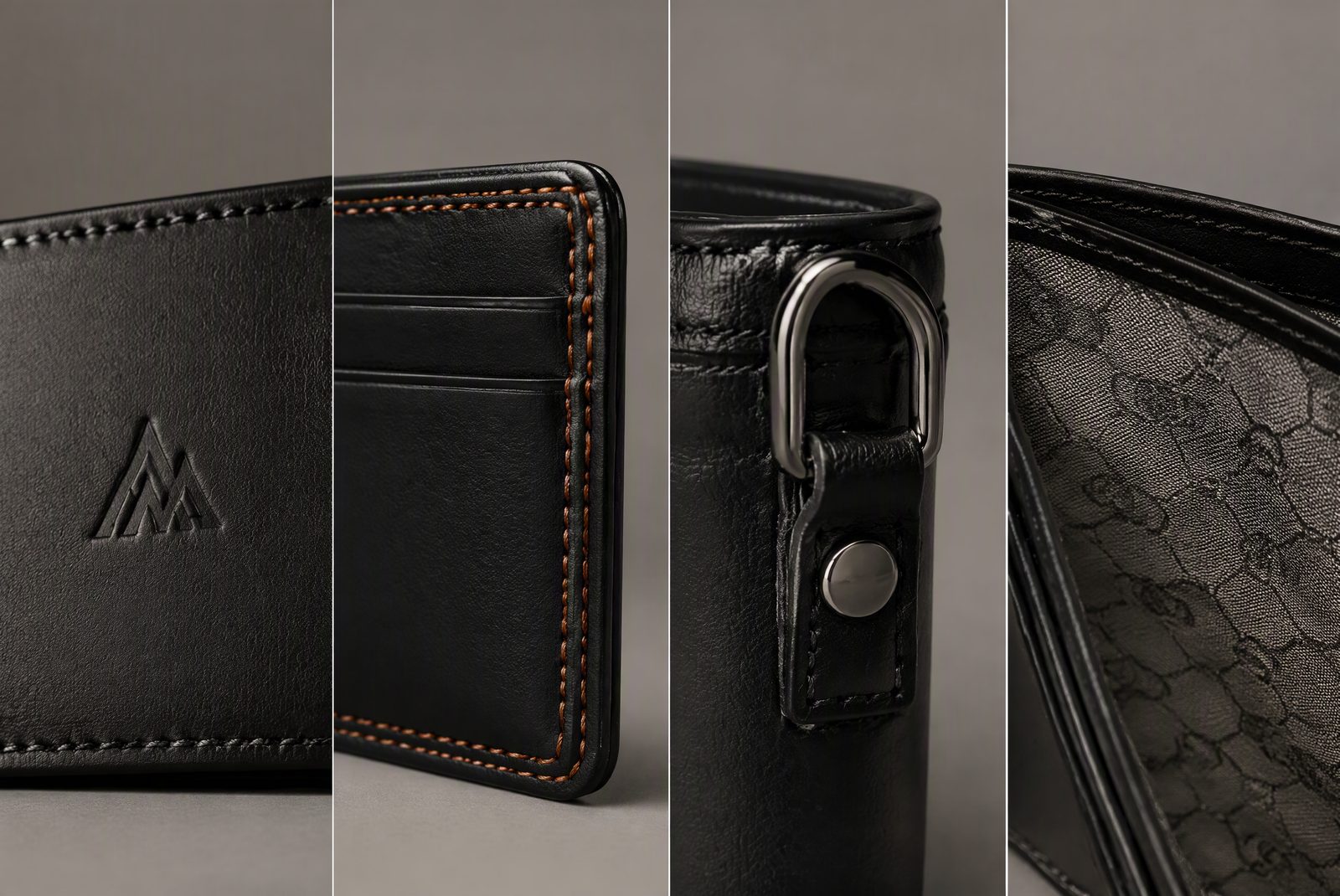
- Extension test: can the model take your branding later — debossed logo, printed lining, custom packaging — without a factory change? TOPWALLET runs OEM, ODM, private-label, and wholesale programs [3][1], so the same line can graduate from stock to branded without requalification.
Reject any SKU you cannot photograph, spec, and price in one sitting. The catalog is a filter, not a shopping spree.
The Custom Process: Drawings, Sampling, and Production
When a stock model is close but not right, the custom track begins. The typical sequence with a manufacturer like TOPWALLET:
- Brief and drawings. Define the change: dimensions, material, mechanism, logo placement. The factory returns a drawing for sign-off before tooling.
- Sampling. With the drawing approved, a sample is produced — TOPWALLET publishes a 7-day sampling cycle [3]. Inspect card fit, closure feel, stitching, RFID coverage if stated, and weight. Never approve from a photo alone.
- Bulk production. After sample sign-off, bulk runs to the agreed QC standard. TOPWALLET runs four-stage inspection against AQL 2.5 under ISO 9001:2015 [4], with 30-day bulk production from sign-off [3]. Hold the factory to both the calendar and the acceptance standard.
The decisions that break custom projects are approving a "close enough" sample and letting branding drift into production week. Fix the spec, sample, and artwork before bulk starts — changes are cheap on paper and expensive on the line.
The TOPWALLET Catalog & Inquiry Page
This page is the factory-direct route in practice: instead of requesting a sales pitch, you request the working line sheet. Submit the catalog inquiry and TOPWALLET sends a structured line sheet covering Wallet & Card Solutions (RFID-blocking, magnetic, pop-up, and card-protection wallets) and Key & EDC accessories (metal key organizers and smart EDC) [3], with materials (aviation-grade aluminum, full-grain leather, rare-earth magnets) [5], indicative price bands, flexible MOQ terms [2], and the 7-day sampling / 30-day bulk production rhythm [3].
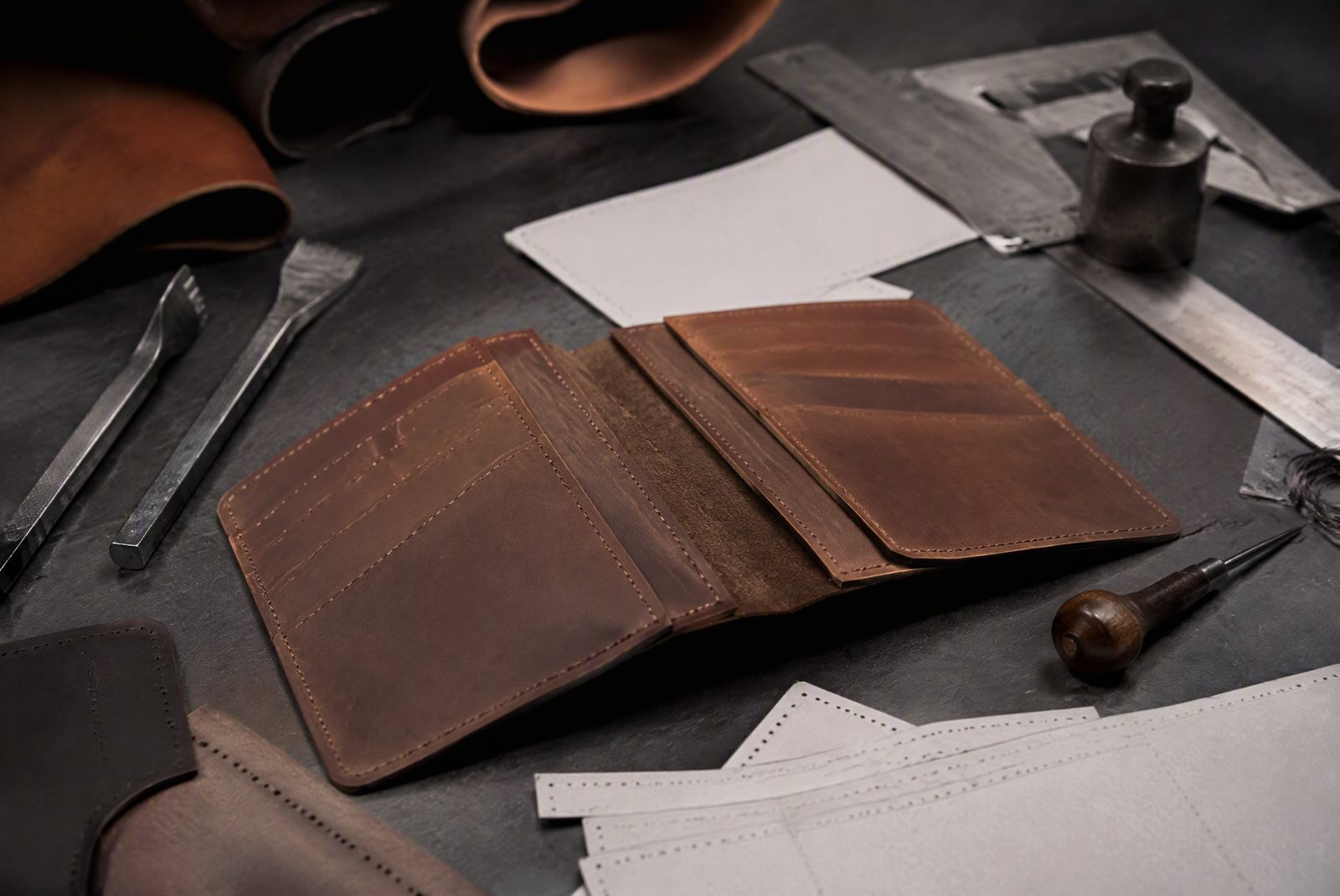
Why go through the manufacturer-direct line instead of a trading company: you quote capacity (50,000 pieces per month [2]), quality discipline (four-stage QC, AQL 2.5, ISO 9001:2015 [4]), and 15 years of manufacturing experience with 200+ brand partners [1] from one counterparty you can audit. The catalog is free; the qualification it enables is the point.
FAQ
What is a wallet catalog or line sheet?
A line sheet is a factory's structured product list: material, construction, capacity, dimensions, price bands, MOQs, and lead times. A catalog page publishes that information so buyers can shortlist without a long email exchange.
What should a factory line sheet include?
Material with precise names, construction and hardware details, capacity and dimensions, indicative price bands, MOQs, and lead times. If a field is missing, ask — a line sheet that hides process may hide cost.
Can I request the TOPWALLET catalog without being ready to order?
Yes. Submit the catalog inquiry and TOPWALLET shares the catalog and program terms before you commit to quantities; production conversations start after you shortlist.
How do I read MOQs on a line sheet?
MOQ means minimum order per SKU (and often per colorway), sometimes with a separate sampling MOQ. TOPWALLET works with flexible MOQs on wholesale orders [2], so state your launch quantity early and ask whether price breaks exist above it.
What is the difference between OEM and ODM on a line sheet?
ODM means the factory's existing designs carry your brand; OEM means your drawings are manufactured to your spec. TOPWALLET supports both, plus private label and wholesale [3], so one factory takes you from stock to fully custom.
How long does sampling take after I pick SKUs?
With a signed drawing, TOPWALLET publishes a 7-day sampling cycle [3]; add a few days for artwork and spec revisions (estimate), then inspect fully before approval.
Do line sheet prices include custom branding?
Usually not. Branding — debossed logos, printed lining, custom packaging — is quoted as an add-on or as part of the private-label program. Confirm it before signing, and add artwork revision time to the 30-day bulk window [3].
Where to Buy
Browse the 2026 model range and request the catalog: custom wallet catalog. For wholesale, OEM, or private-label quantities: REQUEST A QUOTE
Sources
- TOPWALLET — About: 15 years of manufacturing experience, 200+ brand partners, Dongguan B2B manufacturer. https://topedcwallet.com/about/
- TOPWALLET — Wholesale: flexible MOQ, 50,000-piece monthly capacity. https://topedcwallet.com/wholesale-wallets/
- TOPWALLET — OEM/ODM: 7-day sampling, 30-day bulk production; product lines and custom programs. https://topedcwallet.com/oem-odm/
- TOPWALLET — Certifications: ISO 9001:2015, AQL 2.5, four-stage quality inspection. https://topedcwallet.com/certifications/
- TOPWALLET — Materials: aviation-grade aluminum, full-grain leather, rare-earth magnets. https://topedcwallet.com/materials/
From article to product
Sourcing minimalist-wallets?
Tell us the format, the quantity and the date you need stock. You get material options, MOQ and a landed-cost range back within one business day.
Keep reading
More on brand playbook
Wallet Pricing Strategy 2026: From Factory Cost to Retail Price, Without Guessing
Wallet pricing looks simple until you map it: the same slim aluminum wallet can…
ReadWallet Branding Guide 2026: 7 Logo Methods Compared for Custom Orders
The logo method you pick decides how your wallet looks in a week, how…
ReadPersonalized Engraved Wallets in 2026: Font, Placement, and Lead-Time Decisions for OEM Buyers
Personalized engraved wallets sell — but the buying decision comes down to four engineering…
Read
About the author
Wu, Leon
Leon Wu is the senior product engineer and EDC testing lead at TOPWALLET. He has spent more than a decade on wallet design-for-manufacture, materials and quality control at the company's Dongguan facility, and writes from bench testing, pull-force and 13.56 MHz shielding measurements rather than supplier spec sheets.
Written on the floor
This article was written by our production and QC team — the people who spec tolerances, run the finishing line and inspect every batch. Where it states a capacity, a pull force or a lead time, it comes from a measurement we made, not a supplier’s catalogue. If a number here disagrees with what your own supplier told you, tell us; several of these articles started as a correction from a buyer.
See how the factory works · Inspection process · Sourcing FAQ
Sourcing minimalist-wallets?
Tell us the format, the quantity and the date you need stock. You get material options, MOQ and a landed-cost range back within one business day.