

Types & Categories
What type of RFID wallet is best for everyday carry?
The four main form factors each serve distinct carry profiles. A traditional bifold keeps paper currency folded alongside cards but adds noticeable bulk to a front pocket. A slim cardholder — sometimes marketed as an anti-skimming wallet or contactless protection wallet — carries six to twelve cards in a single-plane configuration and slips cleanly into any pocket without distorting your silhouette. A money clip style secures cash through spring tension while holding a small card stack underneath, making it one of the most popular choices among rfid protected wallet for men buyers who favor minimal profile. A compact purse or fold-over variant offers multiple compartments in a smaller footprint, with options ranging from structured satchel designs to a cute rfid wallet approach favored by fashion-forward female buyers.
For pure everyday carry efficiency, a slim cardholder typically delivers the strongest balance of capacity and concealability. It holds just what you use daily — primary debit and credit cards, transit pass, and ID — without dead weight from unused slots or thick bill compartments. Slim architectures also tend to integrate blocking material more uniformly across every card position, since the reduced internal volume leaves fewer opportunities for unshielded gaps.
Side-by-Side Comparison
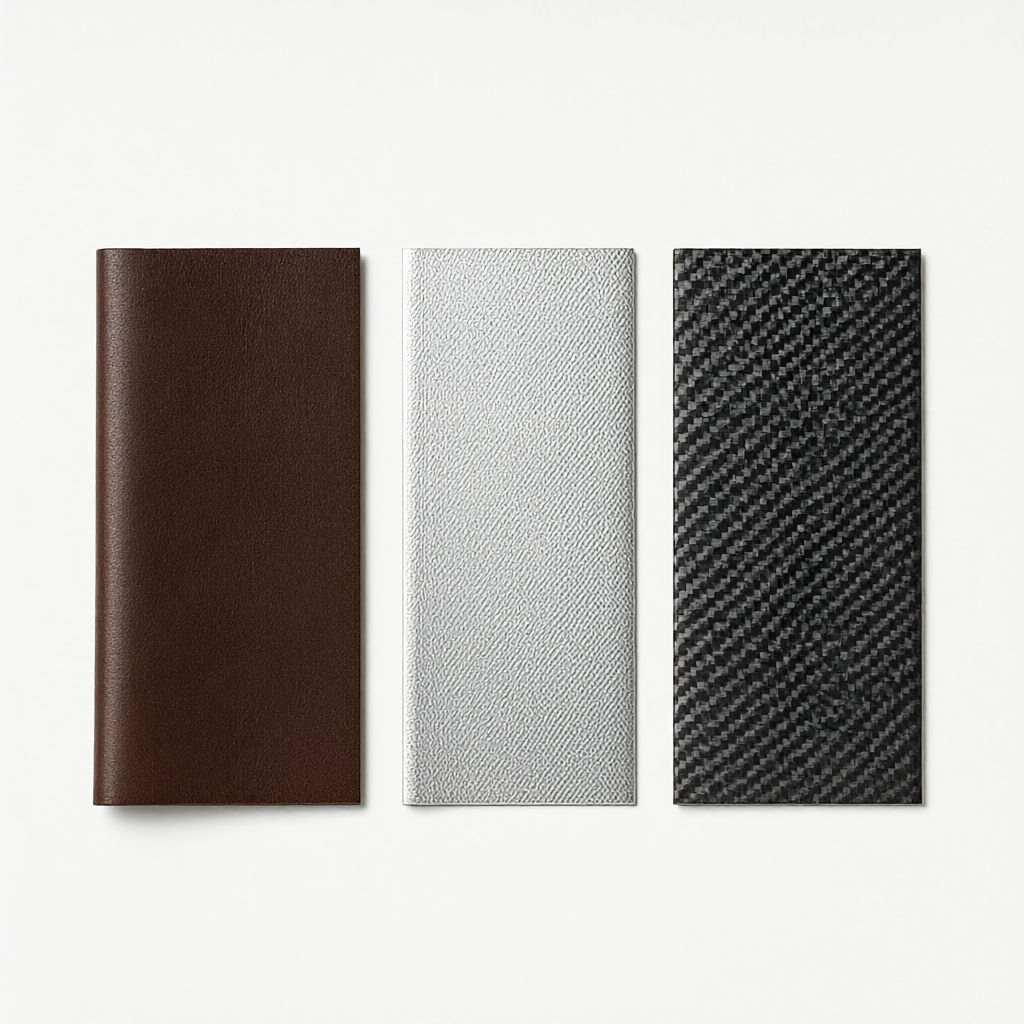
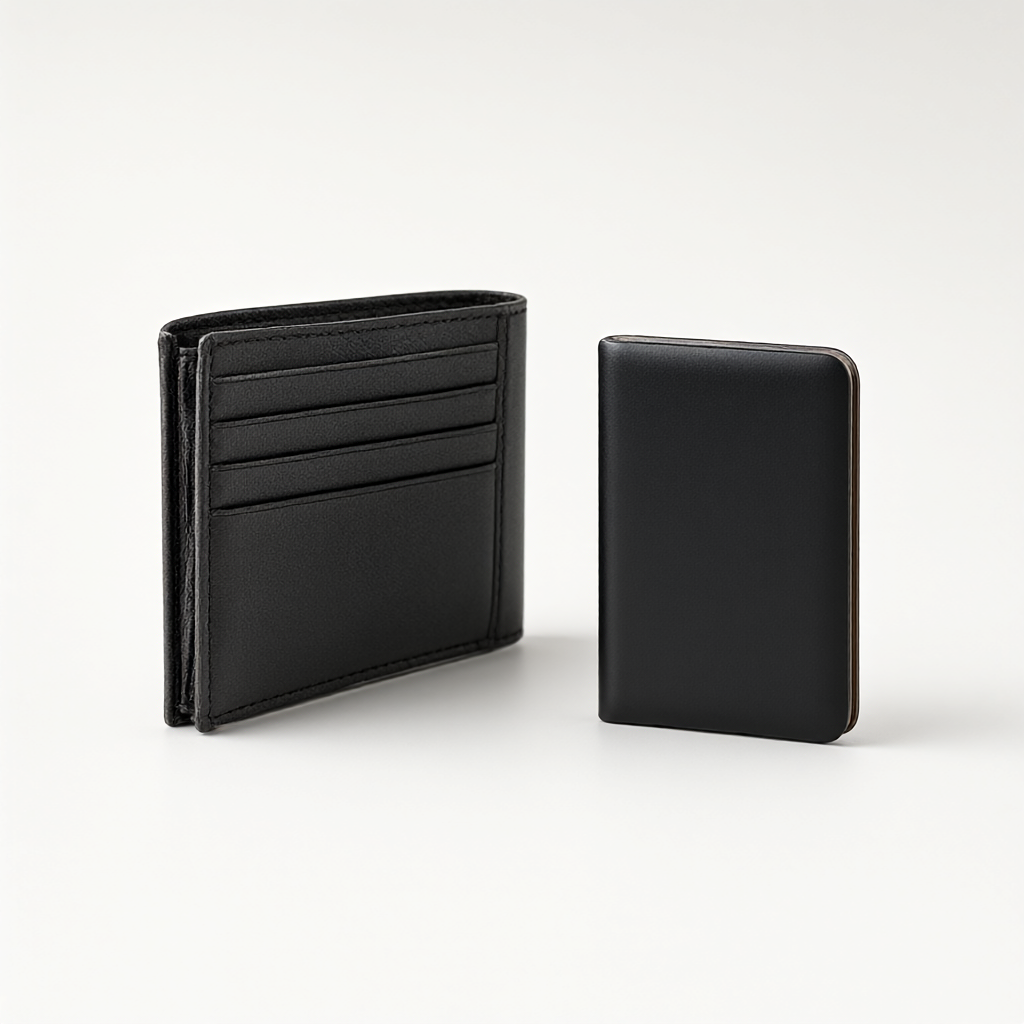
What are rfid wallets and how do they compare across form factors?
Understanding what are rfid wallets requires seeing how the shielding layer interacts with each wallet’s physical layout. Here is how the major categories differ on blocking coverage, capacity, and practical use case:
| Form Factor | Blocking Coverage | Card Capacity | Best Use Case | Typical Material |
|---|---|---|---|---|
| Bifold | Full when lined completely; partial in budget models | 6–12 cards plus cash compartment | Maximum card storage, traditional carry | Leather or fabric with metal mesh lining |
| Slim Cardholder | Full — every slot typically shielded | 4–12 cards | Minimalist daily carry, front-pocket EDC | Aluminum, carbon fiber, or titanium |
| Money Clip | Variable — clip area often unshielded | 4–8 cards plus cash strip | Casual carry, mixed cash-and-card users | Machined metal clip with card-slot shielding |
| Compact Purse | Depends on interior layout and construction | 4–10 cards plus coin pocket | Organized women’s daily carry | Leather or textile exterior with internal RFID-shielded card wallet |
Coverage uniformity matters far more than the binary claim that a wallet “has RFID protection.” A bifold may shield only its rear slot row if the manufacturer placed the blocking layer against a single interior panel. A well-engineered rfid protected slim wallets design typically positions shielding behind every individual card pocket, delivering consistent anti-skimming performance regardless of which slot your card occupies.
What to Look For
What factors matter most when selecting an rfid security wallet?
Four criteria determine whether your RFID wallet performs reliably across years of daily abuse.
Verified blocking coverage across all slots. Every slot in a properly constructed men’s wallets with rfid protection product should sit behind shielding material, not merely near it. Test your wallet before committing long-term: insert a contactless card and attempt to trigger it with your smartphone’s NFC reader or a dedicated testing device. If the reader responds through the wallet, that slot lacks effective attenuation. Per guidelines tracked by ASTM International for proximity card interference, effective consumer shielding reduces read-range field strength sufficiently that casual skimming equipment operating at arm’s length cannot initiate communication.
Material durability under daily stress. Your usage environment dictates which material family fits best. Aluminum wallets resist abrasion and retain structural rigidity but dent under focused impact. Carbon fiber delivers exceptional stiffness relative to its weight and resists corrosion entirely, though it commands a higher price point. Titanium offers the greatest durability and natural hypoallergenic properties at the top of the cost range. Full-grain leather develops a patina over time and feels premium, but it compresses under repeated load and may slowly distort card-slot geometry unless reinforced internally.
Capacity matched to actual daily load. A realistic assessment of your routine prevents overbuying or underspending. If you routinely carry a transit pass, two payment cards, a gym key, and an ID, a six-to-eight-slot wallet avoids unnecessary bulk while maintaining full shielding continuity. Overfilling any RFID-shielded card wallet forces cards apart, creating micro-gaps where the protective layer thins and unshielded card edges become exposed to potential scanner fields.
Construction method reveals longevity. Evaluate how the shielding layer attaches to the wallet body. Affordable implementations laminate a thin metallic foil with adhesive between fabric or leather panels — this delaminates, tears along fold lines, and loses effectiveness within months of regular flexing. Quality construction bonds the shielding as an integral component during assembly, so the protective layer flexes and moves cohesively with the wallet structure rather than peeling away at stress points.
Price & Cost
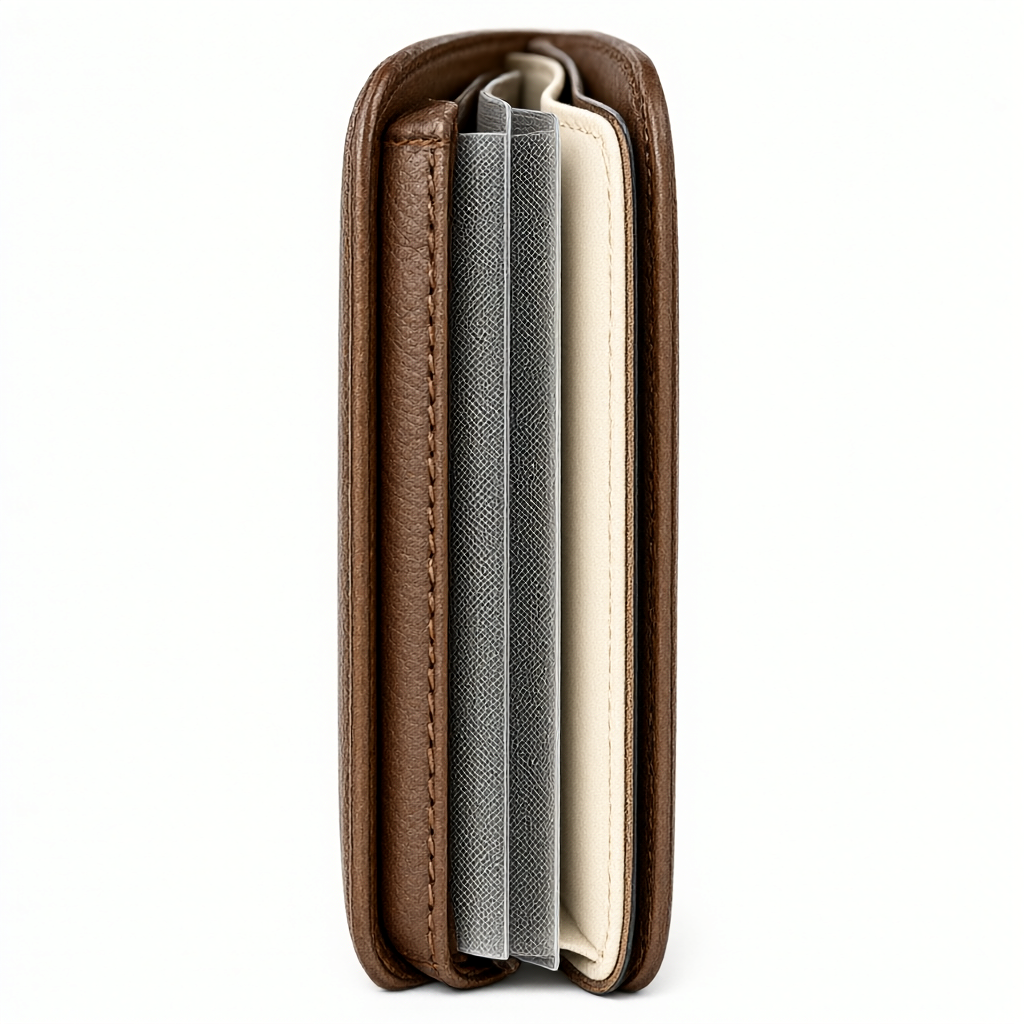
How much does a quality RFID wallet cost?
Entry-level leather or textile RFID-blocking wallets typically range from twenty to forty-five dollars. Mid-tier aluminum and carbon fiber models fall between forty-five and ninety dollars, reflecting material upgrades and more thorough per-slot shielding coverage. Premium titanium constructions and designer-branded selections like a coach wallet rfid offering can reach one hundred to two hundred dollars depending on finish quality, hardware sophistication, and brand positioning.
Price variation primarily traces to three variables: shielding material quality, construction technique, and brand markup. A thirty-dollar leather wallet with a single glued foil insert protects fewer card positions reliably than a sixty-five-dollar machined aluminum cardholder with every slot individually shielded. Budget models additionally tend to sacrifice dimensional precision — loosely fitted slots cause cards to shift and reveal unshielded gap zones during normal pocket movement.
When weighing cost against value, prioritize total-slot coverage and material longevity over cosmetic flourishes. A thin rfid wallet for women in carbon fiber priced around seventy dollars will likely endure significantly longer than two cheaper thirty-dollar alternatives replaced within the same period.
Advantages & Trade-offs
What are the genuine benefits and limitations of an NFC-shielded wallet?
Clear advantages worth acknowledging:
An RFID-protected wallet removes the background anxiety of accidental scanning in congested public spaces — airports, commuter platforms, packed cafés. Contactless payment fraud through handheld skimming devices is increasingly documented, and the Federal Trade Commission monitors consumer complaints tied to remote card-data extraction. While your personal exposure risk may remain low, confirmed shielding provides tangible peace of mind for frequent travelers and privacy-oriented users who prefer minimizing untethered digital footprints.
Modern implementations also solve the historical complaint that shielding prevented legitimate contactless reads. Recent-generation wallets engineer their barrier layers to attenuate distant scanner fields while remaining transparent to the strong near-field generated by point-of-sale terminals, where the reader’s output power briefly overcomes local shielding to complete authentication.
Limitations to factor into your decision:
Shielding adds approximately fifteen to forty grams depending on chosen material, a detail that matters to ultralight EDC enthusiasts tracking every ounce. Certain metallic-lining wallets can briefly disrupt Qi wireless charging if your phone contacts the pad while pressed against the wallet, though this scenario requires simultaneous direct contact. Finally, no consumer wallet guarantees absolute immunity — purpose-built attackers operating high-power equipment at extremely close range can sometimes partially overcome budget-grade shielding, although such circumstances remain uncommon in real-world conditions.
Additional Considerations
What else should buyers evaluate before purchasing?
Several subtler considerations influence long-term satisfaction beyond the core selection criteria.
Interior layer placement determines real performance. The blocking material must sit directly behind each card slot, not merely along one wallet wall. Lower-cost designs route a single backing sheet behind the rear card row, leaving front-position cards exposed. When reviewing a credit card wallet rfid blocking option from various suppliers, ask specifically which slots contain shielding. Complete interior lining — enveloping every card-facing surface — delivers genuinely comprehensive protection rather than partial coverage that creates vulnerability at uncovered positions.
Travelers should confirm passport-frequency alignment. If you store a contactless e-passport inside your wallet, verify the shielding frequency matches your document’s chip operation band. Most contemporary passports communicate at 13.56 MHz, identical to contactless card frequency, meaning standard shielding handles both document types simultaneously. Some older or region-specific travel documents utilize alternate frequencies that basic shielding may not address, so check your specific passport’s technical specifications if it differs from the common standard.
Style variety extends well beyond utilitarian designs. The current market spans from rugged tactical pocket organizers to refined brushed-metal wallets appropriate for boardroom settings. Buyers seeking a cute rfid wallet aesthetic find textured powder-coats, engraved patterns, and color-matched hardware alongside purely functional layouts. Those preferring an rfid protected slim wallets solution access sub-fifteen-millimeter profiles across aluminum, carbon fiber, and hybrid material options.
Women’s offerings now match technical parity with men’s products. Historical gaps between女士-focused and男士-focused RFID wallets have narrowed considerably. Current selections include thin rfid wallet for women formats featuring full-slot shielding, dedicated coin enclosures, wristlet attachment options, and removable crossbody straps — demonstrating that fashion preference and security performance increasingly coexist. Whether described as an rfid protected purse or a streamlined secure card holder, the same shielding engineering standards apply.
Independent verification separates credible claims from marketing language. Not every wallet stamped with rfid security wallet labeling has undergone measurable performance testing. Prioritize sellers sharing published test results or offering straightforward return policies tied to functional verification. At minimum, perform a basic home authenticity check: place your active contactless card inside the wallet and attempt to trigger it through your phone’s NFC reader application. If the card registers normally, adequate shielding has not been achieved.
How We Meet These Standards
As a manufacturer focused on minimalist EDC wallets and pocket gear, our approach to RFID-protected wallets follows the same precision applied across our entire product catalog. Every RFID-blocking metal wallet we produce undergoes systematic shielding verification across all card positions, ensuring comprehensive coverage rather than partial protection concentrated in selective slots. Our in-house CNC machining, laser engraving, and UV printing capabilities enable exact material placement, while aluminum anodizing and surface-finishing workflows allow extensive customization without reducing blocking integrity. With over thirteen years exporting to markets across North America, Europe, Australia, and Southeast Asia, we recognize that dependable performance under sustained daily wear outweighs impressive-but-unverified specification sheets.
Quality assurance remains embedded throughout every production stage. Each order satisfies REACH and RoHS material-safety expectations, and our facility maintains ISO 9001 certification verified through annual independent audit cycles. Our fifty-thousand-square-foot production floor supports monthly output exceeding five hundred thousand units, accommodating anything from a one-hundred-piece custom run to large-scale distribution commitments. Sample turnaround averages seven days, allowing you to evaluate shielding effectiveness and build quality before advancing to full production volume.
If you are evaluating contract manufacturers for private-label development, custom design execution, or OEM fulfillment of RFID-secured wallets, our team can guide you through shielding-coverage mapping, material selection, and production scheduling aligned with your technical requirements.
Frequently Asked Questions
Do Coach wallets block RFID signals?
Coach has introduced select wallet lines incorporating built-in RFID blocking technology, though availability shifts with seasonal collections and regional distribution. Not every Coach wallet includes this feature — only specific SKUs advertise shielding, and it always appears in the detailed product specifications. Before purchasing, confirm the exact model lists RFID protection explicitly rather than assuming brand affiliation guarantees universal coverage.
How does RFID protection work in wallets?
RFID protection functions by embedding a conductive barrier layer — typically aluminum mesh, carbon fiber weave, or titanium composite — between the wallet exterior and its interior card slots. This layer absorbs and redirects the 13.56 MHz radio-frequency energy emitted by portable scanners, preventing the electromagnetic field from reaching your card’s integrated antenna. Without that activated field, the card chip cannot exchange data and no information transfer occurs.
Which Coach wallets have built-in RFID blocking?
Coach releases RFID-blocking wallets intermittently throughout the year, generally as part of rotating seasonal collections or limited-edition drops. Because specific models change frequently, the most dependable method is filtering the current online catalog for “RFID” or “contactless protection” attributes and examining each product’s technical details page for explicit shielding confirmation instead of inferring protection from visible materials or external design cues alone.
Is RFID blocking necessary for everyday use?
RFID blocking is optional rather than mandatory for every cardholder, but it delivers clear value to people who regularly carry contactless payment cards in densely populated public settings. Frequent transit commuters, international travelers, and security-conscious individuals benefit most from the added protection layer. If you predominantly use PIN-authenticated transactions and store your cards securely at home, the practical advantage diminishes though the added safeguard remains harmless and lightweight.
Are there any drawbacks to RFID-blocking wallets?
The principal disadvantages are minor and context-dependent. Metallic shielding layers may occasionally require a brief pause or card repositioning when tapping contactless transit readers or payment terminals, though terminal reads almost always succeed on a second attempt. Certain lower-quality wallets experience adhesive degradation under repeated heat exposure, causing the shielding layer to separate from the wallet substrate gradually. Additionally, carrying a dense metal wallet near airport security screening equipment can sometimes prompt secondary inspection, though this remains an uncommon inconvenience for most travelers.
Sources & References
- ASTM International — www.astm.org
- Federal Trade Commission — www.ftc.gov
- Get a Free Quote → — topedcwallet.com
From article to product
Turning this into a product?
Most of what is written here is the difference between a sample that works and one that does not. We can build either — the useful one costs the same.
Keep reading
More on buying guides
wallet with trigger
How Does a Trigger Wallet Work? What Is the Pop-Up Mechanism? The core of…
Readbest bifold wallet for women
What Is a Bifold Wallet? The term “bifold” refers to the fold: the wallet…
ReadMen’s trifold wallets with zipper compartments vs. bifold
At a Glance The three dominant men’s wallet formats differ in panel count, depth,…
Read
About the author
TOPWALLET Editorial Team
TOPWALLET's editorial and engineering desk writes from bench testing at the Shenzhen (Longgang) facility: pull-force and cycle testing, 13.56 MHz shielding measurements, finish trials and factory audits, rather than supplier spec sheets. Every specification in these guides is one we write on a purchase order.
Written on the floor
This article was written by our production and QC team — the people who spec tolerances, run the finishing line and inspect every batch. Where it states a capacity, a pull force or a lead time, it comes from a measurement we made, not a supplier’s catalogue. If a number here disagrees with what your own supplier told you, tell us; several of these articles started as a correction from a buyer.
See how the factory works · Inspection process · Sourcing FAQ
Turning this into a product?
Most of what is written here is the difference between a sample that works and one that does not. We can build either — the useful one costs the same.