

At a Glance
The best bifold leather wallet for most men sits between three and six card slots, a bill compartment, and optional ID window, weighing under 4 ounces. A leatherology slim bifold wallet style trims card slots down to two or three, shaving roughly 10 mm off the closed height. Luxury leather trifold wallet options add a second bill fold and a snap closure, trading slimness for capacity. Whether you lean toward a classic black full-grain bifold or a heritage-toned antique leather billfold, the core decision comes down to three variables: leather grade, construction method, and pocket depth in your trousers.
What Types of Leather Billfold Wallets Are There?
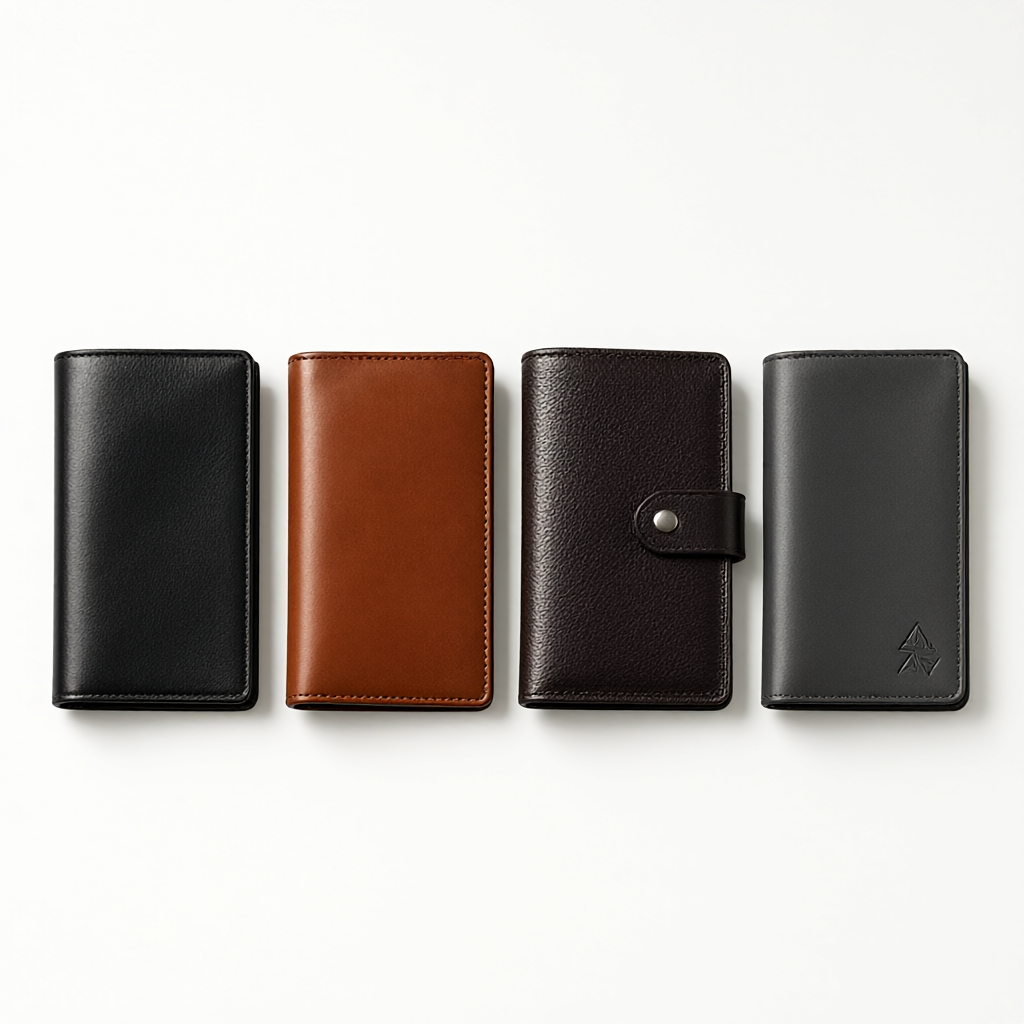
What type of bifold leather wallet suits slim everyday carry?
A standard bifold folds once down the middle, giving you 3 to 4 card slots on each side and a single bill pocket behind the fold. The leatherology slim bifold wallet format strips this down to two card slots and a smaller bill tuck, closing at roughly 78 mm in height. If you carry a phone and two cards, the slim variant keeps your pocket line clean. The trade-off is that you will need to remove cards to add a second bill fold or a receipt slot.
How does a trifold leather wallet differ from a bifold?
A leather wallets trifold layout folds the hide into three vertical panels, adding a third card column and usually a small coin or receipt pocket. The mens black trifold leather wallet is the most common office-casual option because it holds more cards without increasing depth. The downside: the extra fold concentrates stress on the center crease, and triple-fold wallets tend to lose structural shape after 2 to 3 years of daily use unless the leather is thick (at least 1.6 mm).
When is a long bifold leather wallet the right call?
A long bifold leather wallet unfolds into a flat, book-style rectangle, typically 190 mm long by 95 mm wide when open. It holds eight to ten cards, a bill compartment, and often a clear ID window. The leather long bifold wallet works well if you carry a lot of cards and prefer a flat opening motion. It is noticeably deeper in the pocket than a standard bifold, so it suits longer-trouser pockets or jackets rather than tight front pockets.
Should I choose a zippered or a vertical bifold?
A leather zipper wallet bifold adds a horizontal or vertical zip pocket for coins, keys, or extra cards. The closure adds 15 to 25 grams of weight and a mechanical failure point (the zip pull). A vertical bifold wallet leather layout stands the wallet upright in a dedicated pocket, keeping cards visible and reducing fumbling. Choose the zip version if you carry coins; choose the vertical orientation if your trousers have a dedicated vertical bill pocket.
How Do Leather Billfold Wallets Compare?
| Feature | Standard Bifold | Trifold | Long Bifold | Zippered Bifold |
|---|---|---|---|---|
| Card capacity | 4–6 | 6–9 | 8–12 | 4–6 + zip pouch |
| Closed height (typ.) | 85–95 mm | 95–110 mm | N/A (flat) | 85–95 mm |
| Weight (full-grain) | 55–70 g | 70–90 g | 80–110 g | 70–95 g |
| Pocket depth needed | Front / back | Back preferred | Jacket / deep back | Front / back |
| Best for | Minimal daily carry | Office, more cards | Many cards, flat open | Coins + cards |
The table shows why a slim bifold wins for phone-plus-two-cards routines, while a trifold or long bifold earns its extra weight when you carry seven or more cards. If coin storage is a hard requirement, the zippered variant is the only layout that solves it without a separate change purse.
What Factors Matter When Choosing a Men’s Leather Billfold Wallet?
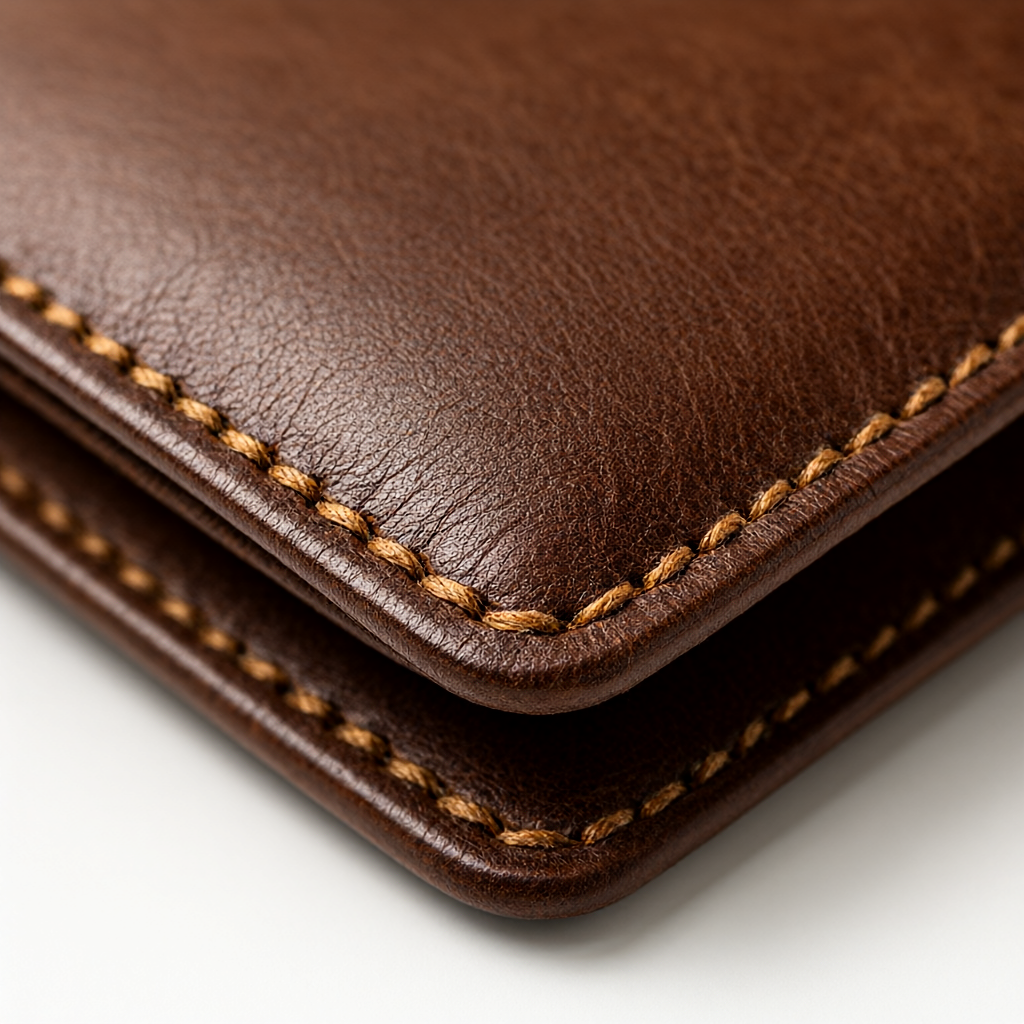
How to choose the right leather billfold wallet?
Start with your daily carry list. Write down every card, bill size, and item you actually pull out weekly. A wallet sized for ten cards when you use four will sit loose and shift in the pocket. Then match the fold type (bifold, trifold, long) to that count, and finally check the closed height against your pocket depth. Most men find a 4-slot bifold with one bill tuck covers 80 % of daily use.
What leather grade should I look for?
Full-grain hide keeps the natural surface, including minor scars and grain irregularities. It develops a patina over 12 to 18 months of use and resists water better than corrected-grain. Top-grain (or “pigmented”) hide is sanded and coated for a uniform look; it is easier to keep clean but will not develop the same depth of character. For a men’s leather billfold wallet you plan to keep for five or more years, full-grain or veg-tanned top-grain at 1.4–1.8 mm thickness is the sweet spot.
What construction details separate a quality billfold from a cheap one?
Look for hand-sewn or saddle-stitched seams rather than single-needle machine stitching. A quality billfold uses reinforced bar tacks at stress corners, a gusseted bill pocket (so bills do not push the fold open), and edge paint or burnished edges that seal the leather fibers. Interior lining in suede or micro-suede protects cards from scratching. The Federal Trade Commission’s leather care label rules require that any wallet sold in the U.S. disclose the exact hide type and country of origin, so check the tag before buying. You can verify label compliance through the FTC.
How Much Does a Men’s Leather Billfold Wallet Cost?
Entry-level machine-stitched leather billfolds run $15 to $30. Mid-range brands using top-grain hide and reinforced stitching sit at $50 to $120. Full-grain or veg-tanned options with hand-finished edges typically cost $150 to $350. Luxury heritage brands (Hermès, Bellroy, or comparable Italian/French tannery houses) price a luxury leather trifold wallet or bifold between $400 and $900. The jump from $30 to $100 is where you gain full-grain material, better stitching, and a gusseted bill pocket. Past $300, the premium buys tannery reputation and finish detail rather than structural upgrades.
What Are the Pros and Cons of a Leather Billfold?
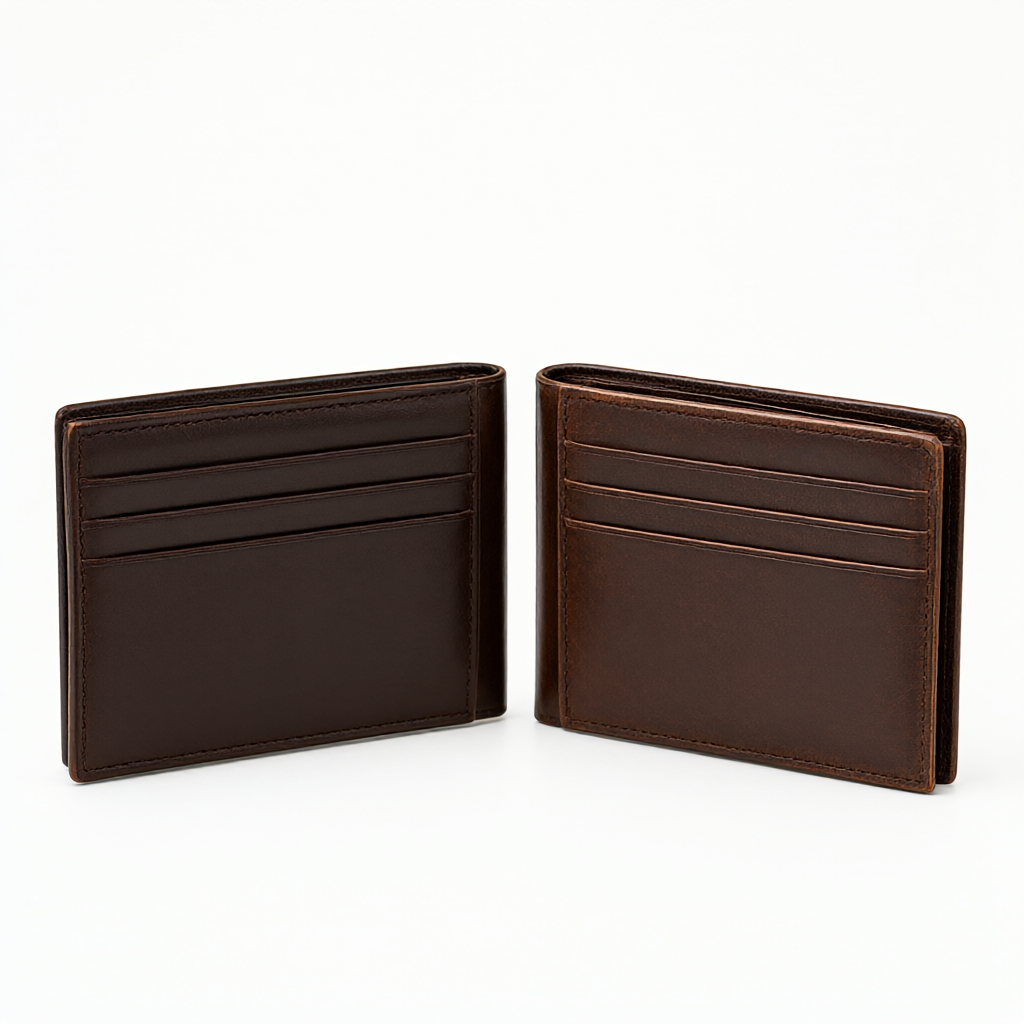
Pros. Leather breathes, so it does not trap moisture the way synthetic shells do. Full-grain hide improves with use, developing a patina that makes the wallet more distinctive over time. A well-made bifold lasts eight to fifteen years with minimal care. Leather also does not delaminate or crack at the fold line the way coated synthetics do after a few hundred flexes.
Cons. Leather is heavier than a titanium or carbon-fiber card holder. A six-slot bifold in 1.6 mm full-grain weighs roughly 65 g, versus 20–30 g for a metal slim wallet. Leather requires occasional conditioning (every 6 to 12 months) to prevent drying. And unlike a metal wallet, a leather billfold offers no inherent RFID blocking unless a shielding layer is added.
Additional Considerations Before Buying
What slim bifold options exist beyond standard designs?
If a standard bifold still feels bulky, the leatherology slim bifold wallet format (two card slots, one bill tuck) is the thinnest leather option that still folds. Alternatively, a vertical bifold wallet leather layout standing upright in a jacket pocket uses the pocket’s height rather than its depth, reducing the perceived bulk. Both formats sacrifice card capacity, so count your cards before committing.
Are antique or heritage-style billfolds worth the premium?
An antique leather billfold uses hand-tooling, hand-painted edges, and often a single-piece cut of vegetable-tanned hide that stretches to 3–4 mm thick. The visual result is a wallet that looks 20 years old on day one. The cost premium (typically 40–80 % over an equivalent machine-made bifold) buys craftsmanship and material thickness. If you value heirloom-grade patina development over lightweight everyday carry, the premium is justified. For a “buy two, rotate, replace in five years” strategy, a $60 top-grain bifold outperforms the cost-per-year math.
Evidence & Practical Notes
A leather billfold that costs $40 and a one that costs $180 often use the same tannery hide; the difference is cutting, stitching method, edge finishing, and brand markup. A buyer who checks the FTC-compliant label (hide species, tanning method, country of manufacture) and inspects the bar tacks and gusset can identify the structural quality without paying the full luxury premium. The practical limitation: even a full-grain bifold will show creasing at the fold within six months of daily use. No stitching technique eliminates fold stress entirely. If visible creasing bothers you, a long bifold leather wallet (which distributes the fold over a wider area) or a card-only leather holder will delay it.
How a Manufacturer Meets These Standards
As an EDC wallet and pocket-gear manufacturer, we produce custom leather billfolds alongside our core metal and carbon-fiber product lines. Our in-house CNC machining and laser-engraving capabilities allow a brand to spec exact hide thickness, card-slot count, and edge-finish detail on a single PO.
Our 50,000 sq ft facility operates under ISO 9001 quality management and BSCI-audited social compliance. Materials are SGS-tested and REACH/RoHS compliant, which means the leather, thread, and hardware on your billfold pass chemical-safety screening before they reach a customer.
For private-label or OEM programs, we support low MOQs starting at 100 pieces, a 7-day sample lead time, and full customization from logo to retail packaging. Whether you are an Amazon FBA seller, a corporate gifting buyer, or a retail chain sourcing a new line, the same quality gates apply.
Frequently Asked Questions
What is the difference between a bifold and a trifold leather wallet?
A bifold folds once, creating two panels and typically four to six card slots. A trifold folds twice, creating three panels and more capacity. The trifold holds more cards but adds weight and concentrates fold stress on two crease lines instead of one.
How many cards should a men’s leather billfold wallet hold?
Most men use three to five cards daily (two payment, one ID, one loyalty, one transit). A four-to-six slot bifold covers that without dead space. If you carry eight or more, move to a long bifold or trifold layout.
Does a leather billfold block RFID signals?
No. Standard leather billfolds have no RFID shielding. If you need RFID blocking, look for a model with a metal or fabric lining between the card slot and the outer surface, or pair your leather wallet with a separate RFID sleeve.
How often should I condition a full-grain leather wallet?
Every six to twelve months, depending on climate and handling. A small amount of neatsfoot oil or a dedicated leather conditioner applied to a soft cloth is enough. Over-conditioning saturates the hide and makes it sticky, so less is more.
Is a long bifold leather wallet better for pockets than a trifold?
A long bifold lies flat against the pocket lining and distributes weight evenly, reducing the “pouch” feel. A trifold sits deeper and can shift. If your trousers have a shallow back pocket, the long bifold’s flat profile is the better fit.
Sources & References
- the FTC — www.ftc.gov
- ISO 9001 — www.iso.org
- Get a Free Quote → — topedcwallet.com
From article to product
Turning this into a product?
Most of what is written here is the difference between a sample that works and one that does not. We can build either — the useful one costs the same.
Keep reading
More on buying guides
wallet with trigger
How Does a Trigger Wallet Work? What Is the Pop-Up Mechanism? The core of…
Readbest bifold wallet for women
What Is a Bifold Wallet? The term “bifold” refers to the fold: the wallet…
ReadMen’s trifold wallets with zipper compartments vs. bifold
At a Glance The three dominant men’s wallet formats differ in panel count, depth,…
Read
About the author
TOPWALLET Editorial Team
TOPWALLET's editorial and engineering desk writes from bench testing at the Shenzhen (Longgang) facility: pull-force and cycle testing, 13.56 MHz shielding measurements, finish trials and factory audits, rather than supplier spec sheets. Every specification in these guides is one we write on a purchase order.
Written on the floor
This article was written by our production and QC team — the people who spec tolerances, run the finishing line and inspect every batch. Where it states a capacity, a pull force or a lead time, it comes from a measurement we made, not a supplier’s catalogue. If a number here disagrees with what your own supplier told you, tell us; several of these articles started as a correction from a buyer.
See how the factory works · Inspection process · Sourcing FAQ
Turning this into a product?
Most of what is written here is the difference between a sample that works and one that does not. We can build either — the useful one costs the same.