
Wallet Manufacturing · 11 min read
How to Vet a Wallet Factory in 2026: 12 Questions That Separate Real Manufacturers From Middlemen

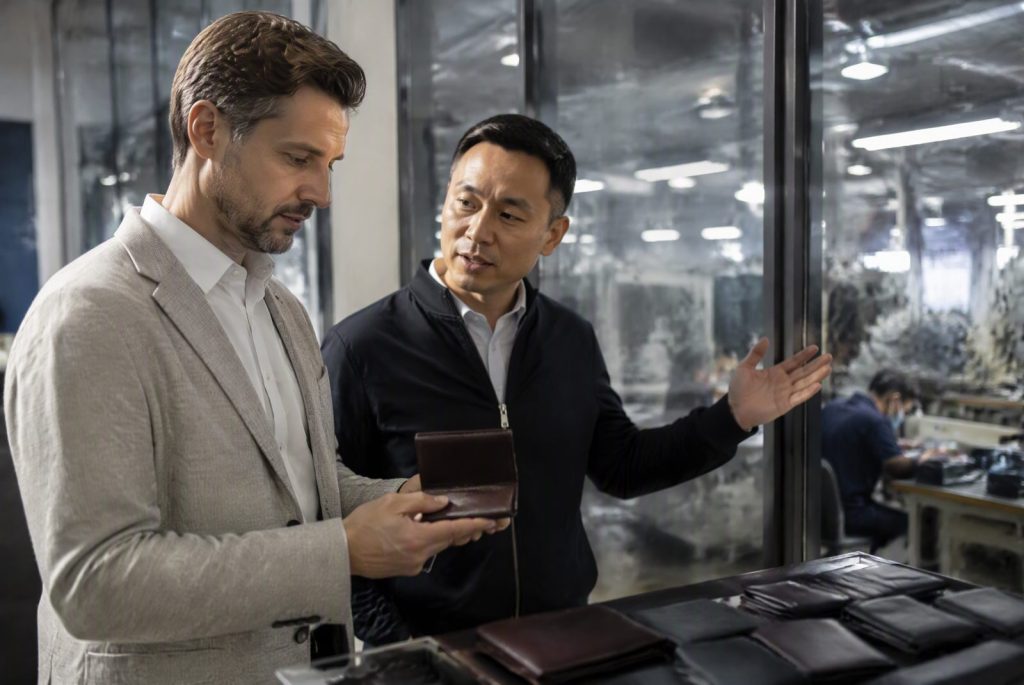
A factory's claim that it can make your wallet is the cheapest sentence in the deal — the risk starts after you send the deposit. This guide gives you a 12-question interview for wallet suppliers, a short list of verification actions you can run from anywhere, and the red flags that point to a trading company rather than a manufacturer. Scope: vetting B2B wallet factories in China from overseas, with or without a visit. Bottom line: you are looking for four things — physical evidence of production, sample accuracy, documented quality control, and certifications you can actually verify.
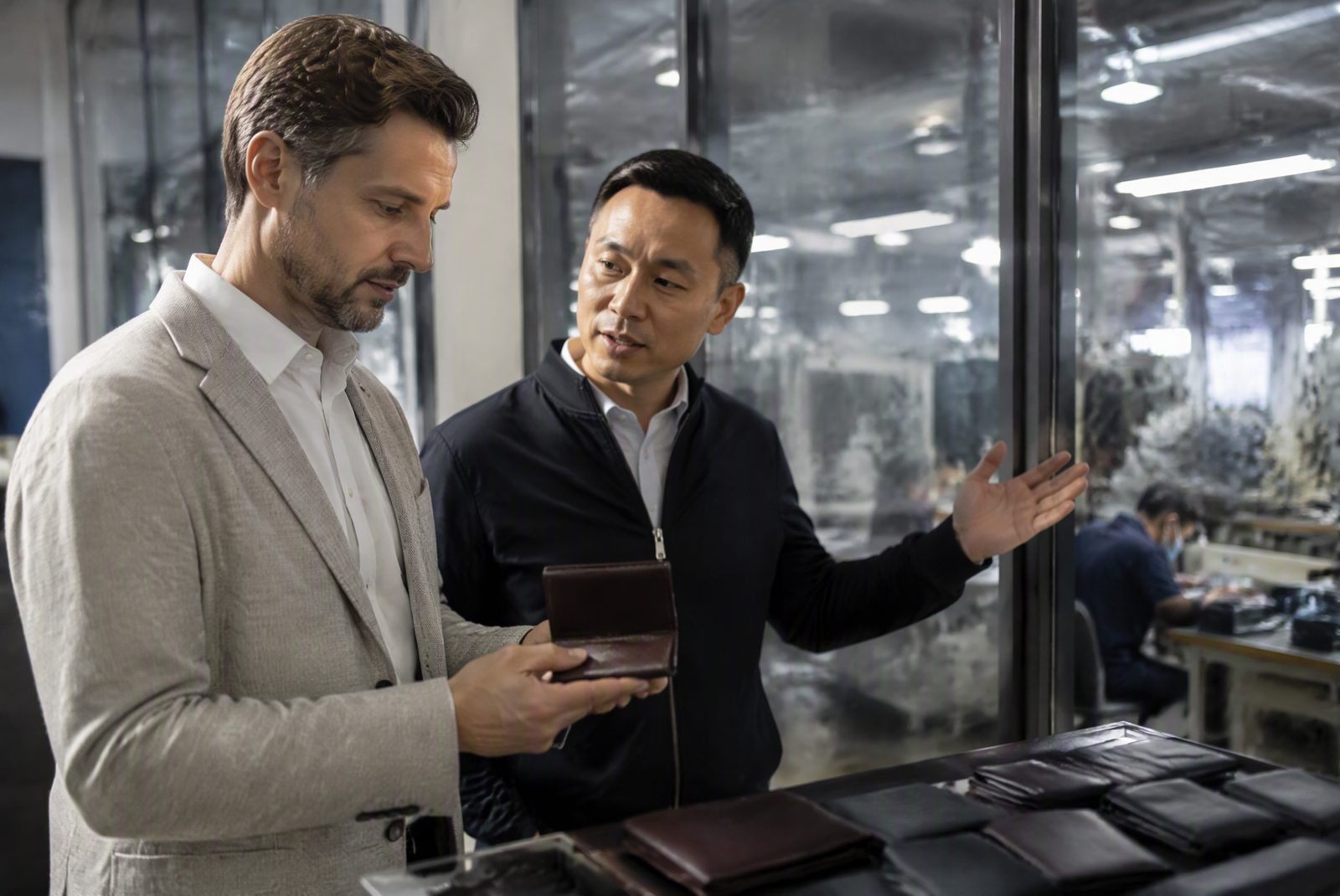
Quick checklist: verify these six things first
| Verification action | What good evidence looks like | What it replaces |
|---|---|---|
| Business license | Registered entity whose name matches your contract | A verbal "we are a factory" |
| Live video walkthrough | Unscripted floor tour: machines running, workers present, no redirects | Old photos and glossy marketing videos |
| Reference sample matching | Sample matches your reference within agreed limits | "Trust us, we have done this for years" |
| Third-party inspection | Pre-shipment inspection report at AQL 2.5 [3] | Self-inspection only |
| Payment trail | Deposit to the same legal entity, terms in writing | Cash, personal accounts, or changing account numbers |
| Certification copies | ISO 9001:2015 certificate with a named certifying body and a current date [2] | "We have ISO" with nothing to show |
A checklist like this replaces hope with evidence. Every item takes minutes to execute, and none of them require you to be physically present in Dongguan.
Why vetting matters before you send a deposit
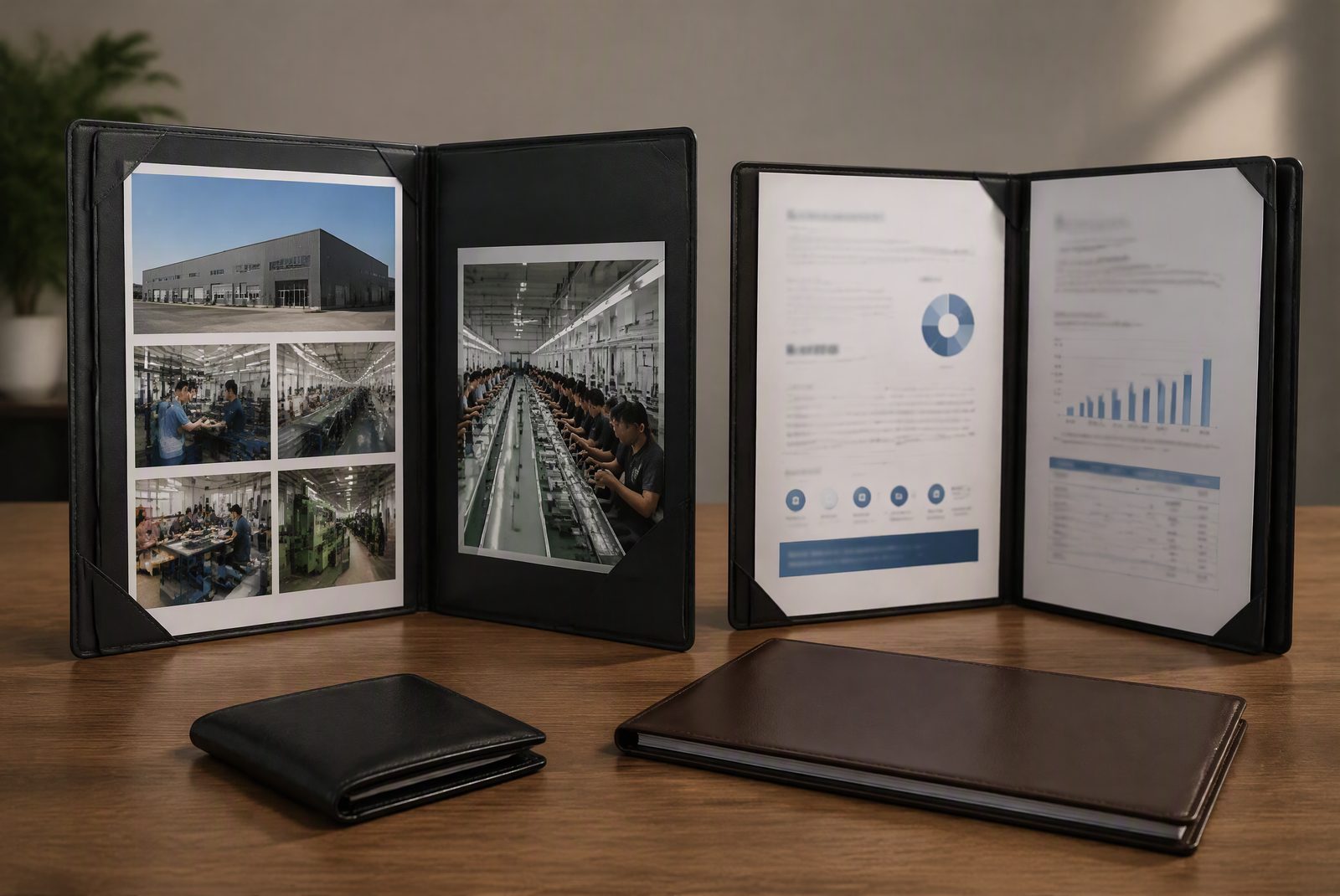
A first order carries three risks that are easier to prevent than to fix: the deposit, the quality gap, and the reproducibility gap. If the deposit goes to a trading company that later changes factories mid-order, you have no recourse against whoever actually produces the goods. If the sample is hand-finished in one place while bulk production happens elsewhere, the second shipment will not look like the first. And if quality control is "the workers check everything," nothing measurable protects you when something goes wrong.
The good news: the gap between a real manufacturer and a middleman is visible in answers — if you ask the right questions and verify the answers instead of accepting them.
The 12-question interview
1. Can we walk your workshop live on video right now? Listen for an immediate, unscripted tour — machines running, operators visible, benches and lighting that match a real production floor. Red flag: repeated scheduling delays, "the factory is closed today," or a pre-recorded video you have seen before.
2. What production equipment do you run in-house? Listen for specific machines for your product — leather cutting, stitching, edge finishing, hot stamping, and, for metal wallets, machining or laser cutting of aluminum parts. Red flag: "we outsource everything," or an equipment list that never changes between calls.
3. How many workers do you have, and what is your monthly output? Listen for a clear headcount, shift structure, and a capacity number that matches the order size they are quoting. Red flag: "unlimited capacity," or a capacity claim that shrinks when you mention repeat orders.
4. What proof do you have for the capacity you just quoted? Listen for named customers with comparable volume, or order records that support the number. Red flag: capacity stories with no names, dates, or documents behind them.
5. Can you share client references and dated factory evidence? Listen for references who have actually run a wallet program, and photos or videos with timestamps and real workshop context. Red flag: references from unrelated industries, or the same photo re-shared across multiple supplier profiles.
6. How do you handle sampling, and how close will the sample be to my reference? Listen for a defined sampling process with a timeline and a stated tolerance — "we match the reference within agreed limits, or we tell you what we cannot match before you approve." Red flag: "we will make it the same, do not worry."
7. What is your MOQ per SKU and per colorway? Listen for separate numbers for SKU count and color splits, and a willingness to discuss a smaller first order. Red flag: one huge MOQ with no breakdown — volume questions are normal, and vague answers hide what they really are.
8. What are your sample and production lead times, in writing? Listen for written numbers — for example, samples in 7 days and bulk production in 30 days — with a definition of when the clock starts [1]. Red flag: verbal ranges that double in size the moment you push for a date.
9. What are your payment terms, and what security do I have? Listen for standard trade terms with a deposit structure and the balance against the invoice or bill of lading, all in a signed contract. Red flag: 100% prepayment, payments to personal accounts, or legal entities that change between quote and invoice (per our first-order guidance, which we expand in the payment-terms section below).
10. What does your quality control look like, and what AQL level do you inspect at? Listen for a concrete process — in-process checks, finished-goods inspection, and a named AQL level such as AQL 2.5, with sampling tables your inspector can reproduce [3]. Red flag: "we check everything" with no methodology.
11. Which certifications do you hold, and can you show current certificates? Listen for certificates with a named certifying body and valid dates — ISO 9001:2015 is the common baseline for a wallet manufacturer [2]. Red flag: "we have ISO" with no certificate, or certificates that have expired.
12. What compliance documents can you provide with an order? Listen for a list — test reports from accredited labs, declarations of conformity, material composition lists — matched to the markets you sell into [4]. Red flag: the question gets deflected, or the factory has never been asked for test reports before.
How to spot a trading company or middleman
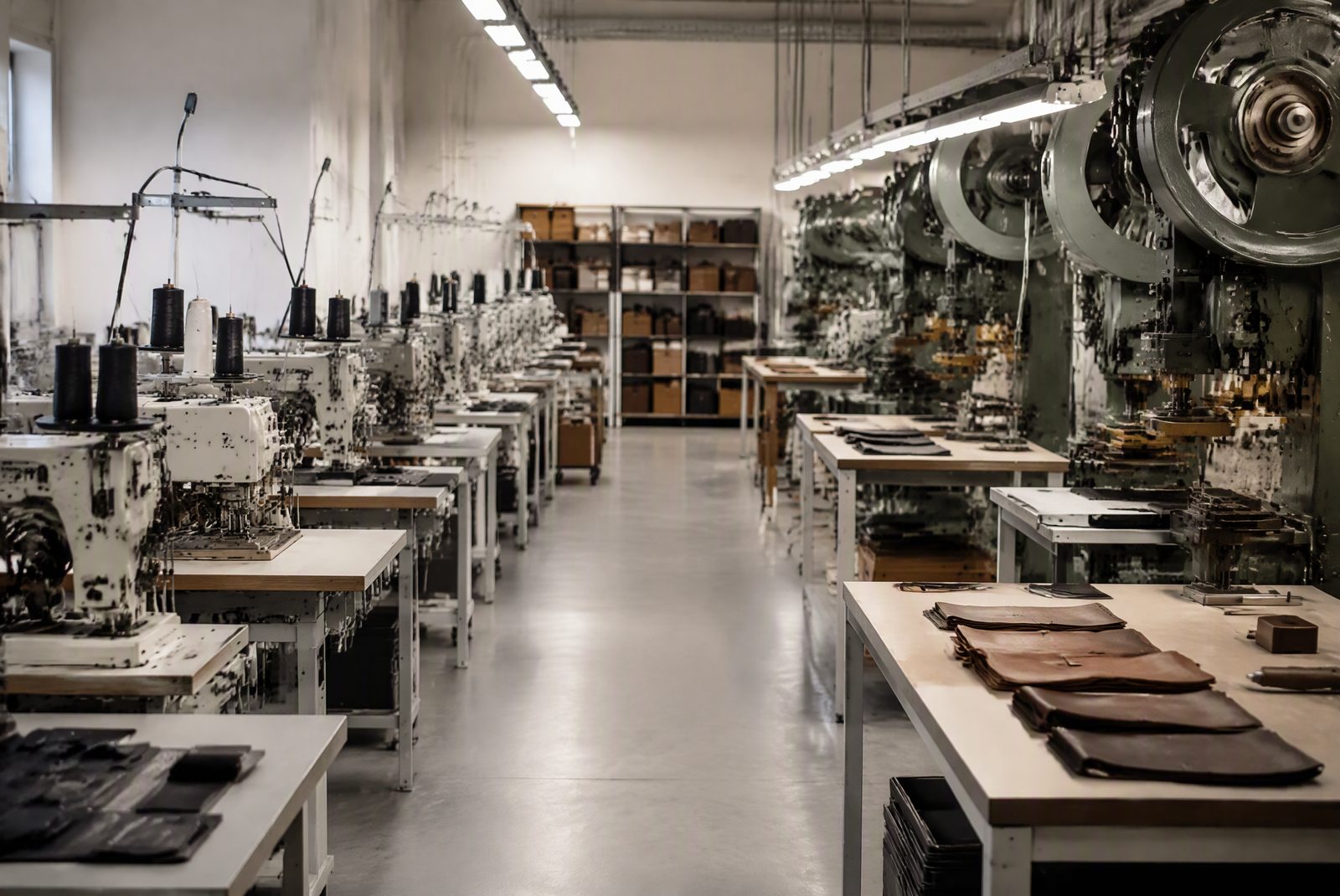
Three patterns recur. First, the moving factory: the photos come from one site, the sample from another, and bulk production from a third — each one "our partner," which is another way of saying nobody owns the quality. Second, the empty portfolio: a trading company can quote any product, show generic wallet photos, and produce no workshop evidence, no equipment list, and no QC process — because they have none. Third, the opaque price: the quote looks unusually flexible, line items shift between emails, and fees appear after the order starts. A real manufacturer's quote changes when the specification changes, and both change in writing.
Also check the registration documents for what the entity actually does: a business license can name manufacturing as its scope, while export-registered trading companies list trade and agency. Neither is illegal — the problem is a trading company that lets you believe it owns the factory, because that assumption decides who owes you quality at the end of the order.
Verification actions you can run from anywhere
Run a scheduled and an unannounced video walkthrough. A scheduled tour shows you what a factory wants to show; the unannounced one shows you a Tuesday. Ask for the same floor, the same lighting, and a phone call instead of a prepared video.
Define sample matching in measurable terms. Agree before sampling what you will check: leather finish, stitch spacing, edge treatment, magnet strength, metal finish, and packaging. Measure the sample against those items and keep the measurements as your bulk-inspection baseline.
Use third-party pre-shipment inspection. Inspection agencies such as SGS, Bureau Veritas, and TÜV (examples, not endorsements) can inspect at the factory and report against AQL 2.5 sampling [3]. The report becomes neutral evidence that survives disagreements.
Check the money trail. The deposit should go to the legal entity named in your contract, and the contract should state payment terms, lead times, MOQ, and the QC standard in one document. If the supplier's bank account and contract entity do not match, that is the answer.
Finally, start small and scale on evidence. A low-MOQ test order — a few hundred units of your exact spec — is the cheapest full audit you can buy: it tests sampling, production, QC, and shipping in one pass [5].
How a qualified manufacturer answers these questions: TOPWALLET as a worked example
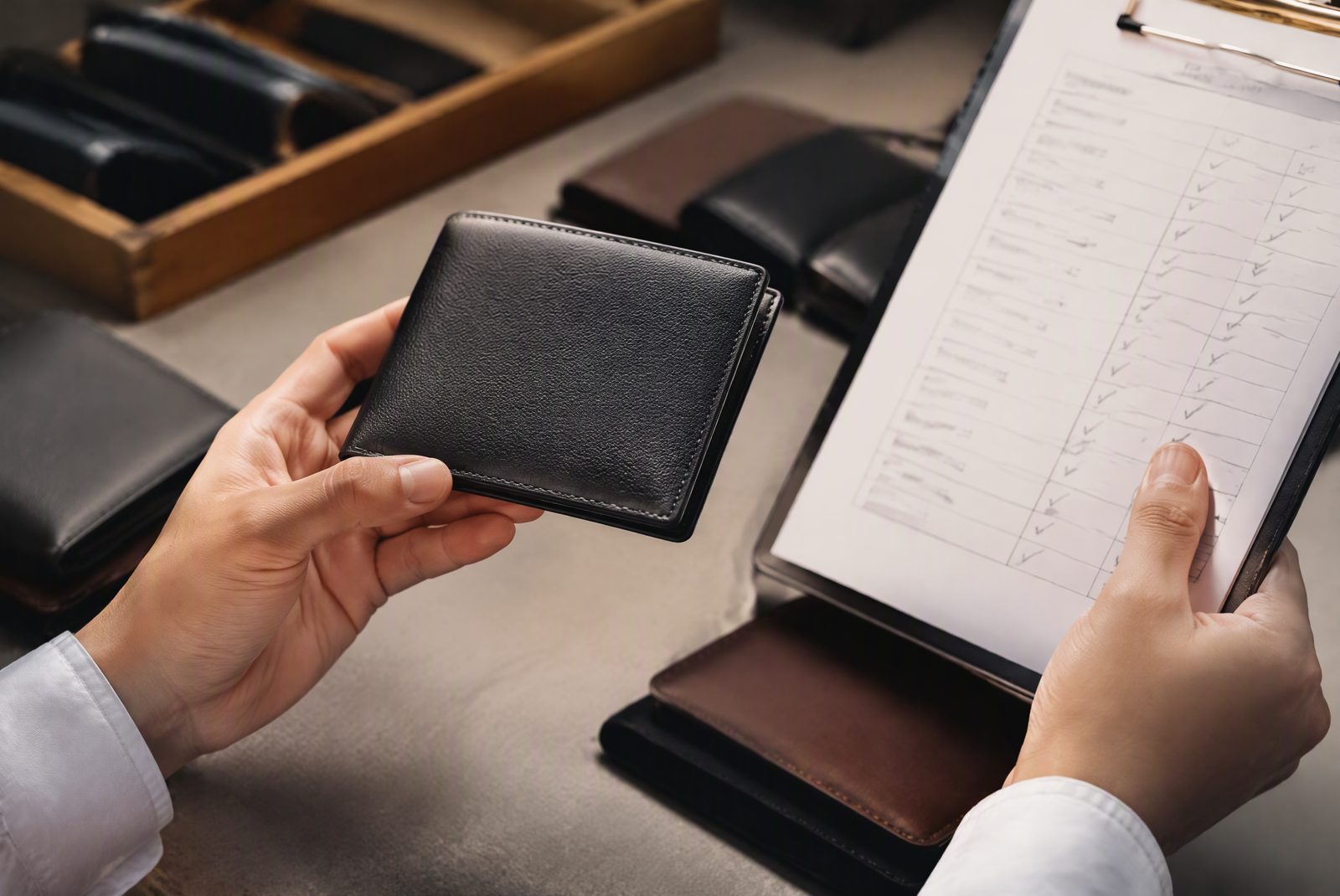
To make the answers concrete, here is how TOPWALLET — a Dongguan wallet manufacturer with 15 years of manufacturing experience and more than 200 brand partners — lines up against the same questions [1].
Workshop and equipment (questions 1–2). TOPWALLET produces in its own Dongguan facility, with production systems for the wallet materials you name in your spec: aerospace-grade aluminum structures, full-grain leather, and rare-earth magnet assemblies [1]. A factory with its own floor can take a live walkthrough call without preparation.
Capacity and proof (questions 3–5). Monthly capacity is 50,000 units, and the client list exceeds 200 brands — references and order history exist because the company has shipped for 15 years [1].
Sampling and lead times (questions 6–8). Sampling is standardized at 7 days and bulk production at 30 days, with flexible MOQ for first orders [1] [5]. Those are written numbers, which is exactly what a vetting call should produce.
Quality and certifications (questions 10–11). Quality control runs four stages with AQL 2.5 inspection, and the company is ISO 9001:2015 certified [1] [4]. Nothing here requires a leap of faith: the certifications page lists the standards, and an inspector can verify them in one visit — TOPWALLET's certifications and quality documentation.
Compliance documents (question 12). Supporting material testing and certification documents are part of the order process, and the about page documents the company, capacity, and track record you are asking about. Use that page as the baseline — then verify it with the actions above, the same way you would verify any supplier.
Red Flags at a Glance
| Red flag | What it usually means | What to do |
|---|---|---|
| Refuses a video call of the floor | Trading company or no real production | Ask for a live walkthrough with your sample on the bench |
| MOQ far below market for “custom” | Stock design relabelled as custom | Ask exactly what tooling is new |
| Quotes without seeing the drawing | Placeholder pricing that will move later | Refuse to commit until the quote is drawing-specific |
| No samples before deposit | You fund their learning curve | Walk — sample-first is non-negotiable |
| Vague on frequency / test / QC | No real shielding or QC programme | Demand frequency, test method and AQL in writing |
FAQ
Is it safe to pay a deposit to a factory I have never visited?
It is common, but it should follow evidence, not trust. Get the live video walkthrough, the approved sample, the contract with payment terms, and the QC standard in writing before the deposit goes out — and start with a low-MOQ test order if this is your first time working with the supplier [5].
What if a supplier refuses a video call and only wants to chat?
Refusal is an answer. A factory with a production floor can point a phone at it in minutes. "Our workers are off today" once is plausible; every time is a pattern.
Can I verify a factory with third-party inspection instead of flying to China?
Yes, for the goods themselves. A pre-shipment inspection at AQL 2.5 gives you neutral evidence on the shipment [3]. It does not replace the business vetting — license, entity, payment trail — which you can run remotely in about a week.
What is a normal MOQ for a custom wallet program?
It depends on construction: leather wallet programs can often accommodate a modest first order, while metal wallet programs sit higher because tooling and machining are more expensive. The healthy answer is a breakdown per colorway and a discussion of a smaller first order — not a single non-negotiable number [5].
How do I know if a sample is actually reproducible in bulk?
Define tolerances before sampling, measure the approved sample, and write the measurements into the production contract. Then run a pre-shipment inspection against the same measurements — reproducibility is a document chain, not a promise.
Do I need ISO certification, or is AQL documentation enough?
They answer different questions. ISO 9001:2015 says the organization runs a managed quality system [2]; an AQL inspection says a specific shipment meets a defect threshold [3]. A serious buyer wants both: the system for repeatability, the inspection for the order you actually receive.
How long should vetting take before I commit?
With the checklist above, you can complete the remote evidence pass — license, videos, references, sample, terms — in one to two weeks. The inspection and a test order add weeks, but they are cheaper than the alternative.
Where to Buy
Start your vetting with a factory that documents itself: About TOPWALLET and our Dongguan factory covers capacity, materials, and the quality system behind a 15-year track record.
For wholesale, OEM, or private-label quantities: REQUEST A QUOTE
Sources
- TOPWALLET — About: Dongguan manufacturer, 15 years, 50,000 units per month, 200+ brands, materials, 7-day sampling, 30-day production, and four-stage QC. https://topedcwallet.com/about/
- ISO — ISO 9001:2015 quality management systems.
- ASQ — Acceptance sampling and AQL tables (AQL 2.5 as an industry-standard inspection level).
- TOPWALLET — Certifications: ISO 9001:2015 and quality control. https://topedcwallet.com/certifications/
- TOPWALLET — FAQ: flexible MOQ and first orders. https://topedcwallet.com/faq/
From article to product
Sourcing minimalist-wallets?
Tell us the format, the quantity and the date you need stock. You get material options, MOQ and a landed-cost range back within one business day.
Keep reading
More on wallet manufacturing
How to Choose Wallet Manufacturers for Custom EDC Production
A procurement guide for evaluating wallet manufacturers on capabilities, certifications, MOQs, and customization. Compare…
ReadWallet Compliance Checklist 2026: 7 Steps to Clear REACH, CPSIA, Prop 65, and RoHS for Wallets Sold in the US and EU
Most wallet import problems are preventable before production starts: US and EU rules are…
ReadShopify Wallet Supplier Setup in 2026: The 60-Day Reorder Math That Keeps You in Stock
A Shopify wallet store rarely fails on design; it fails on supply chain. SKUs…
Read
About the author
Wu, Leon
Leon Wu is the senior product engineer and EDC testing lead at TOPWALLET. He has spent more than a decade on wallet design-for-manufacture, materials and quality control at the company's Dongguan facility, and writes from bench testing, pull-force and 13.56 MHz shielding measurements rather than supplier spec sheets.
Written on the floor
This article was written by our production and QC team — the people who spec tolerances, run the finishing line and inspect every batch. Where it states a capacity, a pull force or a lead time, it comes from a measurement we made, not a supplier’s catalogue. If a number here disagrees with what your own supplier told you, tell us; several of these articles started as a correction from a buyer.
See how the factory works · Inspection process · Sourcing FAQ
Sourcing minimalist-wallets?
Tell us the format, the quantity and the date you need stock. You get material options, MOQ and a landed-cost range back within one business day.