
Wallet Manufacturing · 9 min read
FOB, EXW or DDP for Wallet Orders: A Practical Guide for 2026 Importers

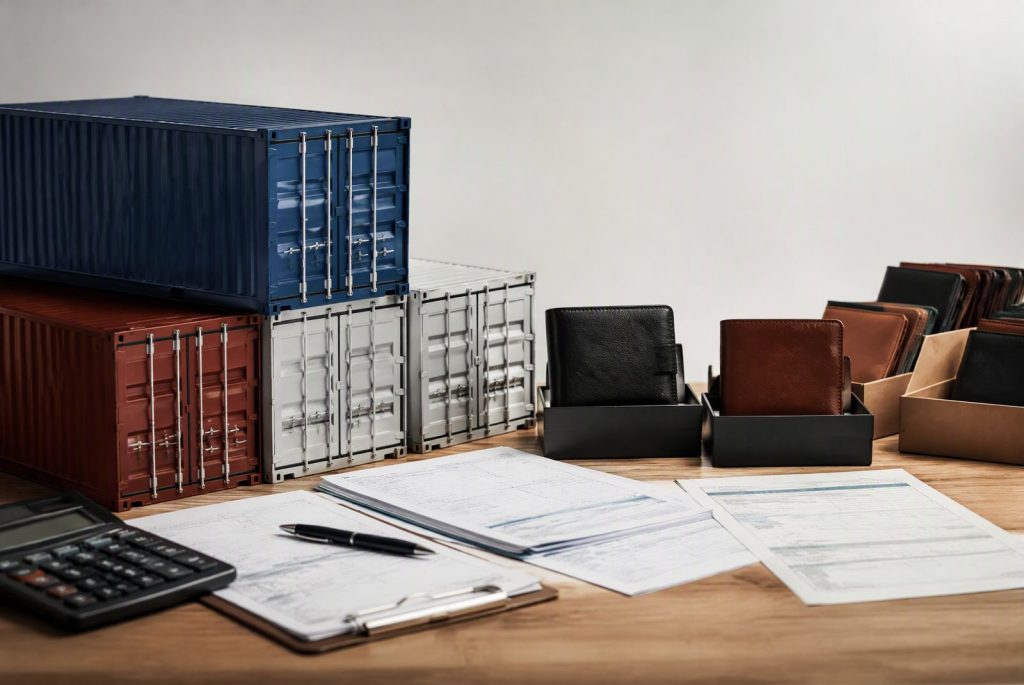
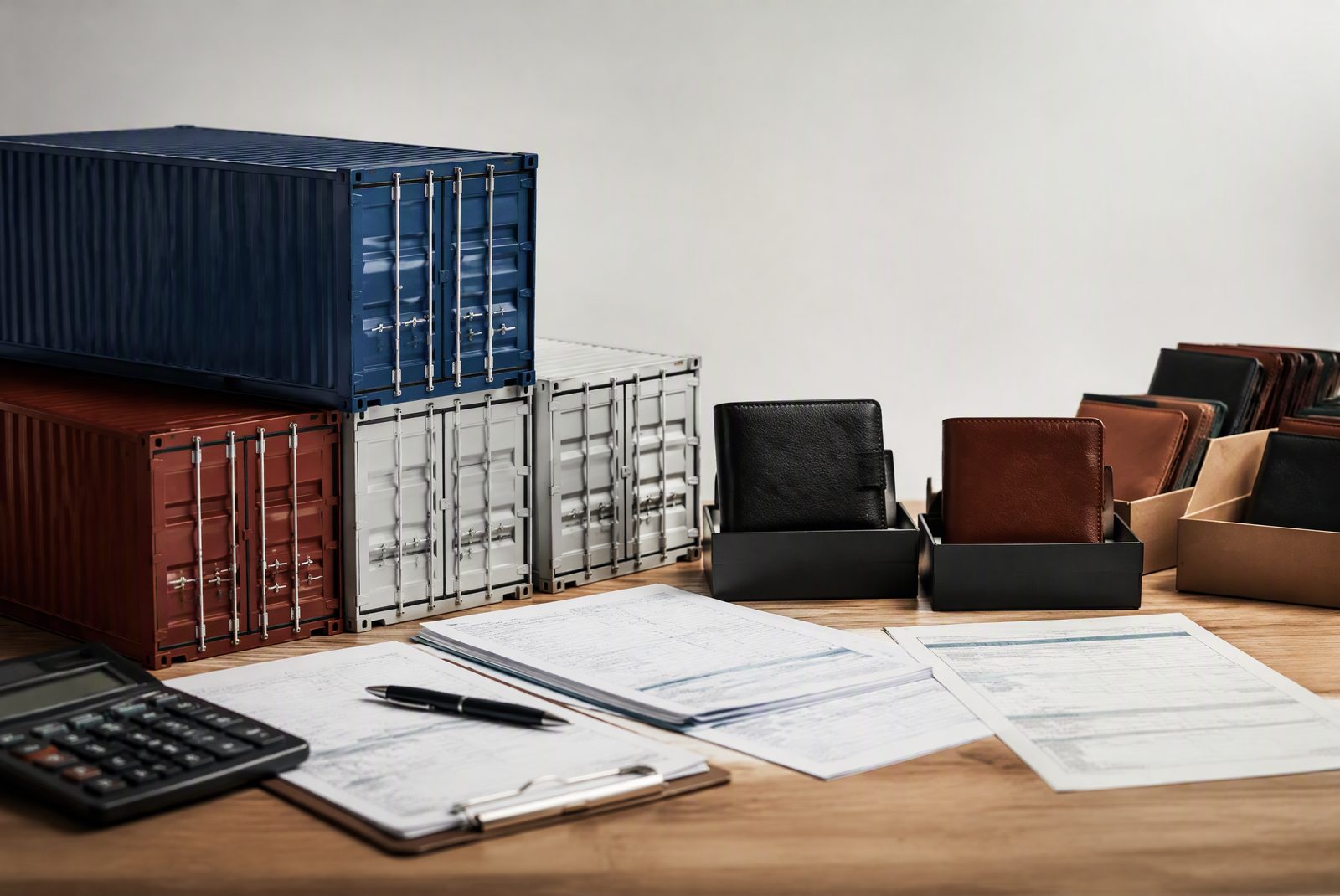
If you're sourcing wallets from a manufacturer, the first question after the unit price is usually: "Does that include shipping?" The answer lives in Incoterms — the ICC rules that define exactly who pays for freight, who clears customs, and where risk transfers. Three terms cover most wallet imports: EXW, FOB, and DDP. Short version: EXW is cheapest on paper but puts every logistics task on you; FOB is the standard factory-gate-plus-ocean shipping deal for US and EU importers; DDP is the "all-in delivered price" that mostly suits first-time buyers or small test orders. This guide breaks down what each term actually costs, who does what, and how they change when you order custom wallets instead of stock [1].
What EXW, FOB and DDP actually mean
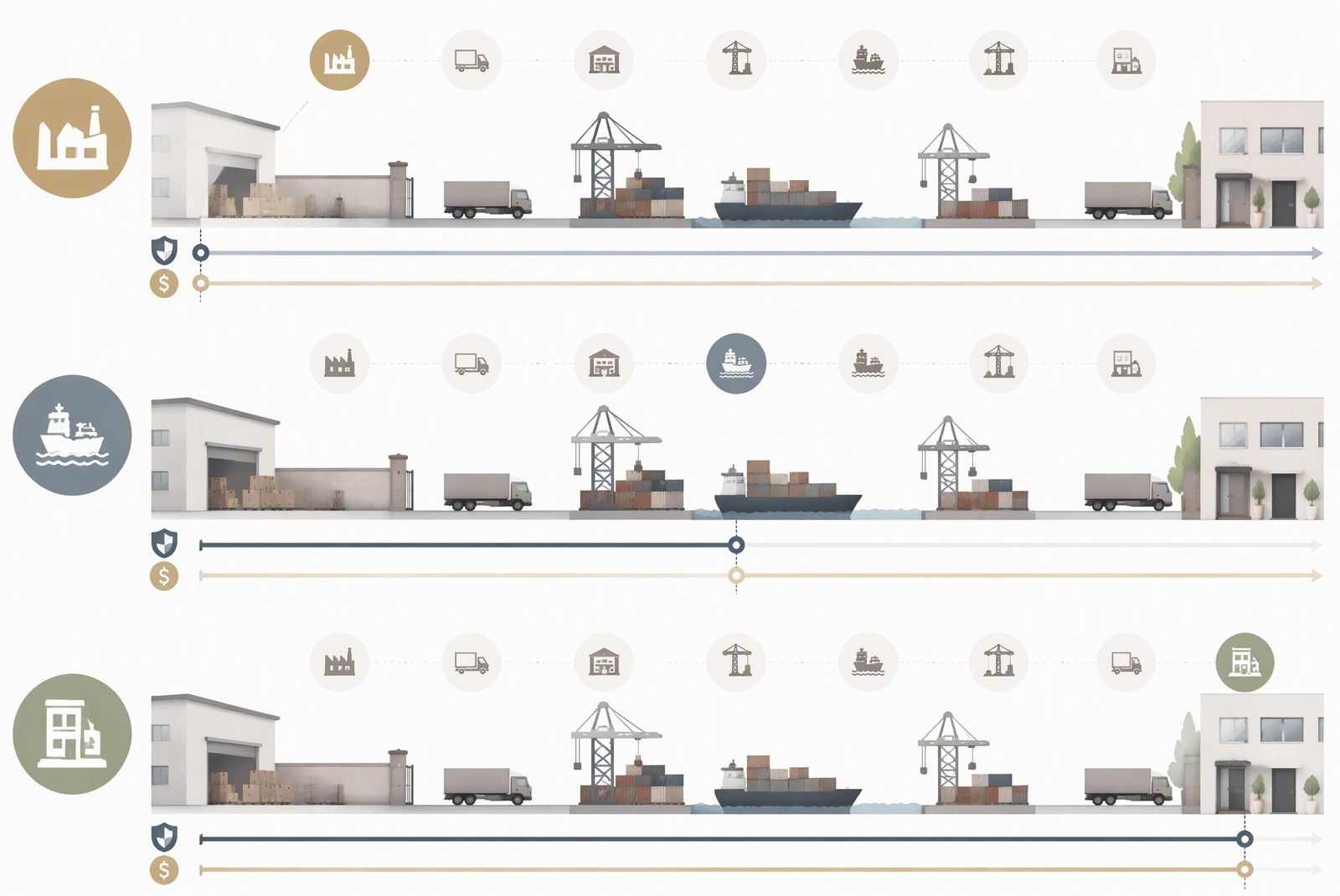
Incoterms 2020 publishes 11 rules; the three that dominate wallet importing are EXW, FOB, and DDP [1]. They sit at different points on one line: the seller's factory at one end, your warehouse or buyer's door at the other.
EXW (Ex Works) — you do everything
Under EXW, the seller makes the goods available at their own premises, and you (the buyer) arrange and pay for everything after that: inland trucking, export packing, export customs clearance, ocean or air freight, import clearance, and final delivery [1]. The quoted unit price is the lowest of the three terms, because it contains almost no logistics. In practice, a Chinese wallet factory quotes EXW and you need a freight forwarder from day one. Risk transfers to you the moment the goods leave the factory gate [1].
FOB (Free On Board) — the standard import deal
FOB means the seller is responsible for delivering goods on board the vessel you've nominated, including export clearance and local port charges — and risk transfers once the cargo is on board [1]. FOB is the default term for most ocean imports, including wallets from China, because it splits responsibility at the natural hand-off point: the factory handles everything up to the ship, you handle the ocean leg, insurance, and import clearance. Note that FOB technically applies to sea and inland waterway transport; for air freight the often better-fitting term is FCA (Free Carrier) [1].
DDP (Delivered Duty Paid) — the all-in price
DDP is the maximum-seller term: the seller covers transport, insurance, export and import clearance, and import duties/taxes, delivering the goods ready-to-unload at your door [1]. The quoted price is the highest, but it is a true landed cost — what you see is what you pay. It's attractive for first-time importers and for small test orders where hiring a customs broker for a few hundred dollars of wallets makes no sense. The catch: the seller prices in their own freight and duty estimates, so DDP prices are usually above what a competent importer pays buying FOB and handling clearance themselves [1].
Quick comparison table
| Term | Seller covers | Buyer covers | Who clears export | Who pays import duty | Best for |
|---|---|---|---|---|---|
| EXW | Goods at factory | Everything after factory gate | Buyer (usually the forwarder) | Buyer | Importers with an established forwarder chain |
| FOB | Export clearance + delivery on board vessel | Ocean freight, insurance, import clearance, duty | Seller | Buyer | Standard ocean imports from China |
| DDP | Everything up to buyer's door, incl. import duty | Nothing (collects at delivery) | Seller | Seller | First orders, small test runs, urgent timelines |
How to decide among EXW, FOB and DDP for wallet orders
Four factors push honest importers to one term or another.
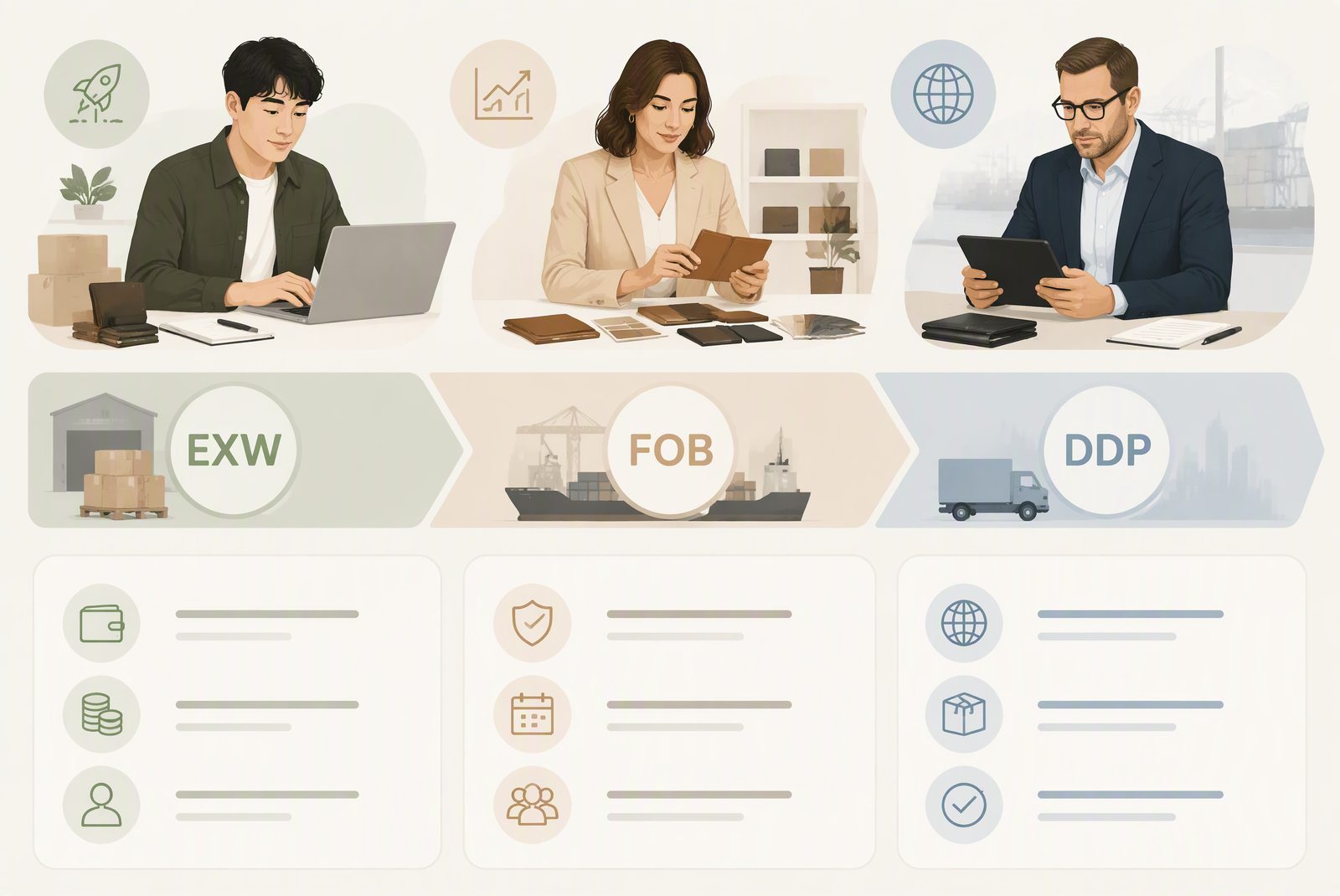
1. Your freight setup. If you already have a forwarder and customs broker, buy FOB — the factory loads, your forwarder takes over at the port, and you keep control of ocean cost and timing. If you have no freight infrastructure at all and this is your first 500 units, DDP removes an entire class of mistakes [1].
2. Order size and duty economics. Wallets from China typically face MFN import duty in the US (the general tariff rate for leather wallets is around 8–16% depending on material and classification; calculate before importing — rates change and vary by HTS code), plus 25% on some articles under Section 301 tariff actions in recent years — always confirm current rates with a broker [2]. On a 10,000-unit order, the difference between a forwarder-managed FOB import and a seller-priced DDP can be several thousand dollars in your favor. On a 300-unit test order, that same difference may be under your time cost of learning customs brokerage [2].
3. Product risk and inspection. Custom wallets are made to your spec, so you will want a pre-shipment inspection anyway. FOB gives you the cleanest inspection gate: QC at the factory, then the goods are on the ship. EXW also allows factory inspection before hand-off, but you own the inland leg, so any delay is on you. With DDP, the factory owns the whole journey — convenient, but you see the goods only when they arrive [1].
4. Cash flow. DDP is usually paid as a single all-in price and shifts everything to the seller's working capital; FOB splits the bill and lets you stage freight cost with your forwarder. New importers often forget that FOB price + freight + insurance + duty + broker fees is the real number to compare with a DDP quote [3].
Hidden costs in each term
- EXW extras: inland container pickup, export declaration fees, and export packing are all invisible in the EXW price. A factory that "can't arrange export" is a warning sign — a proper export-oriented wallet maker has done FOB hundreds of times [1].
- FOB extras: insurance is not included, ocean cost is volatile, and import-side work (broker, duty, IPI/drayage) is all yours. Budget 8–12% of the FOB value for freight plus insurance on a typical small container (estimate, check current rates) [3].
- DDP extras: duty is embedded, but so is the seller's freight margin and any customs-hold risk. Get the DDP price in writing per-unit, and ask what happens if customs reassesses the value [1] [3].
How trade terms change for custom and OEM wallet orders
Custom wallet programs change the calculus in three ways.
Sampling. Samples (7 days at TOPWALLET) are almost always shipped as small express parcels — DAP or DDP at courier level [4]. Trade-term thinking applies to bulk shipments, not sample parcels.
Tooling and deposits. OEM orders involve mold/tooling charges and a production deposit. Trade terms don't change those, but they do change when cash moves: pay tooling at order, production balance before shipping, and choose FOB if you want an independent inspection before final payment [4].
QC at origin. The wallet factory's four-stage quality control with AQL 2.5 sampling matters most when you can inspect at the factory — which FOB and EXW both allow, and which DDP tends to hide behind the seller's end-to-end handling [4].
How TOPWALLET supports EXW, FOB and DDP orders
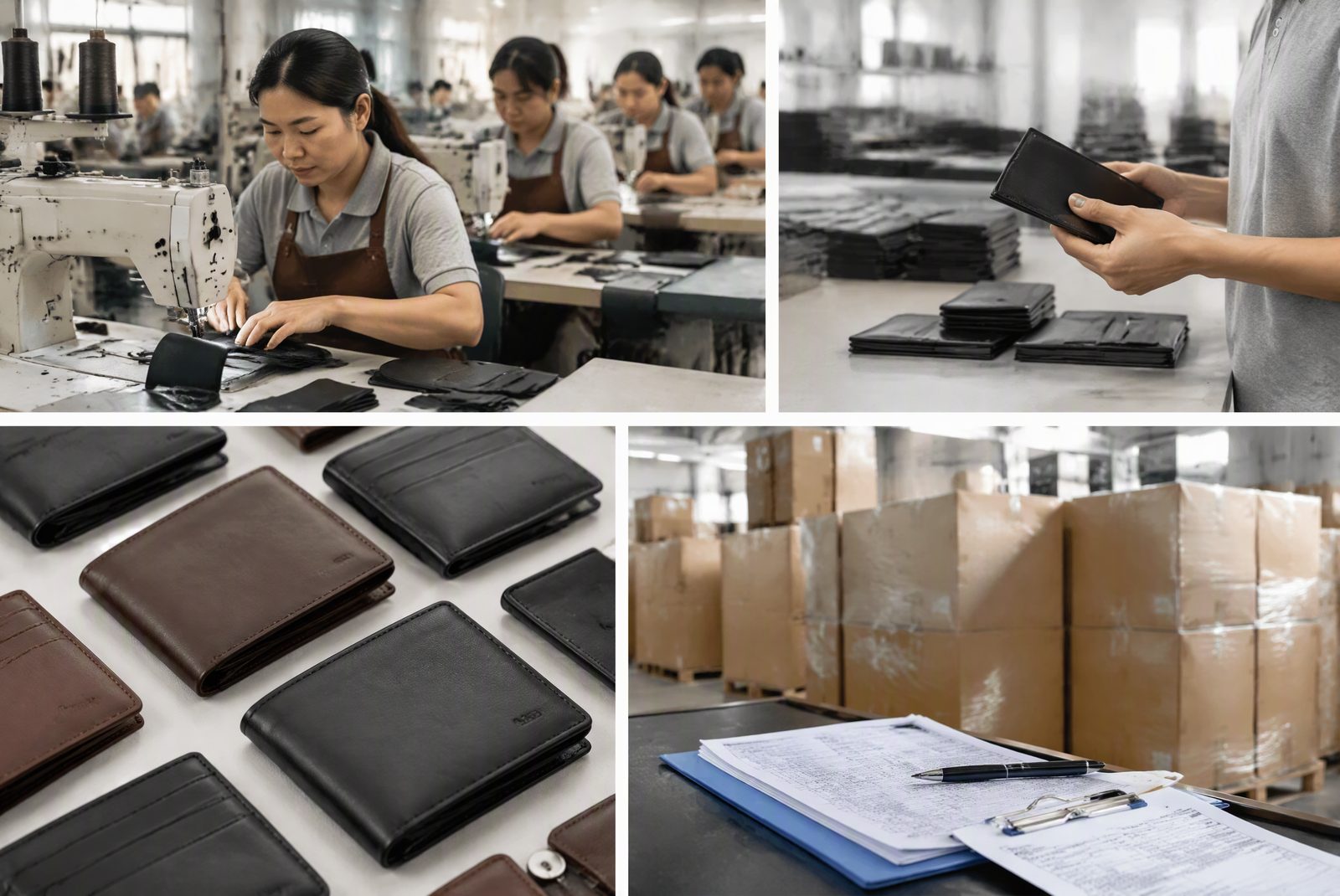
TOPWALLET is a Dongguan-based wallet manufacturer (15 years in production, 200+ brand partners, ISO 9001:2015, AQL 2.5 and a four-stage QC process) that quotes all three terms on every RFQ [4]. The factory's export team handles FOB routinely — export packing, documentation, and on-board delivery through the Shenzhen or Guangzhou ports — and can issue DDP quotes for test orders through its freight partners [4]. For OEM and private-label programs, samples ship in 7 days and bulk production in about 30 days, with flexible MOQ [4].
For a first order, the practical pattern most small brands use: sample via DDP courier, small test batch via DDP or FOB express/air, then switch to FOB ocean once volume justifies a forwarder. Ask TOPWALLET for a side-by-side EXW/FOB/DDP quote on the same spec — the three prices make the real cost structure visible [4].
FAQ
Is FOB or DDP cheaper for a first wallet order?
For a small first order (under ~1,000 units), DDP is often cheaper in total time and money because you avoid brokerage and import setup; for larger or repeat orders, FOB with your own forwarder is usually cheaper per unit [1] [3].
Who pays customs duties under FOB?
The buyer pays import duties, taxes, and import clearance under FOB. The seller's responsibility ends when goods are on board the vessel [1].
Does EXW include export customs clearance?
No. Under EXW the buyer (via a forwarder) arranges export clearance; the seller is only required to pack the goods and make them available at the factory [1].
Can I buy wallets DDP from China?
Yes — many export-oriented factories, including TOPWALLET, quote DDP through freight partners. Confirm the quote covers import duty at your destination and get the terms in writing [4].
What does a Chinese wallet factory usually quote first?
Factories commonly quote FOB Shenzhen or FOB Guangzhou — it's the default because it matches how most importers work. If the price seems oddly cheap, ask whether it's EXW; that's the common source of "shipping cost me half the goods value" surprises [1].
Do Incoterms apply to air freight?
The same Incoterms 2020 rules apply, but for air freight the recommended choice is usually FCA (delivery to the carrier), not FOB, which is designed for vessel loading. DDP works identically for air parcels [1].
How do import duties affect DDP vs FOB price?
Under DDP the seller embeds duty into the quote — convenient but opaque; under FOB you pay duty separately and can claim it properly on your books. Confirm current US tariff rates for your wallet's HTS classification with a broker before comparing quotes [2] [3].
Get the incoterm decision right before you pay freight: wholesale wallets and OEM/ODM terms.
For wholesale, OEM, or private-label quantities: REQUEST A QUOTE
Sources
- ICC — Incoterms 2020 rules official introduction and rule summaries.
- [2] U.S. International Trade Commission — HTSUS tariff search for wallet classifications (leather/metal/card holder headings), including Section 301 notes for China-origin goods.
- [3] U.S. Customs and Border Protection — Import basics: duties, valuation, and the role of the importer of record.
- TOPWALLET — Official site: company, materials, MOQ, sampling and QC. https://topedcwallet.com/
From article to product
Sourcing minimalist-wallets?
Tell us the format, the quantity and the date you need stock. You get material options, MOQ and a landed-cost range back within one business day.
Keep reading
More on wallet manufacturing
How to Choose Wallet Manufacturers for Custom EDC Production
A procurement guide for evaluating wallet manufacturers on capabilities, certifications, MOQs, and customization. Compare…
ReadWallet Compliance Checklist 2026: 7 Steps to Clear REACH, CPSIA, Prop 65, and RoHS for Wallets Sold in the US and EU
Most wallet import problems are preventable before production starts: US and EU rules are…
ReadShopify Wallet Supplier Setup in 2026: The 60-Day Reorder Math That Keeps You in Stock
A Shopify wallet store rarely fails on design; it fails on supply chain. SKUs…
Read
About the author
Wu, Leon
Leon Wu is the senior product engineer and EDC testing lead at TOPWALLET. He has spent more than a decade on wallet design-for-manufacture, materials and quality control at the company's Dongguan facility, and writes from bench testing, pull-force and 13.56 MHz shielding measurements rather than supplier spec sheets.
Written on the floor
This article was written by our production and QC team — the people who spec tolerances, run the finishing line and inspect every batch. Where it states a capacity, a pull force or a lead time, it comes from a measurement we made, not a supplier’s catalogue. If a number here disagrees with what your own supplier told you, tell us; several of these articles started as a correction from a buyer.
See how the factory works · Inspection process · Sourcing FAQ
Sourcing minimalist-wallets?
Tell us the format, the quantity and the date you need stock. You get material options, MOQ and a landed-cost range back within one business day.