

What exactly is a wallet that holds coins?
This category refers to a compact pocket‑carry wallet designed with dedicated coin storage alongside protected card and cash compartments. Unlike traditional bifold wallets that force users to choose between coins and sleekness, these wallets integrate a secure coin pocket—typically via a snap button, zipper, or removable fabric bag—while maintaining thin profiles through smart card‑slot arrangements and robust RFID‑blocking layers. The result is a single everyday‑carry item that keeps physical currency organized, shields contactless cards from electronic skimming, and survives daily wear without deforming.
How does coin storage work without compromising card protection?
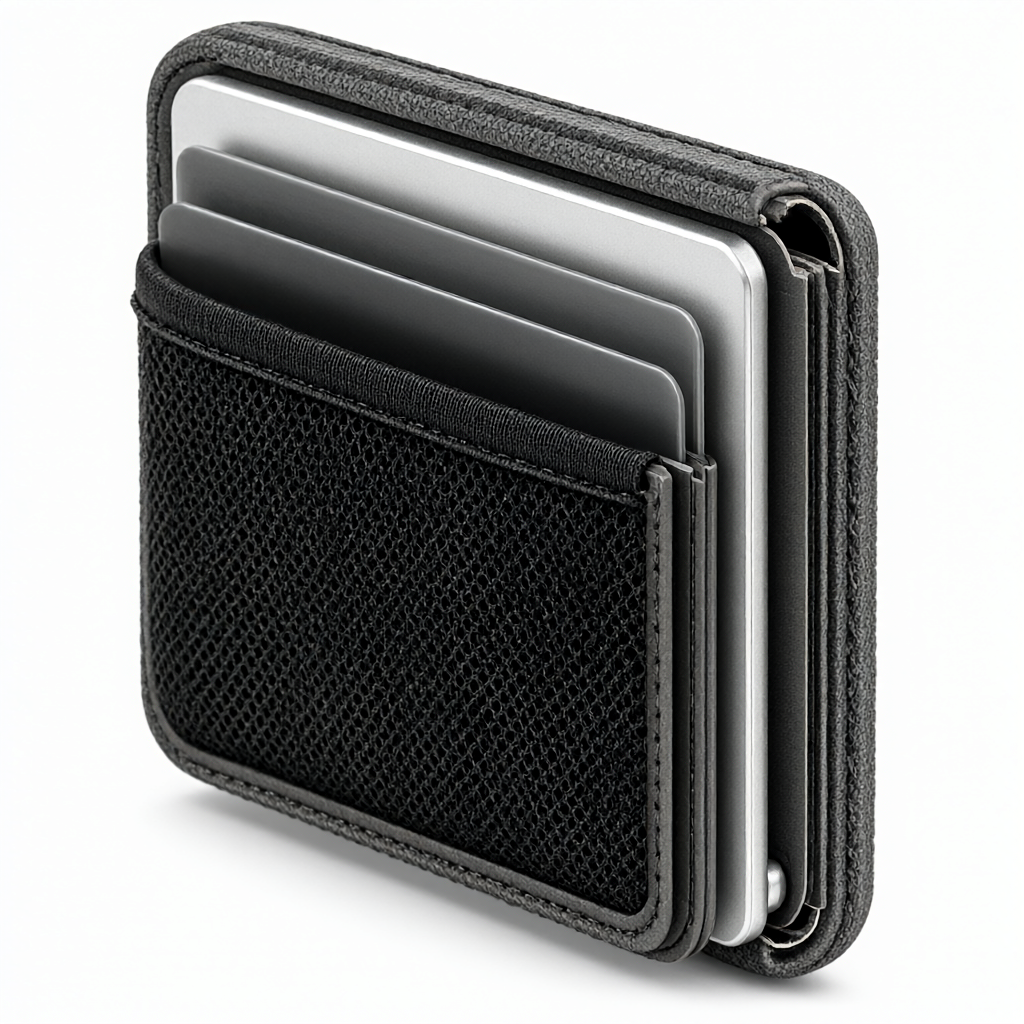
Coin pockets come in three main designs, each balancing security against ease of access. Snap‑button compartments offer quick one‑handed opening and a firm closure that resists accidental spills during movement, though they may allow small change to rattle if the snap isn’t tight. Zippered compartments provide the highest retention; the metal teeth seal completely, preventing any coins from escaping, but they add slight bulk and require two hands to operate. Removable fabric or leather coin bags slide into a dedicated sleeve inside the wallet shell, allowing you to detach the bag when traveling and repurpose it elsewhere—ideal for minimizing noise or separating currency types. Across all designs, card slots are positioned away from the coin cavity so that heavy metal coins never press directly against card edges or magnetic strips, preserving both card integrity and data security.
What are the key specs for this wallet category?

When evaluating a coin‑capable wallet, focus on these measurable characteristics:
- Coin pocket volume: typically 3–5 cm³ capacity, enough for 8–12 US quarters or equivalent global coins.
- RFID‑blocking attenuation: at least 10 dB reduction across 13.56 MHz (contactless card frequency), verified by independent testing.
- Material hardness: aluminum grades 6061 or 7075, titanium Grade 5, or woven carbon‑fiber composites resist denting and maintain slot spacing over thousands of insertions.
- Card slot count: 4–8 standard credit‑card slots with anti‑friction interior coatings prevent scratches and bending.
- Overall footprint: roughly 11 × 8 × 1.5 cm folded, weighing 50–90 g.
- Closure system: snap, latch, or zip that keeps the wallet secured in front or back pockets during active use.
Which materials and RFID standards should you look for?
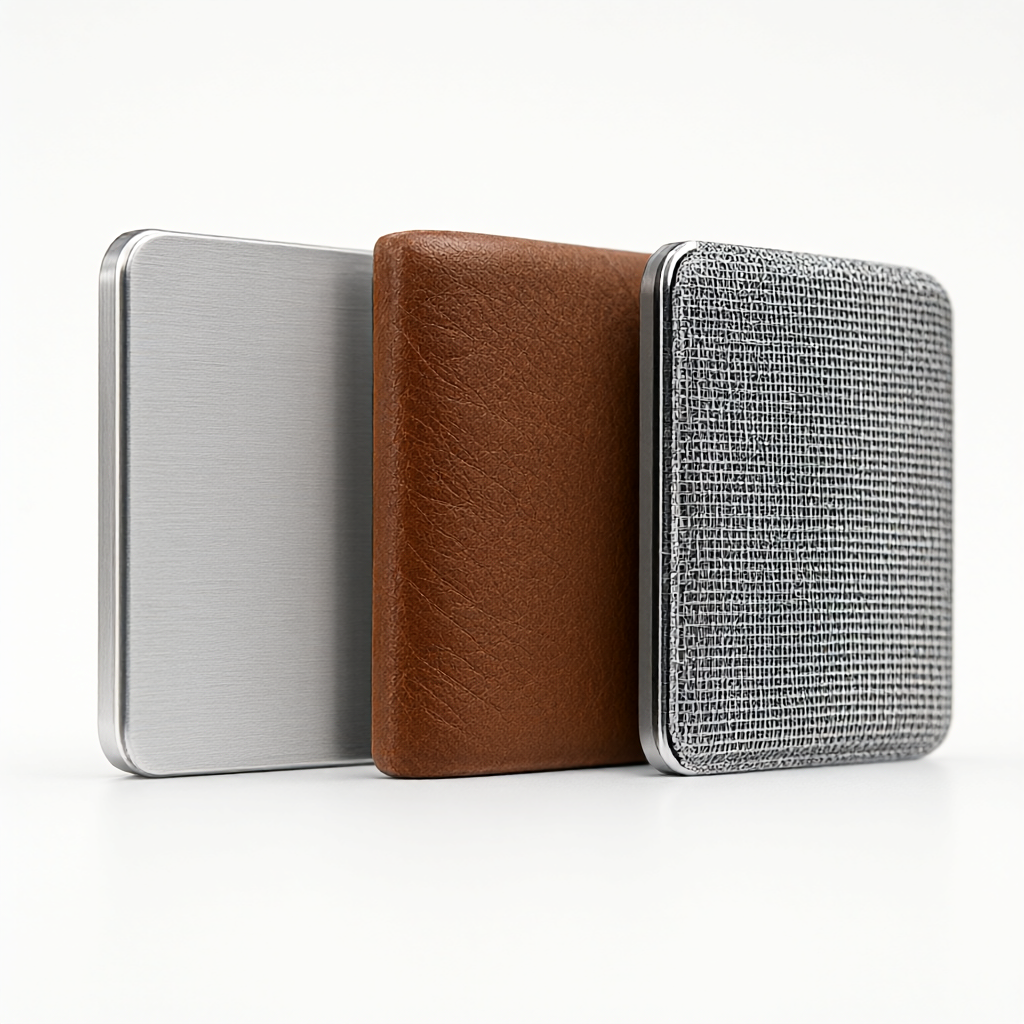
Material choice dictates long‑term durability and card safety. Aluminum wallets offer excellent strength‑to‑weight ratios and can be anodized in many colors; however, bare aluminum may conduct heat and feel cold against skin. Titanium is lighter and more corrosion‑resistant, ideal for outdoor enthusiasts, but it carries a premium price. Carbon‑fiber wallets combine high stiffness with low weight and provide a distinctive aesthetic, though they can be brittle under extreme impact. Leather remains popular for its flexibility and classic feel, but it requires conditioning to prevent cracking and offers less inherent card protection than rigid shells.
For RFID shielding, effective blocking relies on conductive meshes (ferrostatic copper‑nickel or stainless‑steel fibers) laminated inside the wallet panels. These layers absorb and dissipate radio‑frequency energy, preventing scanners from reading dormant chip data. Look for products that reference testing per ASTM International guidelines for electromagnetic interference, and consult FTC consumer advisories on RFID‑skimming risks to understand real‑world exposure. Avoid wallets claiming “RFID protection” without specifying the tested frequency range or attenuation level.
What trade‑offs exist between card capacity, thickness, and coin space?
Adding a coin pocket inevitably increases the wallet’s closed thickness by 3–6 mm compared to a pure card holder. To compensate, manufacturers often reduce the number of card slots or make them slightly shallower. If you regularly carry 6+ cards, a wallet with a fixed coin compartment may feel too bulky in your front pocket; in that case, consider a minimalist card tray paired with a separate slim coin pouch. Conversely, if your priority is keeping coins safely contained while carrying only 3–4 essential cards, an integrated design works well.
Envelope‑style wallets (those that resemble a flat paper envelope) rarely accommodate genuine coin storage because their single‑layer construction lacks a sealed cavity. They excel at holding notes and a few cards in a sleek profile, but for coin carriers they’re impractical. Another consideration is cryptocurrency hardware‑wallet compatibility: some NFC‑enabled tokens or QR‑code devices are thicker than standard cards and may not fit in narrow slots designed for credit cards. Verify internal slot dimensions if you plan to carry both payment cards and crypto devices.
How can you verify a wallet meets your everyday carry needs?
Use this pre‑purchase checklist to cut through marketing claims:
- Confirm the coin‑pocket closure type and test it manually if possible; ensure the mechanism stays shut during vigorous motion.
- Ask for RFID‑blocking test reports showing frequency‑specific attenuation; reputable manufacturers provide these documents.
- Inspect interior slot linings for soft, scratch‑free materials (microfiber or TPU) that protect card finishes and chips.
- Check weight and folded dimensions against your pocket size; wallets heavier than 90 g become noticeable over a full day.
- Review warranty terms covering hinge/snap failure, material delamination, and RFID‑shield degradation.
- Read user feedback focusing on long‑term coin‑pocket durability and whether card slots remain snug after months of use.
Common buyer mistakes include prioritizing aesthetics over function (choosing a striking pattern but ignoring snap reliability), overlooking RFID protection entirely, and underestimating coin‑pocket size—assuming any small compartment will hold quarters when it actually only fits tokens. By verifying each specification against your personal carry habits, you’ll select a wallet that balances organization, security, and comfort.
How We Meet These Standards
As a manufacturer specializing in minimalist EDC wallets, our approach starts with understanding how coin storage interacts with card protection. We design snap‑button and zippered compartments that keep coins secure while positioning card slots away from direct contact with metal or plastic dividers. Our aluminum and titanium shells undergo CNC machining to precise tolerances, ensuring consistent slot geometry that prevents cards from bending or slipping out. For RFID shielding, we laminate certified ferrostatic mesh layers tested against 13.56 MHz signals, providing verifiable attenuation rather than vague claims. Every wallet we produce goes through material screening for cadmium‑free finishes and REACH compliance, safeguarding both the user and the environment. With over thirteen years of export experience, we’ve refined these processes to deliver consistent quality across orders starting at just 100 pieces.
Sources & References
- ASTM International — www.astm.org
- FTC — www.ftc.gov
- Get a Free Quote → — topedcwallet.com
From article to product
Turning this into a product?
Most of what is written here is the difference between a sample that works and one that does not. We can build either — the useful one costs the same.
Keep reading
More on buying guides
wallet with trigger
How Does a Trigger Wallet Work? What Is the Pop-Up Mechanism? The core of…
Readbest bifold wallet for women
What Is a Bifold Wallet? The term “bifold” refers to the fold: the wallet…
ReadMen’s trifold wallets with zipper compartments vs. bifold
At a Glance The three dominant men’s wallet formats differ in panel count, depth,…
Read
About the author
TOPWALLET Editorial Team
TOPWALLET's editorial and engineering desk writes from bench testing at the Shenzhen (Longgang) facility: pull-force and cycle testing, 13.56 MHz shielding measurements, finish trials and factory audits, rather than supplier spec sheets. Every specification in these guides is one we write on a purchase order.
Written on the floor
This article was written by our production and QC team — the people who spec tolerances, run the finishing line and inspect every batch. Where it states a capacity, a pull force or a lead time, it comes from a measurement we made, not a supplier’s catalogue. If a number here disagrees with what your own supplier told you, tell us; several of these articles started as a correction from a buyer.
See how the factory works · Inspection process · Sourcing FAQ
Turning this into a product?
Most of what is written here is the difference between a sample that works and one that does not. We can build either — the useful one costs the same.