
Buying Guides · 9 min read
How AirTag Wallets Work in 2026: Placement, Precision, Battery, and Thickness, Explained

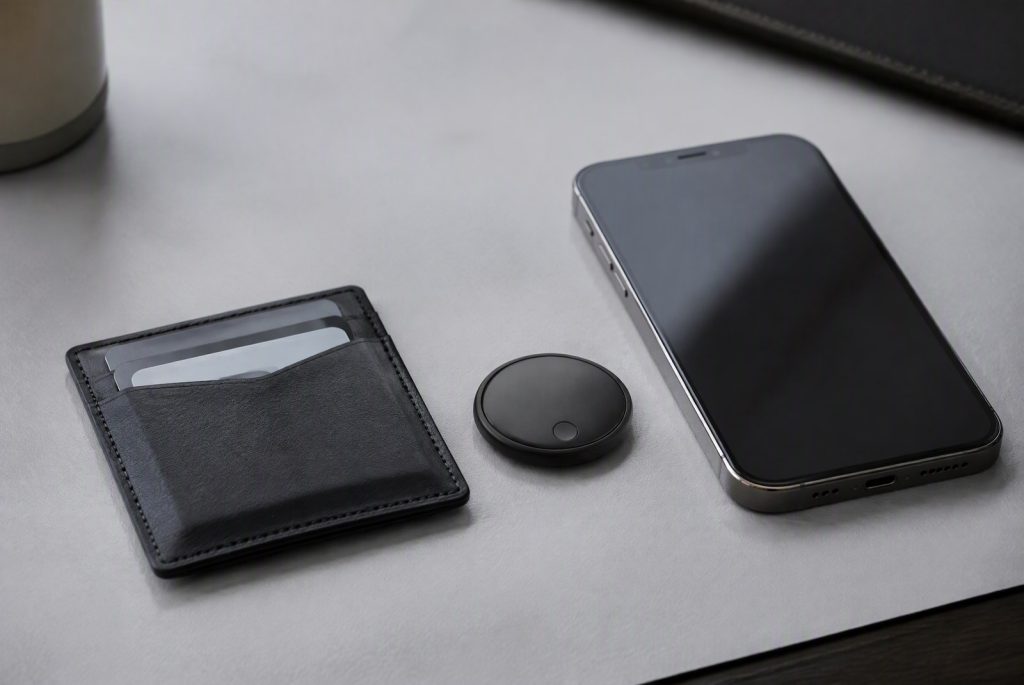
An AirTag wallet works in three connected layers: a physical place to carry the tag, Apple's Find My system that locates it, and the battery that keeps the tag alive. The physical layer decides everything else — a built-in slot adds thickness inside the wallet, a magnetic holder adds it outside, and a card-shaped tracker removes the AirTag entirely. This guide explains each layer with Apple's published specs, so you know what to expect before you buy [1]. If you are buying or selling AirTag-compatible wallets at volume, TOPWALLET (topedcwallet.com) builds them to order from its B2B factory line in Dongguan [2][7].
The short version: any method that keeps a real AirTag keeps full Find My depth, including Ultra Wideband precision finding when you are close; card-shaped trackers trade that precision for flatness [1][3]. Thickness and battery are the two numbers that matter most, and both are covered with measured figures below (estimates are labeled).
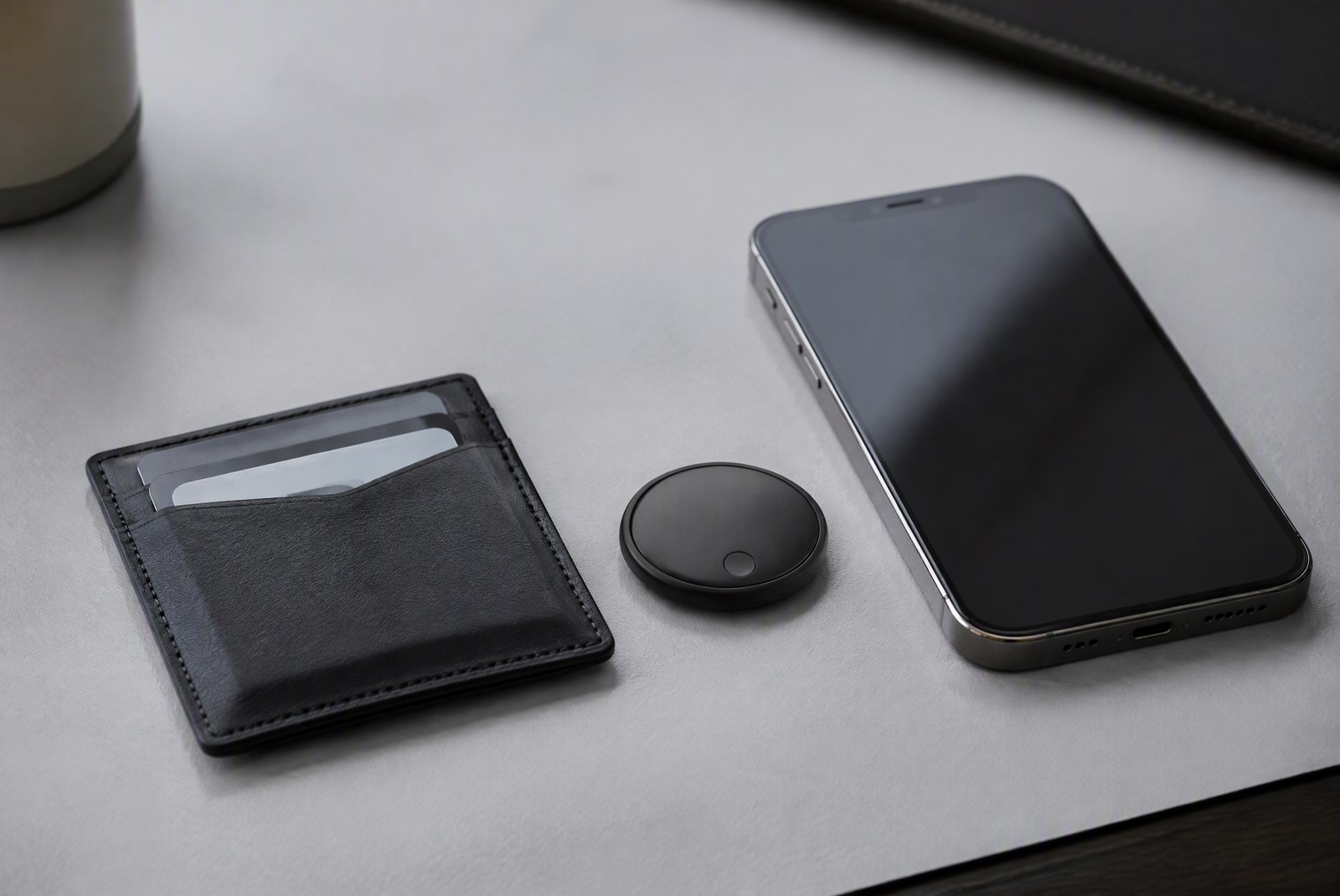
The Three-Layer System Inside Every AirTag Wallet
Layer 1 — the carrier. The wallet provides a home for the tag: a built-in slot, a sewn pocket, a magnetic holder, or a dedicated tracker-card slot. The carrier determines thickness, protection, and how exposed the tag is [1].
Layer 2 — the Find My network. The AirTag sends out a secure Bluetooth signal that nearby iPhone, iPad, and Mac devices in the Find My network detect; those devices relay the location to iCloud, and you see it in the Find My app. Apple states the network draws on more than a billion devices, and the process is anonymous and encrypted [1].
Layer 3 — the battery. The AirTag runs on a user-replaceable CR2032 coin cell and works for more than a year on everyday use before iPhone alerts you to replace it [1]. A wallet does not change that life, but it can make the tag harder to reach when replacement time comes.
Placement Options for an AirTag in a Wallet
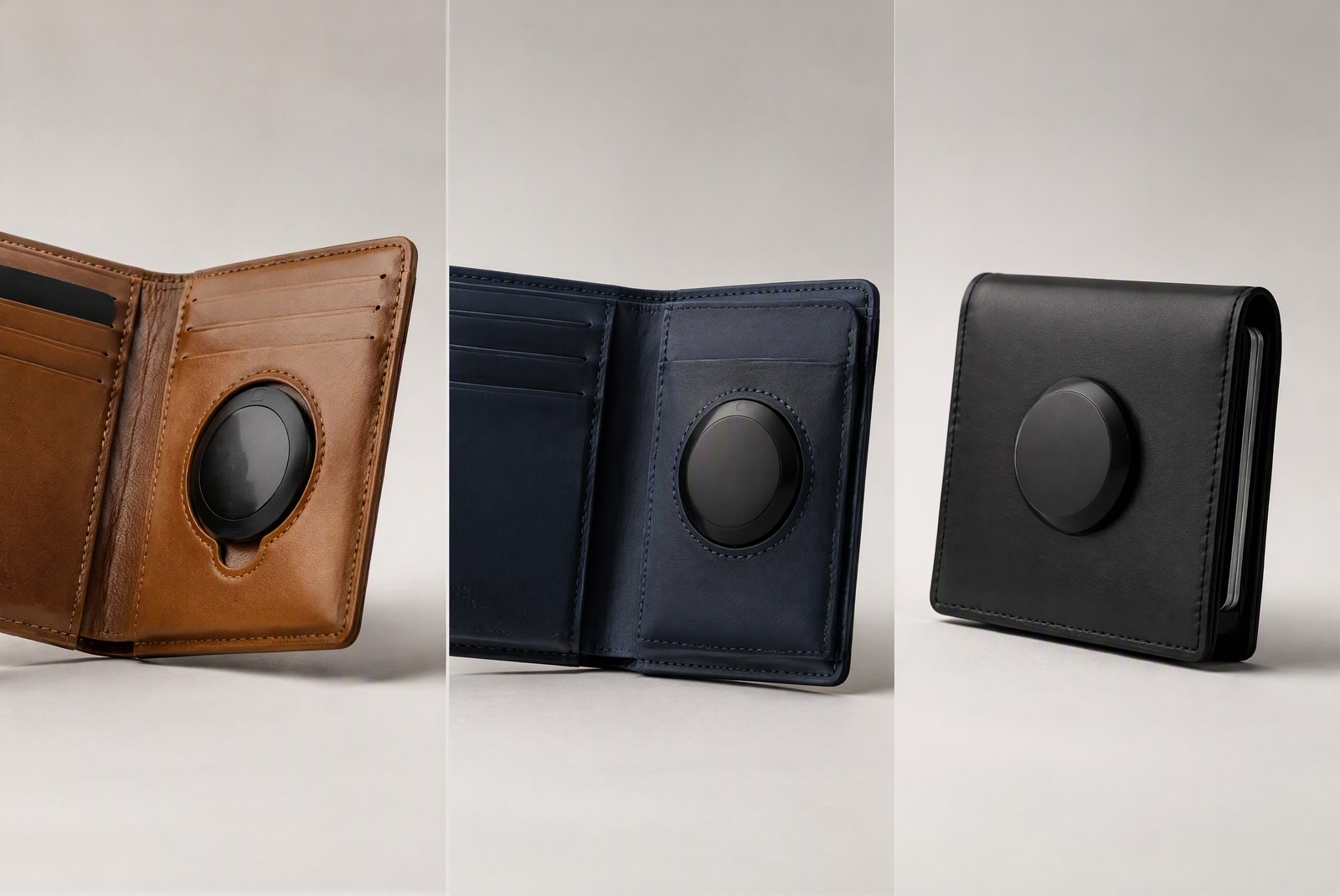
- Built-in slot. The wallet body is shaped around the tag, so the AirTag sits flat and protected. Thickness grows by roughly the tag's 8.0 mm in that zone; most designs land around 12-16 mm total (estimate) [1].
- Sewn pocket / sleeve. A fabric or leather pocket holds the tag like a card. It fits more wallet styles and keeps the tag inside, but the tag can shift and the wallet gets thicker by the tag plus the pocket material (estimate) [1].
- Magnetic holder. The tag clips to the outside or inner flap. Your wallet's card capacity does not change, but the tag protrudes 8.0 mm and is the most exposed to impacts (estimate) [1].
- Tracker-card slot. A credit-card-size tracker (Ridge Tracker Card, Ekster Tracker Card) replaces the AirTag in a normal card slot. Almost zero added thickness, but network-only tracking without UWB precision [3][4].
How Much Thicker Does an AirTag Make a Wallet?
Thickness is the first question most buyers ask, so here is the math with official numbers where they exist and labeled estimates elsewhere.
| Layer | Thickness | Note |
|---|---|---|
| AirTag (official) | 31.9 mm diameter × 8.0 mm high, 11.8 g | Apple's published tech spec [1] |
| Typical front-pocket card wallet | ~6-12 mm | Estimate across mainstream designs (per our research) |
| Built-in-slot wallet with AirTag | ~12-16 mm | Estimate (per our protocol): wallet body + 8.0 mm AirTag zone |
| Wallet with magnetic AirTag holder | Stack unchanged; tag adds 8.0 mm outside | Estimate [1] |
| Wallet with tracker card | ≈ one credit card added | Typically under ~2 mm; per-brand specs vary [3][4] |
Measurement note: The AirTag row uses Apple's official figures [1]. Wallet thicknesses are estimates because no brand publishes a single "wallet thickness" number that covers every model and material. Combined figures assume the tag sits flat rather than at an angle.
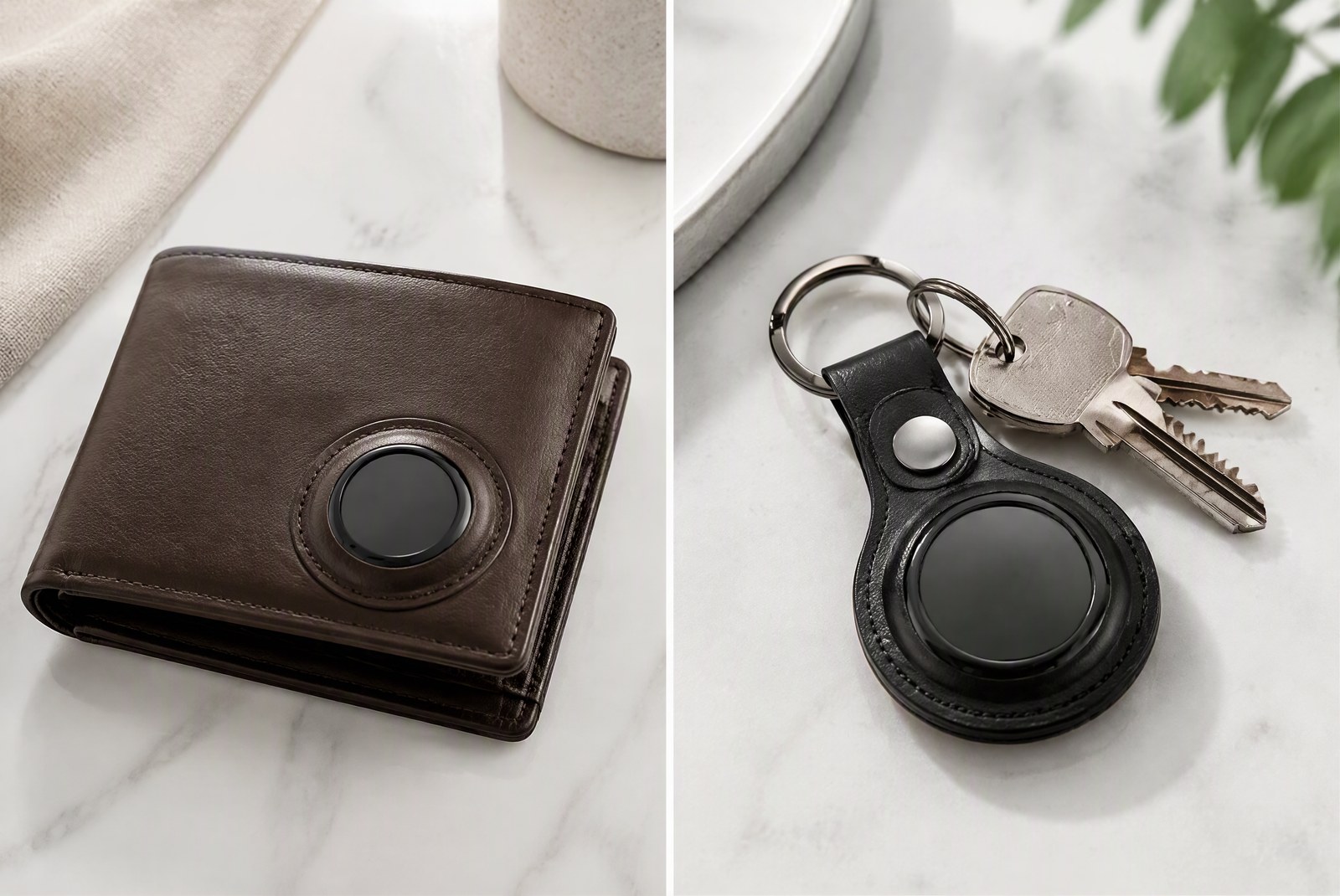
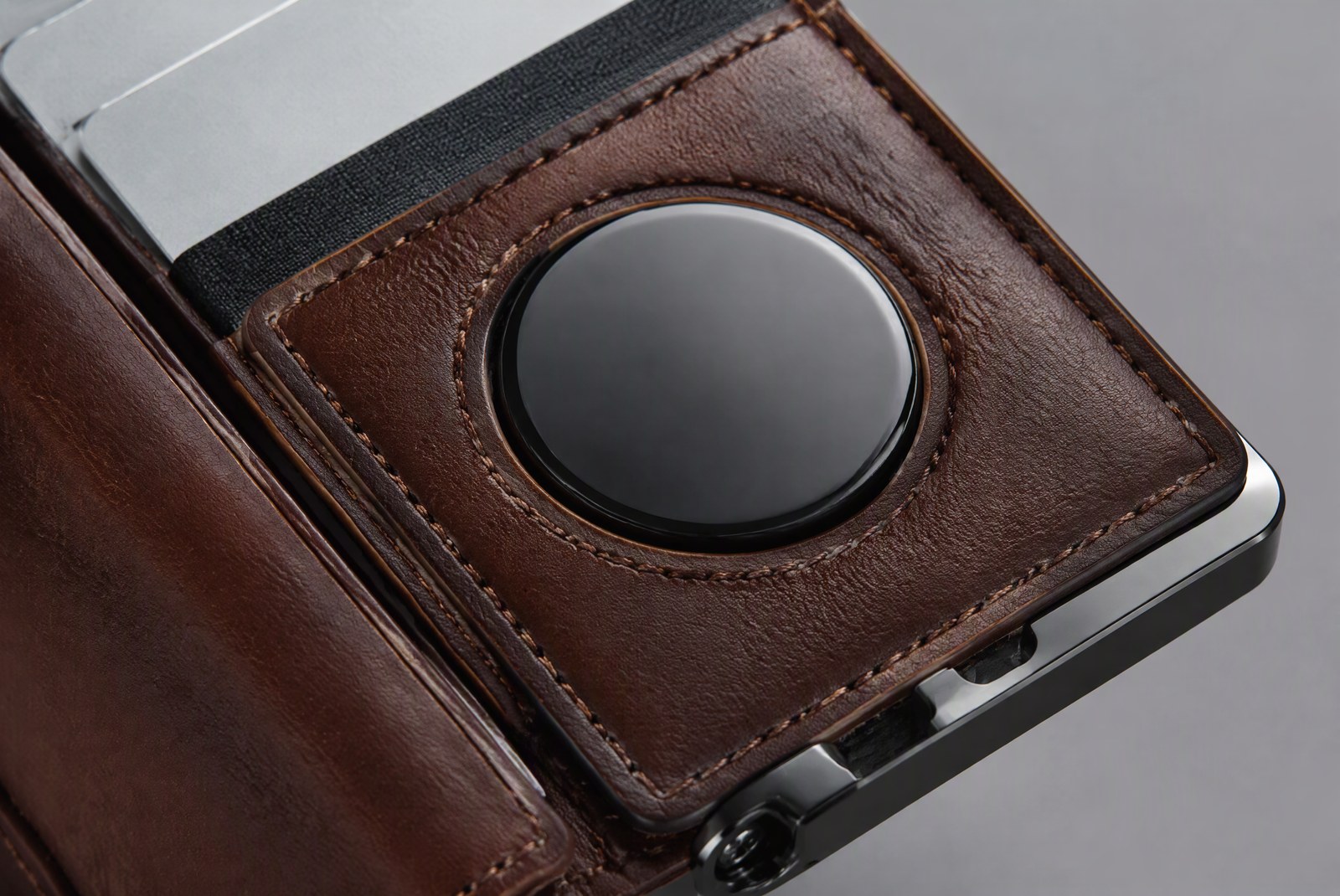
The materials change the same math. A rigid wallet (aluminum, titanium, carbon fiber, or structured leather) holds the tag's 8.0 mm in a defined pocket; a soft bifold can bulge instead of pocketing the tag [2][7]. TOPWALLET builds its AirTag-compatible line with 6061-T6 / 7075-T6 aluminum, TC21 / Gr5 titanium, 3K carbon fiber, full-grain leather, 304/316L stainless steel, and rare-earth magnets, so the tag sits in a precision pocket rather than a stretchy gap [2][7].
Battery: CR2032 Life and Replacement in a Wallet
Per Apple's published testing, the AirTag runs for more than a year on everyday use from a user-replaceable CR2032 coin cell [1]. Sliding that tag into a wallet, three things matter beyond the official figure:
- Replacement access. iPhone warns you when the battery is low; you twist the tag's back cover off and swap the cell. A built-in slot makes that easy, while a sewn pocket can mean unthreading the tag first [1].
- Water and dust. The AirTag is IP67 rated (1 meter for up to 30 minutes), which is more than a wallet ever needs, but a sealed pocket adds a second layer of protection [1].
- Tracker cards are different. They do not use a CR2032: Ridge Tracker Card recharges wirelessly (Qi/MagSafe), and Ekster Tracker Card uses a replaceable battery of its own — check each brand's page for its cycle [3][4].
Tracking Precision: When UWB Helps and When the Network Takes Over
There are two distinct "find it" modes, and wallets use both at different ranges [1]:
- Nearby — Precision Finding with Ultra Wideband. When the AirTag is within range, your iPhone leads you with distance and direction using UWB. Apple's current generation extends this range further than before, which matters for "the wallet is in this room" moments — in a sofa, a car, or a bag [1].
- Far away — the Find My network. When the tag is out of range, nearby Apple devices relay its last position anonymously. Apple does not publish a fixed distance for this: the practical range is "however many Find My devices the tag passes," which is why lost wallets at airports and offices are the network's strongest case [1].
- Lost Mode and sound. You can enable Lost Mode so a contact message shows when someone taps the tag with an NFC phone, and the built-in speaker plays a sound on demand to pinpoint it by ear [1].
Privacy and Anti-Tracking: What AirTag Does Automatically
Apple builds anti-stalking protections into AirTag, and they work in a wallet context as well [1]:
- Unknown-tag alerts. If an AirTag that is not yours travels with you, your iPhone — or an Android phone — alerts you, and the tag eventually plays a sound if the owner stays away [1].
- Your location stays private. Only you can see where your AirTag is; relaying devices stay anonymous, location data is encrypted, and Apple states even it does not know the AirTag's location or the identity of the helping device [1].
- Practical reading for wallets. In practice, a wallet AirTag behaves normally around friends or on a crowded train — alerts only trigger when a tag is separated from its owner [1].
FAQ
How to attach an AirTag to a wallet?
Slide it into the dedicated slot. Do not tape it; the slot is sized precisely for it.
How thick is an AirTag?
8 mm thick, 32 mm diameter. Roughly the same as two stacked credit cards.
How to put an AirTag in a wallet?
Open the wallet, slide into the sized slot. Most AirTag wallets have a dedicated compartment.
How to add an AirTag to a wallet?
If your wallet has no slot, use a metal AirTag holder that clips into a standard card slot.
How to attach Apple AirTag to wallet?
Use the built-in slot, or a belt/loop accessory if the wallet lacks one.
How does an AirTag in a wallet work?
It works exactly like an AirTag anywhere else: the tag broadcasts a Bluetooth signal, nearby devices in the Find My network relay its location, and your iPhone shows it on a map — while UWB precision finding guides you when you are close [1]. The wallet's only job is to carry the tag securely.
How far can an AirTag track?
Apple does not publish a fixed range. Nearby, Bluetooth and UWB precision finding work within their wireless range; farther away, the Find My network relies on the more than one billion Apple devices that can detect the tag and relay its location [1].
How long does the AirTag battery last in a wallet?
Apple's figure is more than a year of everyday use from the standard CR2032 cell [1]. That rating does not change once the tag sits inside a wallet — what differs is reachability: a tight card slot makes the coin-cell swap more fiddly than a dedicated tracker card.
Does an AirTag in a wallet cause back pain or too much thickness?
The AirTag alone is 8.0 mm thick, and built-in designs typically land around 12-16 mm total (estimate), so a firm stack is possible [1]. If a firm back-pocket sit bothers you, switch to front-pocket carry or a card-shaped tracker with almost no added thickness [3][4].
AirTag vs tracker card in a wallet: which one should I pick?
Choose the AirTag for UWB precision, easy battery replacement, and the full Find My feature set [1]. Choose a tracker card for flatness and stealth; it trades precision for a credit-card profile and needs its own charging or battery schedule [3][4]. EDC users who sit a lot usually prefer the card, travelers who want directional guidance prefer the AirTag.
Is it safe to carry an AirTag in a wallet?
Yes. The AirTag is IP67 rated, runs over a year on a CR2032, and Apple's anti-tracking alerts are built in, so carrying one in a wallet slot is a standard use case [1].
Where to Buy
Subscribe for new AirTag wallet drops — join our newsletter on our site to get notified when new built-in-slot models land [2].
Shop AirTag-compatible wallets or request a wholesale quote through TOPWALLET's contact page for B2B quantities [2].
Related Reading
REQUEST A QUOTE → Tell us your spec and order volume. Or REQUEST A SAMPLE first — 7-day sampling, 30-day mass production, flexible MOQ.
Sources
- Apple AirTag — Official tech specs and feature descriptions: dimensions and weight, CR2032 battery life, UWB Precision Finding, Find My network, Lost Mode, IP67, and anti-tracking safeguards.
- TOPWALLET — Official site of the B2B wallet manufacturer; AirTag-compatible wallet category, newsletter, and contact/quote route.
- Ridge — Official source for Ridge Wallet specs and the Ridge Tracker Card referenced in the tracker-card comparison.
- Ekster — Official source for the Ekster Tracker Card and tracker-slot wallet designs.
- GSTAR — Factory brand behind TOPWALLET; material and manufacturing data referenced in the construction section.
From article to product
Turning this into a product?
Most of what is written here is the difference between a sample that works and one that does not. We can build either — the useful one costs the same.
Keep reading
More on buying guides
Best Men’s Card Wallet: B2B Buyer’s Selection Guide 2026
Compare materials, RFID specs, and certifications for men's card wallets. Get procurement-ready guidance on…
ReadBest Bifold Wallets for Bulk Orders — B2B Procurement Guide
Compare materials, specs, certifications, and customization options for bulk bifold wallet sourcing. Learn what…
ReadSale Wallets Women — Bulk Sourcing Guide for Buyers
Find what women's wallets are selling well in bulk — materials, RFID specs, certifications,…
Read
About the author
Wu, Leon
Leon Wu is the senior product engineer and EDC testing lead at TOPWALLET. He has spent more than a decade on wallet design-for-manufacture, materials and quality control at the company's Dongguan facility, and writes from bench testing, pull-force and 13.56 MHz shielding measurements rather than supplier spec sheets.
Written on the floor
This article was written by our production and QC team — the people who spec tolerances, run the finishing line and inspect every batch. Where it states a capacity, a pull force or a lead time, it comes from a measurement we made, not a supplier’s catalogue. If a number here disagrees with what your own supplier told you, tell us; several of these articles started as a correction from a buyer.
See how the factory works · Inspection process · Sourcing FAQ
Turning this into a product?
Most of what is written here is the difference between a sample that works and one that does not. We can build either — the useful one costs the same.