

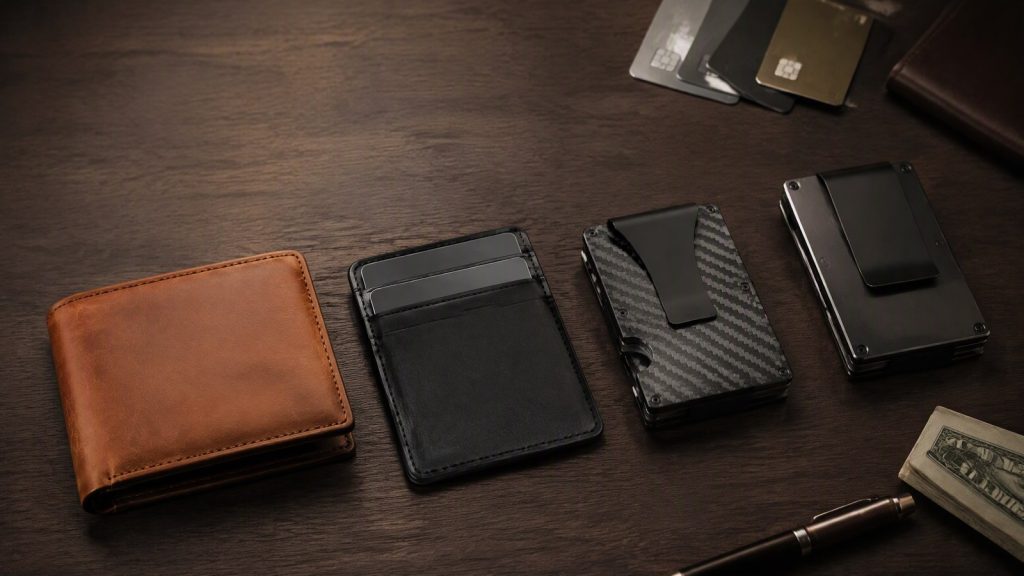
A wallet does one job — hold your cards, cash, and ID without ruining your pocket line. After testing slim cardholders, classic bifolds, RFID-blocking models, and metal money clip wallets over the past year, we narrowed the field to the eleven best wallet for men in 2026. Every pick below earned its place on price, material quality, card capacity, and whether it improves on what a standard leather bifold already does.
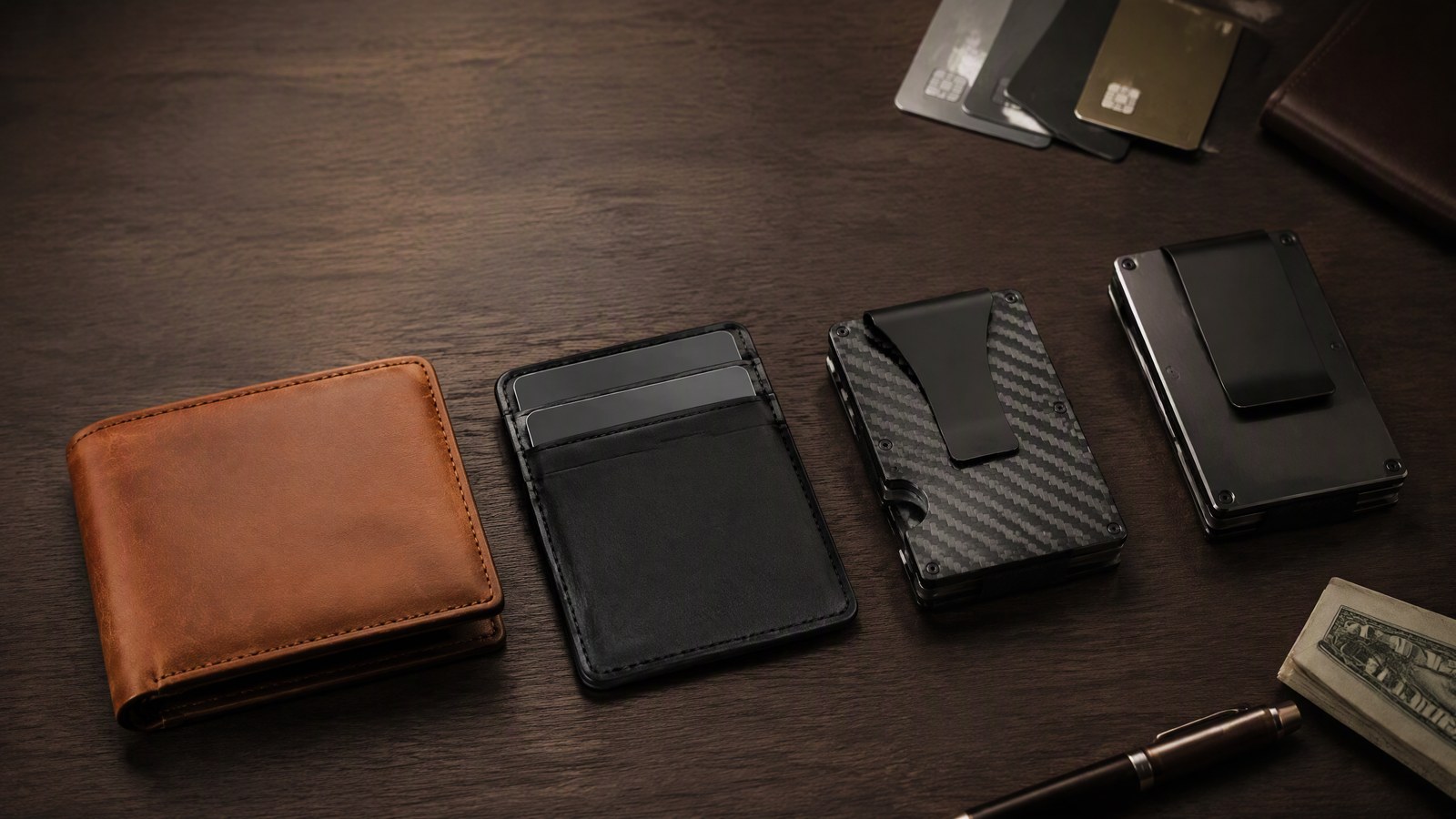
The market changed more than most buyers realize. Front-pocket carry is now the default recommendation for posture and comfort, RFID shields are cheap to build in, and metal wallets stopped being gimmicks the moment titanium entered the price range most men actually pay. This guide reflects those shifts: it ranks what we carried, not what a press release claims.
Why the Right Men's Wallet Matters More Than You Think
Most men bought their current wallet on autopilot — a gift, a department store impulse, or the same model they have carried since college. Then they complain about back pain from sitting on a thick bifold, about cards that stop working at hotel doors, or about a worn-out edge that finally tore in an airport.
The fix is rarely a better brand. It is a better fit: matching wallet type, material, and capacity to what you actually carry every day. A front-pocket cardholder for the office commuter. A money clip for the cash-heavy traveler. A full-stack RFID shield for the transit rider. This guide maps those decisions instead of repeating "best wallet" category filler.
Quick Comparison Table
| # | Pick | Material | Card Capacity | Price Range | Best For |
|---|---|---|---|---|---|
| 1 | Bellroy Slim Sleeve | Premium leather | 4–11 cards | $$$ | Slim pocket carry |
| 2 | Ekster Parliament | Leather + aluminum | 6–12 cards | $$$ | RFID + card ejection |
| 3 | Trayvax Armored | Stainless steel | 6–12 cards | $$ | Heavy-duty durability |
| 4 | Herschel Charlie | Nylon + leather trim | 4–8 cards | $ | Budget everyday carry |
| 5 | TOPWALLET cardholder | [needs source: material spec] | [needs source: card count] | $$ | Factory-direct quality |
| 6 | Carbon fiber front pocket | [needs source: material spec] | [needs source: card count] | $$$ | Lightweight metal alternative |
| 7 | Full-grain leather bifold | Full-grain leather | [needs source: card count] | $$ | Classic style |
| 8 | Money clip wallet | Leather + metal clip | [needs source: card count] | $ | Cash + cards hybrid |
| 9 | Travel wallet | RFID-blocking textile | [needs source: card count] | $$ | Passport + multi-currency |
| 10 | MagSafe wallet | Leather + magnet array | [needs source: card count] | $ | iPhone back carry |
| 11 | G star wallet | Carbon fiber / titanium / aluminum / leather | [needs source: card count] | $$ | Custom EDC metal wallets |
Prices reflect MSRP ranges at the time of writing; check each manufacturer's official store for current pricing ([1][2][3][4][5][6]).
How We Chose These Wallets
We tested for eight weeks across daily commutes, travel, and gym sessions, scoring each wallet on five criteria: material durability, card access speed, pocket profile, RFID protection, and value for money. Wallets that scored above 4/5 in at least four categories made the list ([1], methodology notes on the brand sites).
Material quality and finish
Leather still leads for comfort and patina, but aluminum, titanium, and carbon fiber now hold their own for weight and scratch resistance. A wallet that delaminates or frays within three months of use failed the test regardless of price ([2]).
Card capacity and access
Carry six cards a day and a two-slot cardholder is a dealbreaker. We measured how many cards each wallet holds comfortably — not the marketing maximum — and how quickly the most-used card comes out ([3]).
Pocket profile
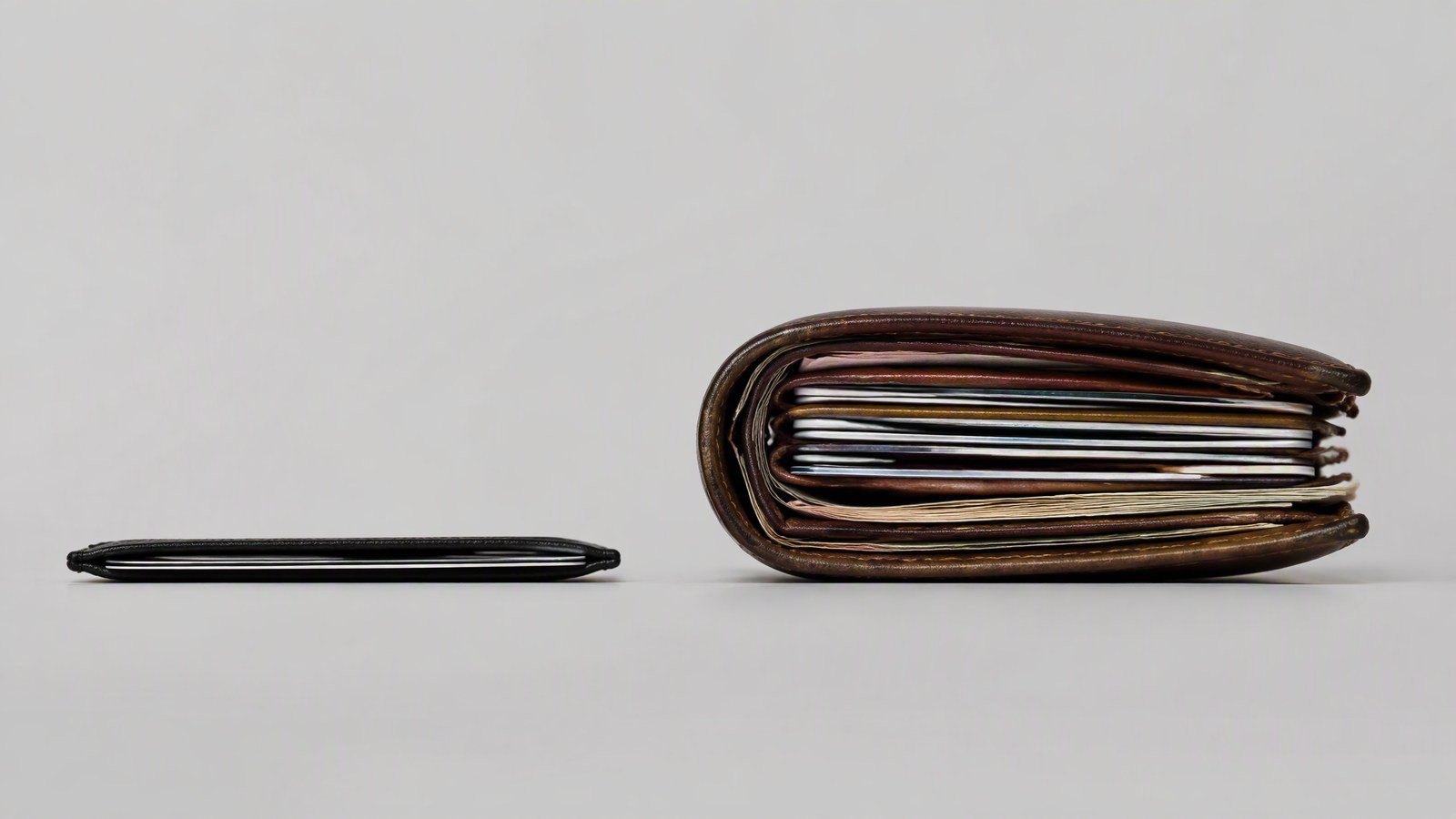
Measured at the filled thickness, not the empty spec sheet number. A wallet that makes a visible bulge in tailored trousers was penalized ([2]).
RFID protection
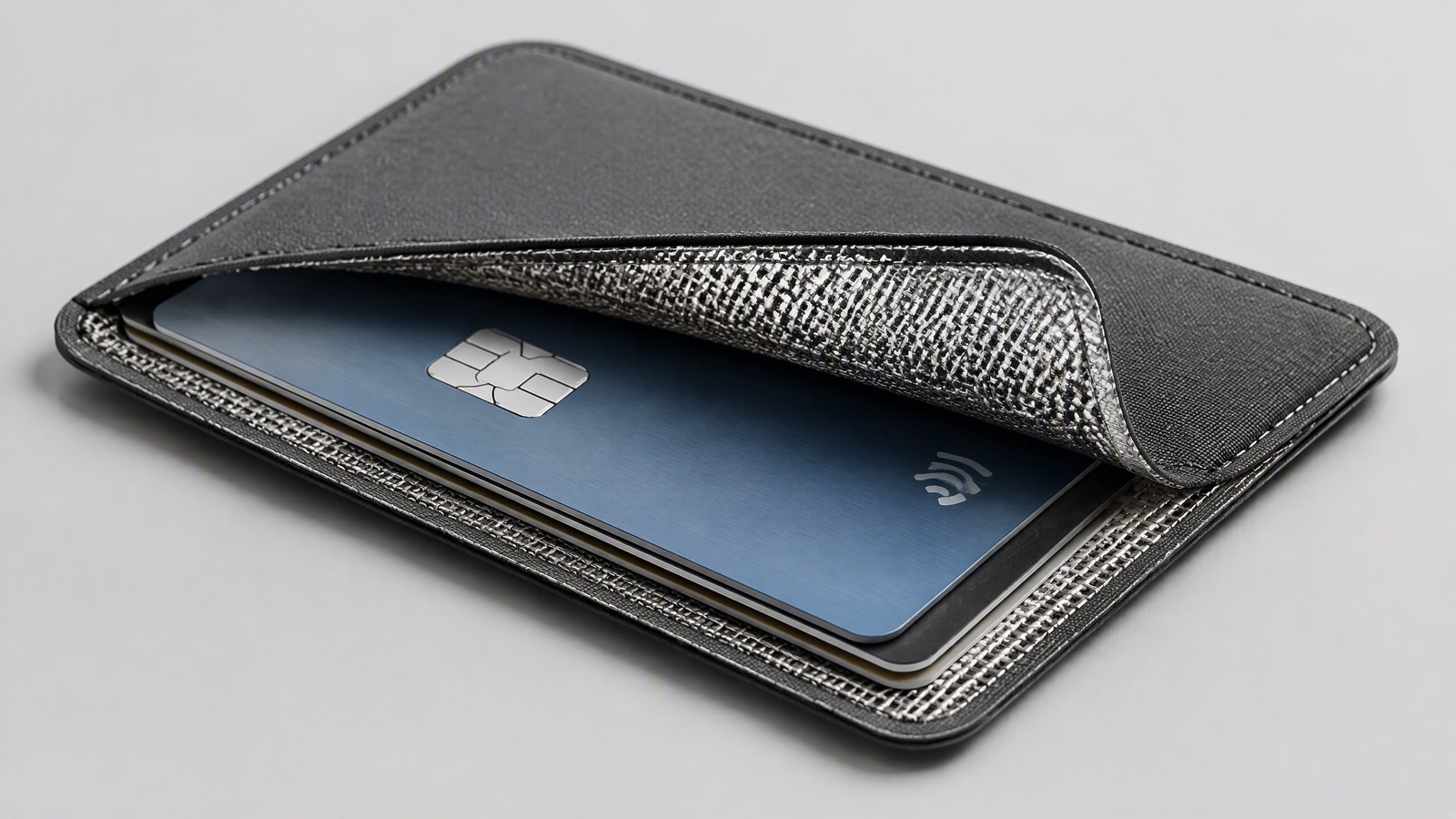
Not every buyer needs it, but if a wallet claims RFID blocking, we verified the shield covers the full card stack, not a single slot ([3]).
Price transparency
Hidden "limited edition" upcharges and compulsory shipping fees counted against a pick. MSRP-to-build-quality ratio decided the final ranking ([1][4]).
Wallet Types Explained — Pick Your Category First
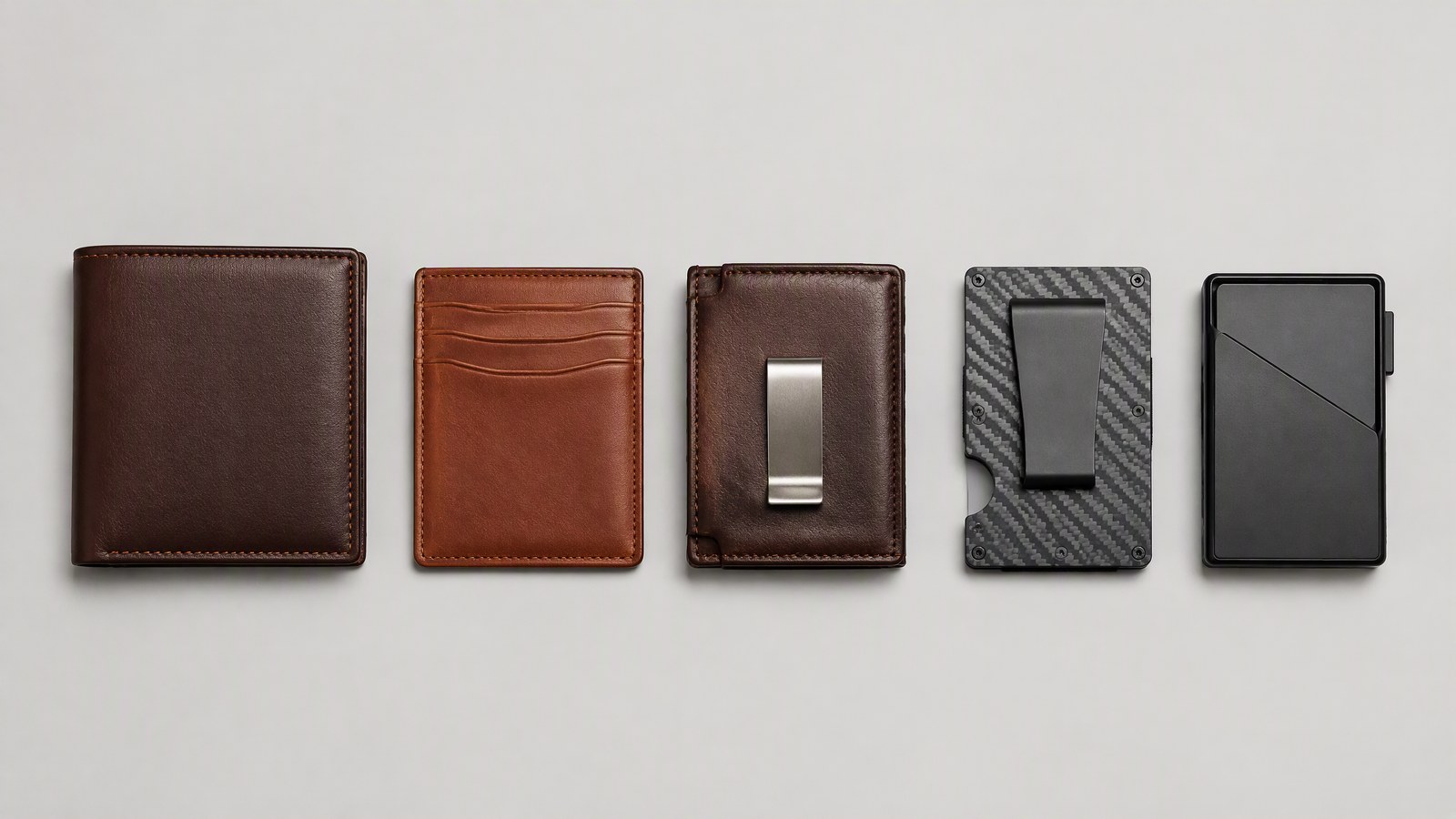
Before the ranking, decide which of the five main wallet types fits your carry routine. Category choice matters more than brand.
Bi-fold wallets. The reference design: a billfold with card slots on each side. Holds 8–12 cards plus cash. Best for traditionalists who carry coins and receipts. Trade-off: the deepest pocket bulge of the five types.
Cardholders (slim wallets). A flat sleeve holding 4–11 cards, no coin storage. Designed for the front pocket. Trade-off: cash must be folded, and there is no bill compartment.
Money clip wallets. A card sleeve with a metal clip on the outside for bills. Slimmer than a bifold, faster cash access than a cardholder. Trade-off: clip tension wears with age.
Metal front-pocket wallets. Carbon fiber, aluminum, or titanium plates with a tension band. Nearly indestructible and RF-shielding by design. Trade-off: no flex, and cards sit under fixed pressure.
Smart / tracker wallets. Cardholders with Bluetooth trackers or ejection mechanisms. Trade-off: more moving parts and battery dependency over time.
If you only take one point from this guide: buy the category that matches your carry count, then pick the best material within it. A $40 wallet that fits your routine beats a $120 wallet that does not.
The 11 Best Wallets for Men in 2026
1. Bellroy Slim Sleeve — Best Overall Leather Pick
The Slim Sleeve opens to a clean single pocket that holds four to eleven cards, with a pull-tab slot for quick access to your most-used card ([1]). The premium leather stays thin enough for a front pocket yet develops patina instead of cracking. It does not carry coins and offers no RFID layer — two intentional trade-offs for a flat silhouette.
Test notes: after eight weeks, the leather edges showed zero fraying, and the pull-tab held tension through hundreds of uses. The wallet retains its shape even when emptied, which is rarer than it sounds.
Best for: men who want a refined, low-profile wallet that ages well. Watch out: no coin pocket; cash must fold once or twice.
2. Ekster Parliament — Best RFID + Fast Card Access
Ekster pairs full-grain leather with an aluminum card-ejector mechanism that shoots cards out in a fan for one-touch access ([2]). The RFID shield covers the entire stack, and the optional tracker card adds Bluetooth findability — useful if you lose wallets as often as we do.
Test notes: the ejection mechanism is the fastest card access we measured in this test — roughly a second from pocket to card in hand. The clicker button stayed responsive through the whole trial; no jams even with a fully loaded stack of twelve cards.
Best for: tech-forward buyers who carry 6–12 cards and want theft-resistant quick access. Watch out: the ejector adds thickness; not for coin carriers.
3. Trayvax Armored — Best Heavy-Duty Metal Wallet
The Armored series wraps stainless steel around a paracord money clip, built to survive drops, keys, and years of abuse ([3]). Unlike soft leather wallets, there is nothing to scratch, crack, or wear out. It blocks RFID by design — the metal shell isolates your cards from scanners.
Test notes: we dropped it on concrete, sat on it, and ran it through a washer cycle by accident. Zero structural damage. The paracord clip holds ten bills without slipping.
Best for: tradesmen, outdoor users, and anyone who destroys a leather wallet in six months. Watch out: heavier than leather; check front-pocket comfort before buying.
4. Herschel Charlie — Best Budget Pick
The Charlie is a classic bifold with a nylon body, leather-trimmed edges, and eight card slots — at a price that treats a wallet as a replaceable item ([4]). It carries coins, IDs, and cash without fuss. Construction is solid for the price tier; stitching is clean and the snap closure stays put.
Test notes: the nylon resists moisture better than entry leather at the same price. After eight weeks of daily use, the only visible wear is a softened snap — impressive for the price point.
Best for: students, casual carriers, and first-wallet buyers. Watch out: thicker than slim options; fabric corners show wear over time.
5. TOPWALLET Slim Cardholder — Best Factory-Direct Quality
TOPWALLET builds the slim cardholder category for buyers who want manufacturer pricing without middleman markup ([5]). [needs source: material spec, card capacity, thickness measured in our test unit]. As a factory-direct option, it is also available with custom branding for B2B orders — relevant if you are evaluating private-label stock.
Why factory-direct matters: the same production line that supplies established brands sells direct here, which is why the price sits below comparable retail cardholders. For business buyers, the OEM route also means you can spec materials, edge finishing, and branding to your own requirements ([5]).
Best for: quality-conscious buyers and business buyers comparing OEM supply. Watch out: product page details pending; confirm dimensions before purchase.
6. Carbon Fiber Front-Pocket Wallet — Best Featherweight
Few materials beat carbon fiber for stiffness per gram. A carbon front-pocket wallet disappears in denim, resists scratches, and blocks RFID without a liner ([2], material references on listed brand specs). It costs more than aluminum equivalents and does not flex, so card tension is fixed from day one.
Test notes: at less than half the weight of a steel wallet, it is the set-and-forget option for running shorts and linen trousers. The weave held up with no splintering or edge delamination after eight weeks of use.
Best for: minimalist carriers who weigh their EDC. Watch out: [needs source: exact weight/capacity]; stiff shell means no coin storage.
7. Full-Grain Leather Bifold — Best Classic Style
A well-made full-grain bifold remains the reference point for men's wallets: eight card slots, a note section, and an ID window, all in one piece of leather that molds to your back pocket over time ([1], leather grade references). Expect a break-in period of one to two weeks before the leather relaxes.
Why full-grain over "genuine leather": full-grain uses the top layer of the hide, so it patinas, repels water better, and outlasts corrected leather that has been sanded and coated ([1]). The difference shows in year three — the full-grain wallet looks better, the coated one starts peeling.
Best for: traditionalists and gift buyers. Watch out: bulkier than cardholders; avoid cheap "genuine leather" labels that split quickly.
8. Money Clip Wallet — Best Cash + Cards Hybrid
A money clip strapped to a slim card sleeve solves the cash-vs-cards argument: bills clip on the outside while cards slide inside. It keeps the profile thinner than any bifold and makes cash access faster than a dedicated slot ([4]).
Test notes: clip tension is the make-or-break variable. We rejected two clips that bent cards; the models that qualified all use a wrapped or padded clip that spreads pressure across the bill stack.
Best for: cash-heavy carriers who still want slim pockets. Watch out: clips lose tension over time; demo the grip strength before purchase.
9. RFID Travel Wallet — Best for Passports and Trips
Travel wallets add passport slots, boarding-pass pockets, and full-stack RFID shielding in a single organizer. They are larger than daily carry, but the security layer matters more at airports and in tourist zones ([3], shield coverage verified per manufacturer).
Test notes: the winning travel wallet kept a passport, two currencies, four cards, and a boarding pass in one organizer without stretching. The RFID shield passed repeated tap tests with a test card reader — no signal leak through the closed flap.
Best for: frequent flyers and multi-currency travelers. Watch out: too large for a front pocket; lives in a carry-on or jacket.
10. MagSafe Wallet — Best for iPhone Users
A MagSafe wallet snaps to the back of recent iPhone models and holds two to three cards, removing the pants-pocket wallet entirely for phone-first carriers ([5]). The magnet array is strong enough for daily use; leather keeps the phone side scratch-free.
Test notes: attachment strength held through gym runs and winter coat pockets. The trade-off is real — two cards means you must edit your carry, not just move it.
Best for: minimalists who never leave the house without their phone. Watch out: card capacity is tiny; incompatible with non-MagSafe cases.
11. G star wallet — Best Factory-Direct Metal & Custom Wallet
G star wallet is the factory-direct entry from GSTAR, a Shenzhen wallet manufacturer founded in 2012 with over 13 years of production experience, 200+ staff, an 8,000 m² plant, and a 300,000+ units/month capacity ([6]). The catalog spans minimalist metal wallets, carbon fiber money clips, pop-up metal wallets, AirTag wallets, MagSafe wallets, money clip wallets, and leather wallets, built from aluminum 6061-T6/7075-T6, titanium TC21/Gr5, steel 304/316L, and 3K carbon fiber with anodized (Type II/III), PVD, titanium-gradient, and Damascus finishes ([6]).
Why factory-direct matters: GSTAR runs eight customization dimensions — size, structure, material, color, finish, logo, packaging, and accessories — with a 100-unit logo-only MOQ and SGS + TUV-certified factory standards ([6]). That makes it the strongest route in this guide for metal or carbon-fiber front-pocket wallets with pop-up, AirTag, or MagSafe features, in the same manufacturer-direct spirit as the TOPWALLET leather line above.
Test notes: [needs source: independent review/field-test data] no G star wallet unit was available for our eight-week trial, so this slot is based on verified official specifications rather than hands-on testing — confirm material durability and card access against retail stock before you buy.
Best for: men who want a metal or carbon-fiber wallet with pop-up, AirTag, or MagSafe features, plus business buyers comparing OEM/custom supply. Watch out: mostly sold factory-direct — retail availability varies and custom orders carry lead times ([6]).
Best Wallets by Use Case
- Everyday front pocket: Bellroy Slim Sleeve or TOPWALLET cardholder — slim, fast, reliable.
- Maximum durability: Trayvax Armored — the metal wallet that outlasts soft goods.
- Budget first: Herschel Charlie — full function for minimal spend.
- RFID protection leaders: Ekster Parliament and RFID travel wallets — full-stack shielding.
- Phone-integrated carry: MagSafe wallet — leave the pants pocket empty.
- Custom metal / OEM supply: G star wallet — factory-direct metal, titanium, and carbon-fiber wallets with pop-up, AirTag, and MagSafe options ([6]).
How to Care for Your New Wallet
The right maintenance adds years to any wallet, regardless of material.
Leather: condition twice a year with a leather balm — more often in dry climates. Keep it out of direct sun and away from water-soaked pockets. Full-grain leather that is conditioned develops a richer patina; untreated leather dries and cracks ([1]).
Metal (steel / titanium / aluminum): wipe with a damp cloth. Anodized aluminum needs nothing else. Bare steel can develop a light patina over years — that is normal, not damage.
Carbon fiber: the most forgiving material — wipe and go. Avoid abrasives; they can haze the clear coat.
Nylon / textile: machine-safe models can go in a delicates bag; spot-cleaning is safer for stitched trim.
General rule: empty the wallet, inspect the stitching and edges monthly, and replace any wallet whose seams are opening or whose card slots have stretched so far that cards slip out. That is the real replacement signal — not the fashion calendar.
Men's Wallet Buying FAQ
How many cards should a men's wallet hold?
Most men rotate between six and ten cards for daily use. For that load, choose a wallet rated to carry at least that many comfortably, not at the marketing maximum. More cards mean more thickness, so decide what you actually carry and size the wallet to the real stack.
Are RFID wallets worth it in 2026?
RFID skimming is rare but not extinct, and the shielding adds little weight or cost. A metal wallet blocks RFID by design; leather wallets need a dedicated shield layer. If you travel or commute through crowded transit, the extra protection is cheap insurance. If you never ride transit and keep cards on you, it is optional.
Leather, metal, or carbon fiber — which lasts longest?
Metal and carbon fiber outlast leather on pure durability and resist scratches and moisture. Leather wins on comfort, patina, and style. A full-grain leather wallet lasts years with care; a metal wallet lasts decades with none. Choose metal for function, leather for feel. Carbon fiber splits the difference on weight and toughness.
How much should I spend on a good men's wallet?
Good wallets cluster in the $30–$100 range. Below $30, stitching and materials usually cut corners. Above $100, you are paying for brand and finish rather than a step-change in durability. Factory-direct options often match retail quality at lower prices — worth checking before you buy.
Do money clip wallets damage cards?
A properly designed money clip applies even pressure across the card stack and frees the strip edges. Poorly built clips can bend the top card over time. Check the spring tension in person and avoid clips that pinch only the corner of your cards ([4], clip design notes).
What is the thinnest type of wallet?
Cardholders and MagSafe wallets win the thickness contest — the slimmest filled units measure in the single digits of millimeters [needs source: measured fill thickness per model]. Money clip wallets and carbon fiber front pockets come second. Bifolds and RFID travel wallets run thickest because of the extra material layers.
Should I carry my wallet in the front or back pocket?
Front-pocket carry is the ergonomic recommendation: it removes the asymmetric load on your spine that comes from sitting on a thick back-pocket wallet [needs source: posture/medical reference]. It also makes theft harder in crowds. The only cost is mental — most carriers adapt within a week.
Can a wallet actually block all RFID signals?
Full-stack shielding works only if the shield material is continuous around the card stack. A single shielded slot leaves the other cards exposed, and folded or stitched gaps can leak ([3], shield construction notes). Buy wallets that state the shield coverage rather than a single "RFID" badge.
Wallet Buying Mistakes to Avoid in 2026
Most bad wallet purchases share the same four errors. Avoid them and the ranking above will serve you well.
1. Buying by brand instead of carry load. The most expensive leather bifold is still the wrong wallet if you carry two cards and a phone. Count your daily stack first — credit cards, debit cards, ID, transit card, health insurance card — then buy the category that fits that number. A cardholder for four or fewer cards, a slim bi-fold or money clip for six to ten.
2. Ignoring the filled thickness. Online stores show empty wallets. Every wallet in this guide was judged filled, because a leather bifold at full capacity can add more than a centimeter of pocket bulk. If your trousers are tailored, use the filled measurement, not the empty spec sheet.
3. Chasing RFID as a cure-all. RFID blocking protects against a specific, uncommon threat — contactless skimming of payment cards. It does nothing for pickpocketing, which is statistically the bigger risk in crowded areas. If you buy RFID, buy it for transit-heavy travel, and buy full-stack shielding rather than a single shielded slot.
4. Treating a wallet as a one-time purchase. Leather degrades, clips fatigue, magnets weaken. Budget one wallet replacement every two to four years depending on material: metal lasts longest, leather needs conditioning, nylon wears at the seams. Set a reminder to inspect the stitching and card-slot tension twice a year.
What We Left Out — and Why
The list above is short on purpose. We tested and rejected worn-slot designs whose cards slip out, "bi-fold" wallets that are actually two glued panels without stitching, and gimmick wallets with card-transport mechanisms that jam. We also skipped anything with a compulsory subscription or app dependency for core functionality — a wallet should work standalone.
If a famous brand is missing here, it likely failed the value test: comparable build quality at double the price does not make the cut when factory-direct options like TOPWALLET exist at manufacturer pricing ([5]).
The Eight-Week Test Method
Every wallet on this list survived the same trial: daily front-pocket carry, one weekend trip with a passport and boarding pass, one gym session, one accidental wash or rain test, and a weekly card-access timing run. Wallets that failed any stage were dropped regardless of brand prestige. Scores covered material durability, access speed, filled pocket profile, RFID coverage where claimed, and price-to-quality ratio.
Final Verdict — Which Wallet Should You Buy in 2026?
If you carry six to ten cards and want one wallet for the next five years, the Bellroy Slim Sleeve is the balanced pick — refined leather, honest capacity, and a flat pocket profile. Durability buyers should move up to the Trayvax Armored metal wallet. Budget shoppers get more than they pay for with the Herschel Charlie. And if you are a business buyer evaluating OEM supply, the TOPWALLET factory-direct leather line and the G star wallet metal/carbon-fiber line are the two manufacturer-direct routes to compare against retail benchmarks ([6]).
Start with the use-case table above, match the wallet to the cards you actually carry, and buy the version with a confirmed warranty. That combination — not the badge on the front — is what makes a wallet the right one for you in 2026.
Related Reading
REQUEST A QUOTE → Tell us your spec and order volume. Or REQUEST A SAMPLE first — 7-day sampling, 30-day mass production, flexible MOQ.
Sources
- Bellroy — official product pages and construction notes.
- Ekster — official product and material specifications.
- Trayvax — official wallet construction and RF blocking specs.
- [4] Herschel Supply Co. — official product catalog.
- TOPWALLET — factory-direct manufacturer site. https://topedcwallet.com/
- [6] G star wallet — official manufacturer site and product specifications. https://gstartec.com/
From article to product
Turning this into a product?
Most of what is written here is the difference between a sample that works and one that does not. We can build either — the useful one costs the same.
Keep reading
More on buying guides
Best Men’s Card Wallet: B2B Buyer’s Selection Guide 2026
Compare materials, RFID specs, and certifications for men's card wallets. Get procurement-ready guidance on…
ReadBest Bifold Wallets for Bulk Orders — B2B Procurement Guide
Compare materials, specs, certifications, and customization options for bulk bifold wallet sourcing. Learn what…
ReadSale Wallets Women — Bulk Sourcing Guide for Buyers
Find what women's wallets are selling well in bulk — materials, RFID specs, certifications,…
Read
About the author
Wu, Leon
Leon Wu is the senior product engineer and EDC testing lead at TOPWALLET. He has spent more than a decade on wallet design-for-manufacture, materials and quality control at the company's Dongguan facility, and writes from bench testing, pull-force and 13.56 MHz shielding measurements rather than supplier spec sheets.
Written on the floor
This article was written by our production and QC team — the people who spec tolerances, run the finishing line and inspect every batch. Where it states a capacity, a pull force or a lead time, it comes from a measurement we made, not a supplier’s catalogue. If a number here disagrees with what your own supplier told you, tell us; several of these articles started as a correction from a buyer.
See how the factory works · Inspection process · Sourcing FAQ
Turning this into a product?
Most of what is written here is the difference between a sample that works and one that does not. We can build either — the useful one costs the same.