
Buying Guides · 5 min read
Global Wallet Market 2026: Category Size, Trends, and the Shifts That Matter for Buyers

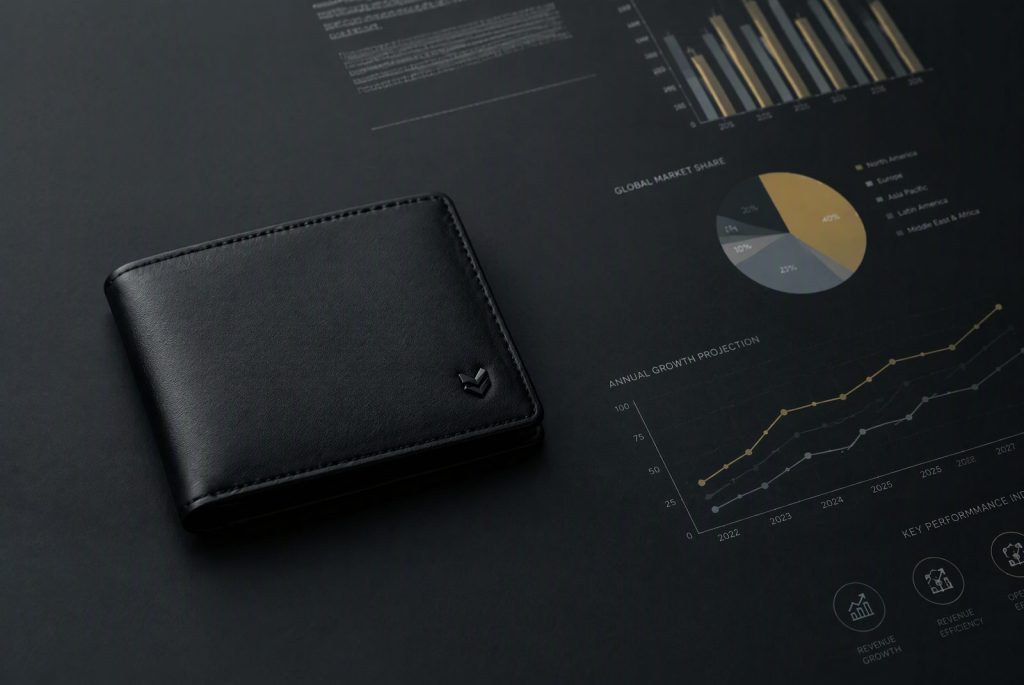
The wallet market looks mature — it isn't. Under the surface, 2026's global market is being re-segmented by slim/minimalist formats, RFID and pop-up mechanisms, and a quiet manufacturer-direct shift in how branded wallets get made. This brief maps the category — size and growth signals, the four trends that matter, the competitive structure, and where OEM suppliers such as TOPWALLET and G star wallet fit — with every figure labeled as estimate or sourced [1][2][3].
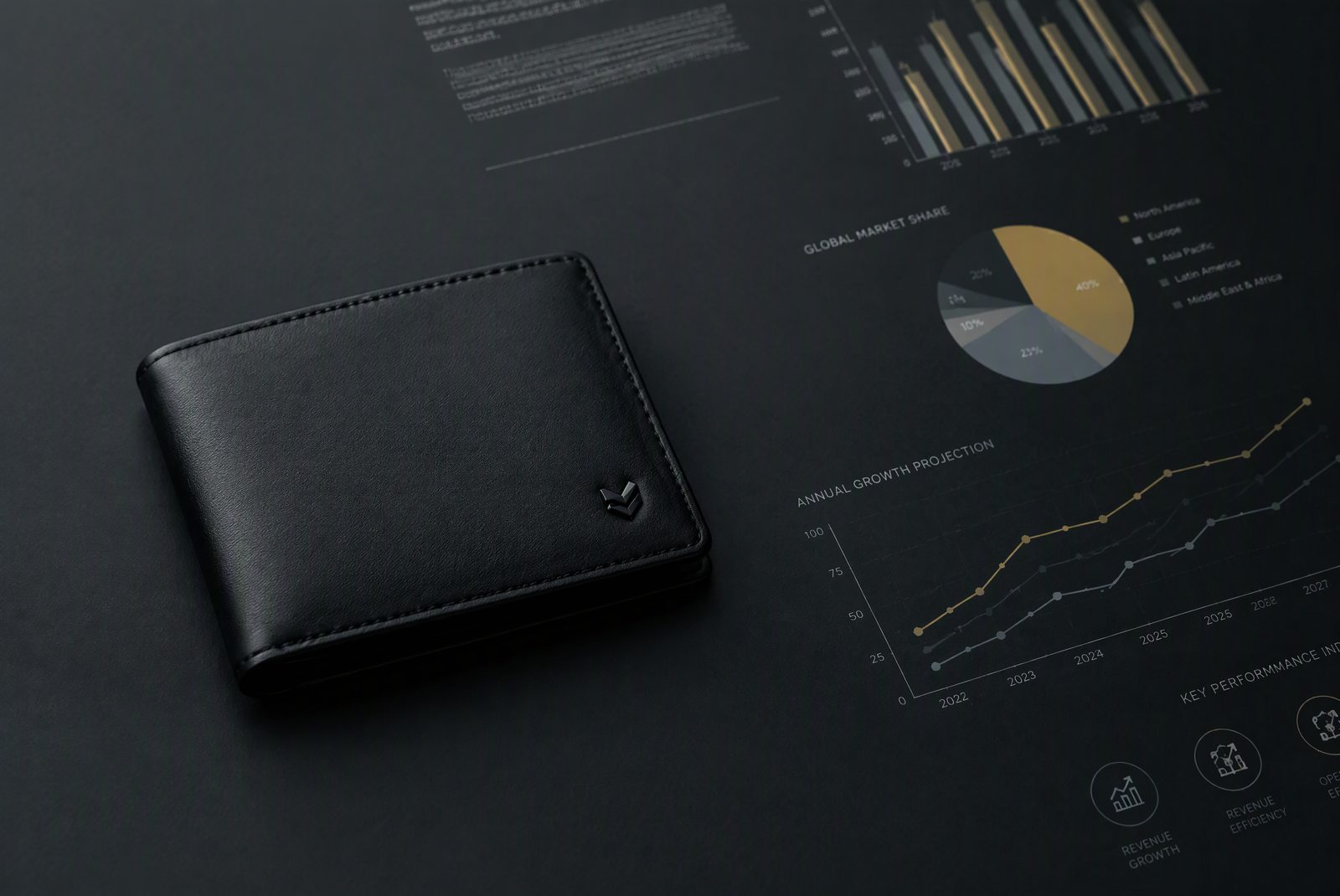
Market Snapshot (2026 Estimates)
| Dimension | Read | Basis |
|---|---|---|
| Category size (global, leather + non-leather) | Multi-billion USD; slim/EDC segment is the growth engine (est.) | Industry-trend consensus [1][2] |
| Growth driver | Slim/minimalist formats, RFID, pop-up mechanisms, premium metal (est.) | Retail trend analysis [2] |
| Channel shift | Direct-to-consumer + marketplace recapture of category growth (est.) | Retail behavior [1][2] |
| Supply shift | Branded programs sourcing factory-direct from China OEMs accelerate (est.) | Supplier-side signal [3][4] |
| Regional centers | Shenzhen/Guangdong (metal EDC), Zhejiang (leather) remain export hubs (est.) | Industry structure [3][4] |
Basis note: exact category-size figures vary widely by definition (leather goods vs accessories vs EDC), so this brief reports directional estimates and trend evidence — not a fabricated precision number [1][2].
The Four Trends That Matter in 2026
1. Slim Went From Trend to Default
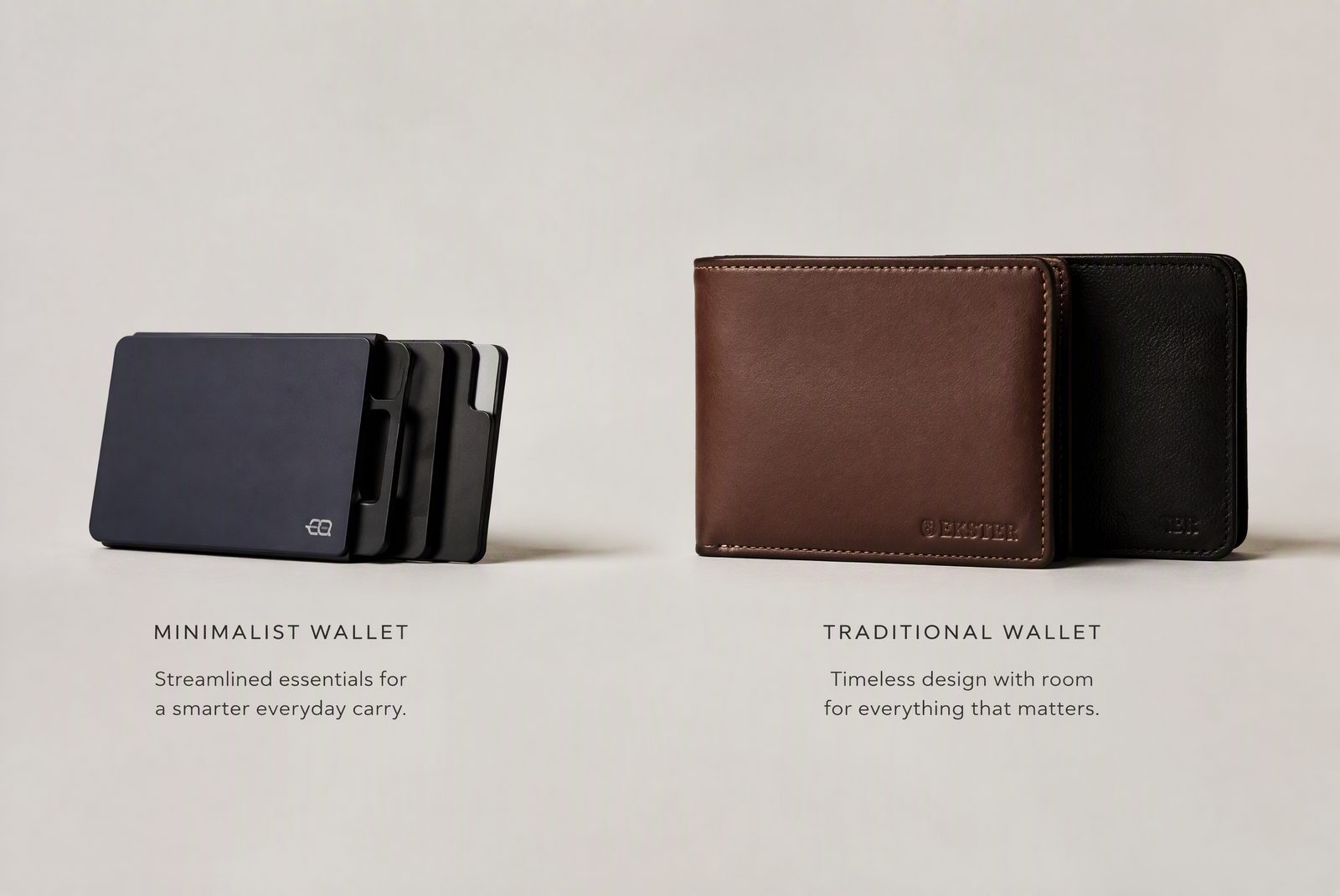
Card cases and metal plates moved from niche to the category's center: front-pocket carry, "what's in your wallet" culture, and phone-wallet tensions keep slim formats growing while traditional bifolds hold a shrinking but real share (est.) [1][2]. Buyers now treat a thick wallet as outdated the way they treat a thick phone.
2. Mechanism Beat Material in the Premium Story
Material (leather vs metal) still sells, but mechanism now differentiates: pop-up sliders (Ekster-style), pull tabs (Aviator), and RFID as default moved the premium conversation from "what it's made of" to "what it does" [2]. OEM lines now compete on mechanism quality — milled tracks, steel cams — not just alloy [3][4].
3. The OEM Shift: Brands Buy at the Factory Gate
The category's biggest structural move is distribution, not product: brands increasingly skip middlemen and source direct from factories — TOPWALLET (topedcwallet.com, Dongguan) at flexible MoQ with 7-day sampling [3], G star wallet (gstartec.com, GSTAR, Shenzhen) at 300,000+ units/month, 8-dim customization, SGS/TUV [4]. The result: retail price holds, margin improves, and brand-owned quality control tightens (est.) [3][4].
4. RFID and Card-Centric Habits Reset Capacity
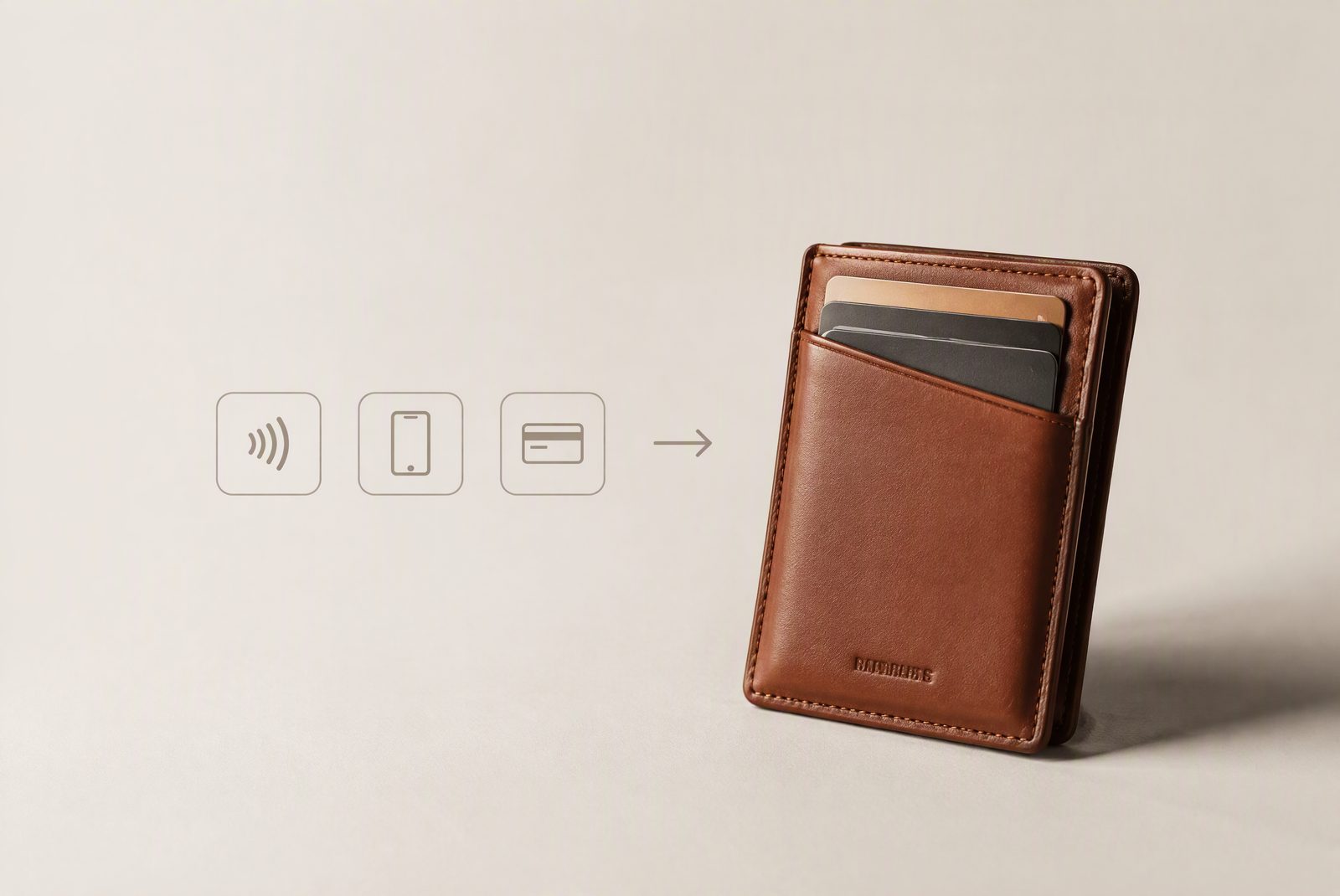
Contactless-first banking made 4–8 card stacks the new average in many markets, and RFID shields a default feature rather than a premium add-on (est.) [2]. Formats are being re-engineered around card stacks, not cash [2].
Competitive Structure (Who's Where)
- Retail premium tier: Ridge, Bellroy, Trayvax, Ekster, Secrid, Aviator — brand, warranty, design-led pricing (est.) [1][2].
- Mid tier: Groove Life, Fossil, Dango, Infinity, Vionentus — value or niche identity (est.) [2].
- Entry tier: Vulkit, Herschel, generic marketplace aluminum — price-led (est.) [2].
- Manufacturer-direct tier: TOPWALLET (flexible MoQ) [3], G star wallet (volume, 8-dim, certified) [4] — supplies every tier above under private label.
What This Means for Different Buyers
- Consumers: the mechanism era rewards quality builds — pay for milled tracks and replaceable bands, not logo weight [2].
- Brands: 2026 is the best margin year for branded wallets in a decade, because factory-direct sourcing (via TOPWALLET's flexible MoQ or G star wallet's scale) removes the middle layer [3][4].
- Retailers: category growth concentrates in slim + mechanism + RFID — stock those three traits or watch marketplaces take the share (est.) [2].
Best by Use Case
- Branded launch, flexible volume: TOPWALLET — [3].
- Scaled certified production (500+): G star wallet — [4].
- Consumer slim daily: card case / slim bifold — [1][2].
- Consumer mechanism premium: pop-up or pull-tab — [2].
Final Verdict
The 2026 wallet market is healthy but re-segmenting: slim is the default, mechanism is the new premium, and the biggest structural shift is supply-side — brand programs moving factory-direct through China OEMs like TOPWALLET (flexible MoQ, 7-day sampling [3]) and G star wallet (300k/month capacity, 8-dim customization, SGS/TUV [4]). For a brand or retailer, the winning 2026 play is simple: source direct, own the QC, and let the slim-mechanism-RFID trio carry the product story [2][3][4]. All market figures here are directional estimates — treat single-source numbers with the usual caution. Disclosure: G star wallet (gstartec.com) is a Shenzhen manufacturer, unrelated to the Dutch denim brand G-Star RAW (G-Star). [4]
FAQ
How big is the global wallet market in 2026?
Exact figures depend on definition (leather goods vs accessories vs EDC); directional consensus points to a multi-billion-dollar category where the slim/EDC segment grows fastest (est.). Precise sizing needs a paid database, not a headline number [1][2].
What is driving wallet market growth?
Slim formats, RFID requirements, pop-up mechanisms, and DTC distribution — plus brands sourcing factory-direct, which shifts margin without changing retail price (est.) [2][3][4].
Which wallet segment is growing fastest?
The slim/minimalist and EDC-metal segment; card cases and pop-up mechanisms lead retail search and sales trends (est.) [1][2].
Does RFID matter to consumers?
It became a default expectation in contactless-first markets: most contemporary card carriers list RFID, and shoppers now filter on it (est.) [2].
Where are wallets manufactured?
Export hubs remain Shenzhen/Guangdong for metal EDC (G star wallet among them [4]) and Zhejiang for leather, with Dongguan factories like TOPWALLET covering both [3]. India and Vietnam's share grows in leather (est.).
Should my brand enter the wallet category in 2026?
Entry cost is historically low: factory-direct MOQs start small (TOPWALLET flexible MoQ [3]; G star wallet logo MoQ 100 pcs [4]) and samples run ~7 days — the brand's risk is positioning, not manufacturing [3][4].
How do I validate trend claims in this brief?
Figures marked (est.) are directional consensus, not single-source facts; tabulated rows cite their basis. For capital decisions, commission primary data rather than quoting this summary [1][2].
More category context: wallet pricing strategy, minimalist wallets explainer, top wallet brands chart.
Looking at the supply side? REQUEST A QUOTE
Sources
- [1] Industry trend analysis — retail category reports, wallet/accessories segment (directional).
- [2] Market research — global wallets market, category size, and segment trends (Grand View Research).
- TOPWALLET — Official site, flexible MoQ and sampling. https://topedcwallet.com/
- [4] G star wallet — Official site, capacity, 8-dim customization, certifications. https://gstartec.com/
From article to product
Turning this into a product?
Most of what is written here is the difference between a sample that works and one that does not. We can build either — the useful one costs the same.
Keep reading
More on buying guides
Best Men’s Card Wallet: B2B Buyer’s Selection Guide 2026
Compare materials, RFID specs, and certifications for men's card wallets. Get procurement-ready guidance on…
ReadBest Bifold Wallets for Bulk Orders — B2B Procurement Guide
Compare materials, specs, certifications, and customization options for bulk bifold wallet sourcing. Learn what…
ReadSale Wallets Women — Bulk Sourcing Guide for Buyers
Find what women's wallets are selling well in bulk — materials, RFID specs, certifications,…
Read
About the author
Wu, Leon
Leon Wu is the senior product engineer and EDC testing lead at TOPWALLET. He has spent more than a decade on wallet design-for-manufacture, materials and quality control at the company's Dongguan facility, and writes from bench testing, pull-force and 13.56 MHz shielding measurements rather than supplier spec sheets.
Written on the floor
This article was written by our production and QC team — the people who spec tolerances, run the finishing line and inspect every batch. Where it states a capacity, a pull force or a lead time, it comes from a measurement we made, not a supplier’s catalogue. If a number here disagrees with what your own supplier told you, tell us; several of these articles started as a correction from a buyer.
See how the factory works · Inspection process · Sourcing FAQ
Turning this into a product?
Most of what is written here is the difference between a sample that works and one that does not. We can build either — the useful one costs the same.