
Buying Guides · 5 min read
Why Minimalist Wallets Keep Winning in 2026: The 5 Forces Behind the Slim Carry Shift

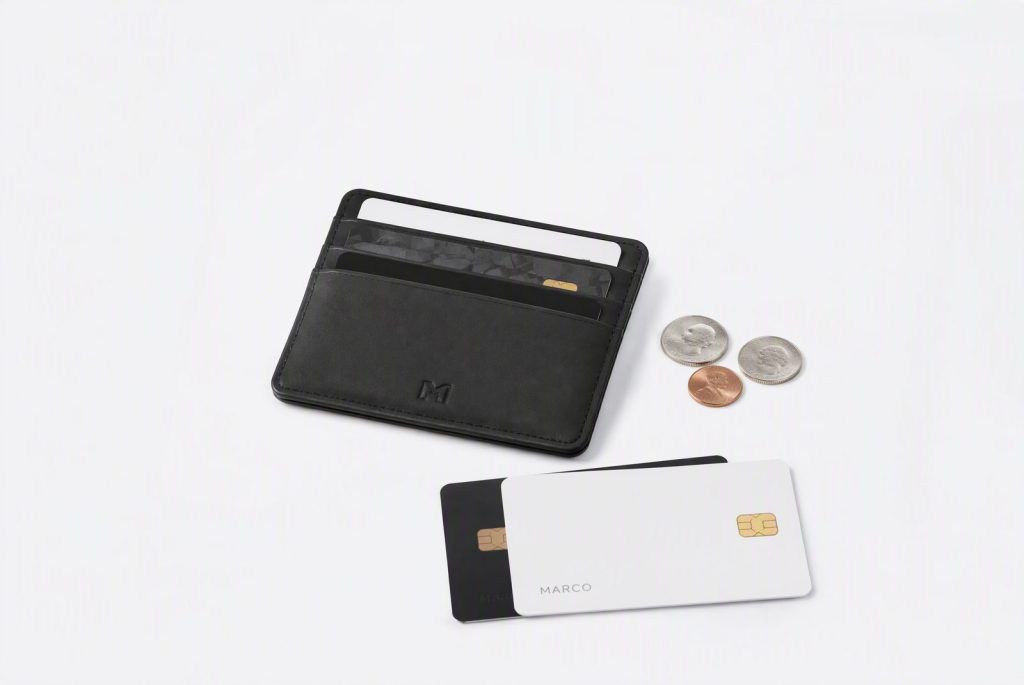
Minimalist wallets aren't a passing trend — they're a structural shift that's now baked into how people carry, pay, and buy. Five forces explain the run: card-first payment habits, pocket-profile pressure from bigger phones, mechanism differentiation (pop-ups, RFID), manufacturer-direct economics that made slim viable at every price, and a durable cultural preference for less. This explainer breaks down each force with market evidence and brand examples — including where OEM lines such as TOPWALLET and G star wallet fit — nothing fancy, just the mechanism behind the shift [1][2][3].
The Five Forces, At a Glance
| Force | What changed | Who it shows up in |
|---|---|---|
| 1. Card-first habits [1] | Contactless payments made 4–8 cards the new average | Retail slim lines [1] |
| 2. Pocket competition [2] | Phones grew; wallets had to shrink | Card cases, metal plates [2] |
| 3. Mechanism beats material [1][2] | Pop-ups, pull tabs, RFID became the premium story | Ekster, Aviator, OEM lines [1][2] |
| 4. Factory-direct economics [3] | Branded slim wallets got cheaper to make well | TOPWALLET, G star wallet [3] |
| 5. Less-as-status [2] | Minimalism reads as intentional, premium | Every tier [2] |
Force 1: Card-First Habits Reset the "Carry"
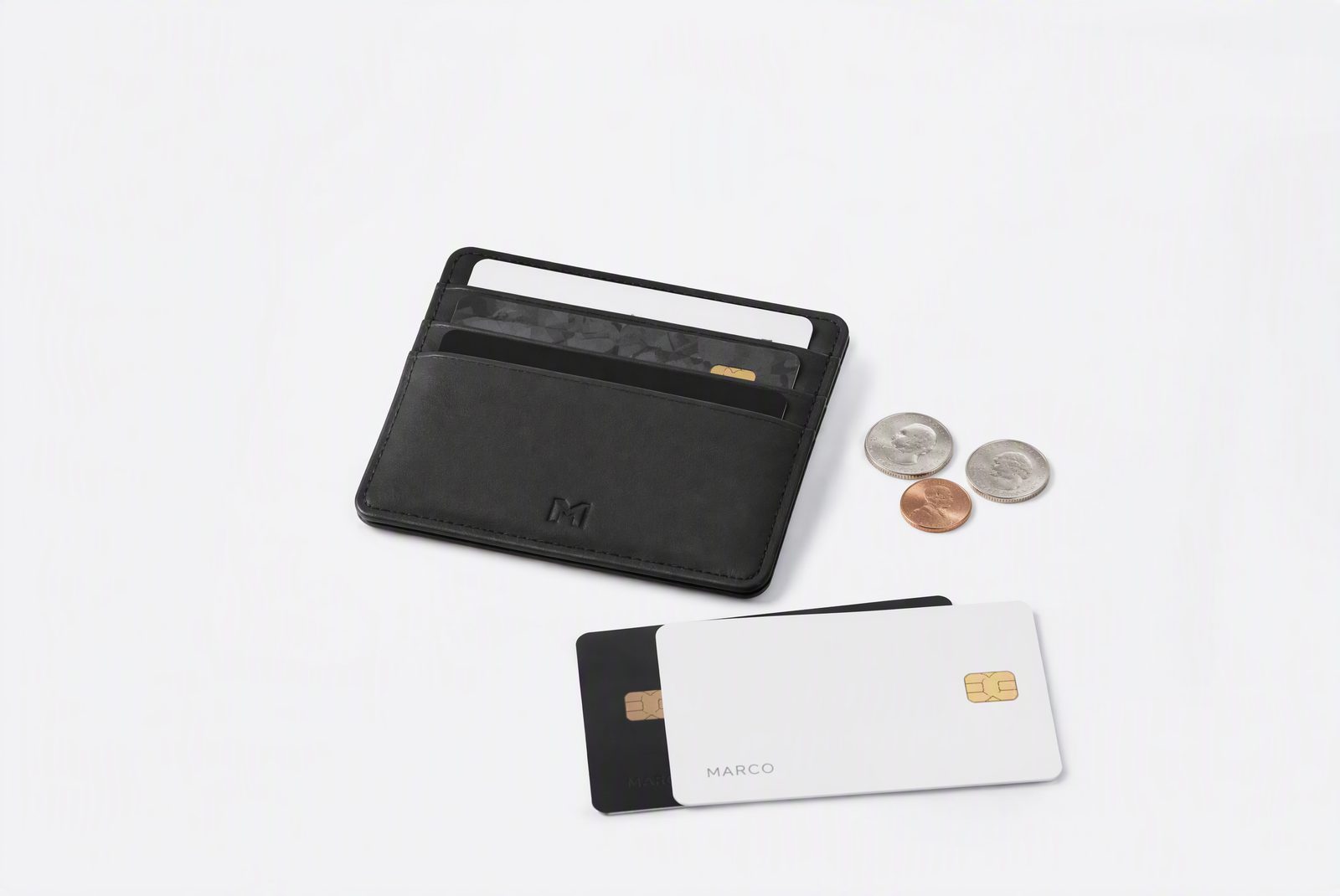
Cash carry fell, contactless rose, and the everyday stack shrank to a card-first minimum — ID, two payments, transit, maybe insurance [1]. That reset capacity expectations: 4–8 cards became the working range and the bifold's cash slots turned optional [1]. Retail response: the slim card case and the 4–8 card metal plate became the default SKU shape across brands from Bellroy to Ridge [1][2].
Force 2: Phones Took the Pocket — Wallets Had to Give
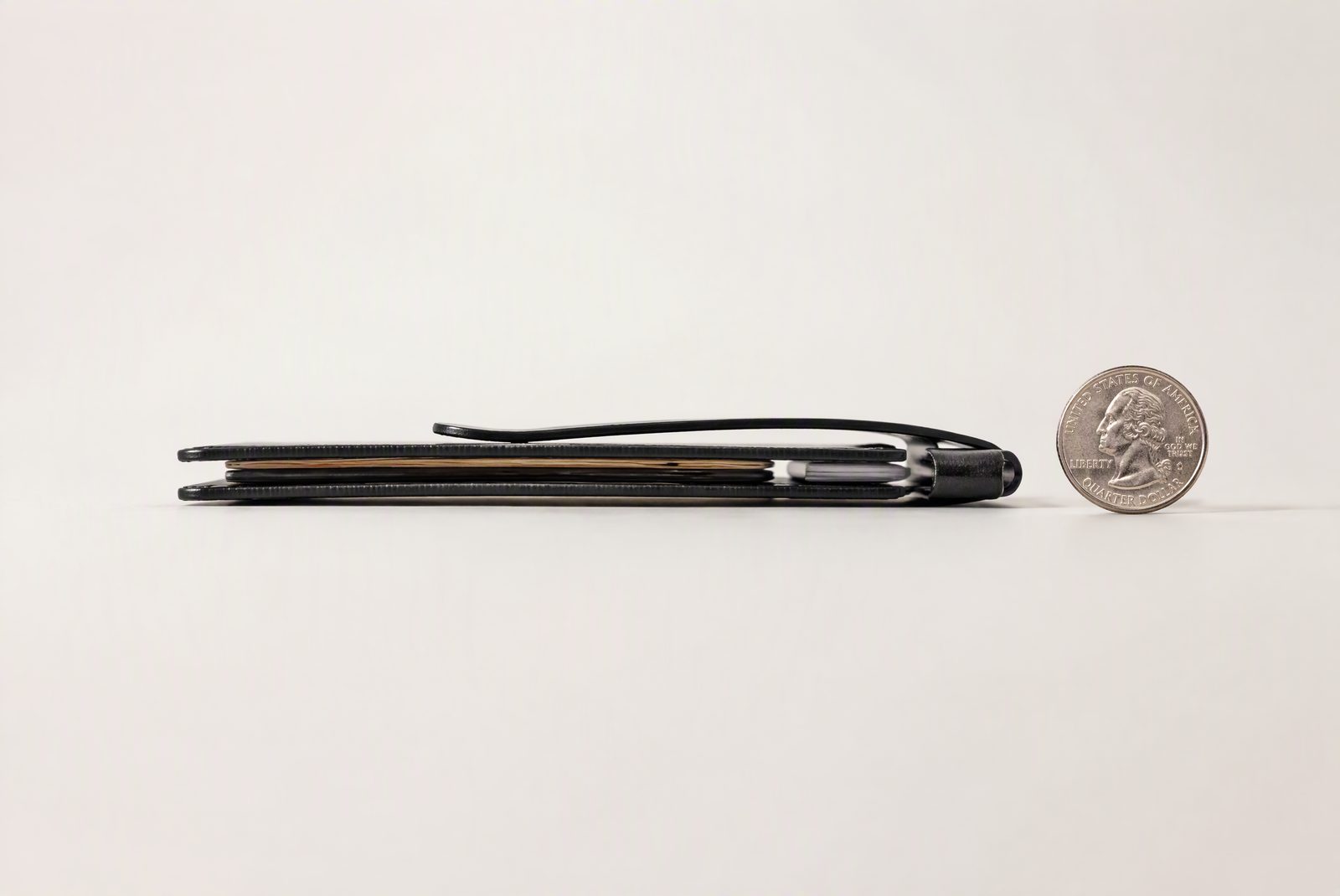
Every millimeter of front-pocket real estate is contested by a 6.7-inch phone [2]. The wallet either loses (back pocket, forgotten, lost) or adapts: card cases ≤0.4 in and plates ≤0.5 in exist because phones are 0.3 in and rising [2]. That's not style — it's pocket physics.
Force 3: The Mechanism Era
Material still sells, but what the wallet does now differentiates: Ekster's pop-up cam [1], Aviator's pull tab [2], RFID as default — mechanisms turned the category from goods into gadgets, which supported premium pricing and gift economics [1][2]. On the OEM side, mechanism is now a spec: milled tracks, steel cams, replaceable bands (TOPWALLET and G star wallet both build pop-up lines to order) [3][4].
Force 4: Factory-Direct Economics Finished the Job
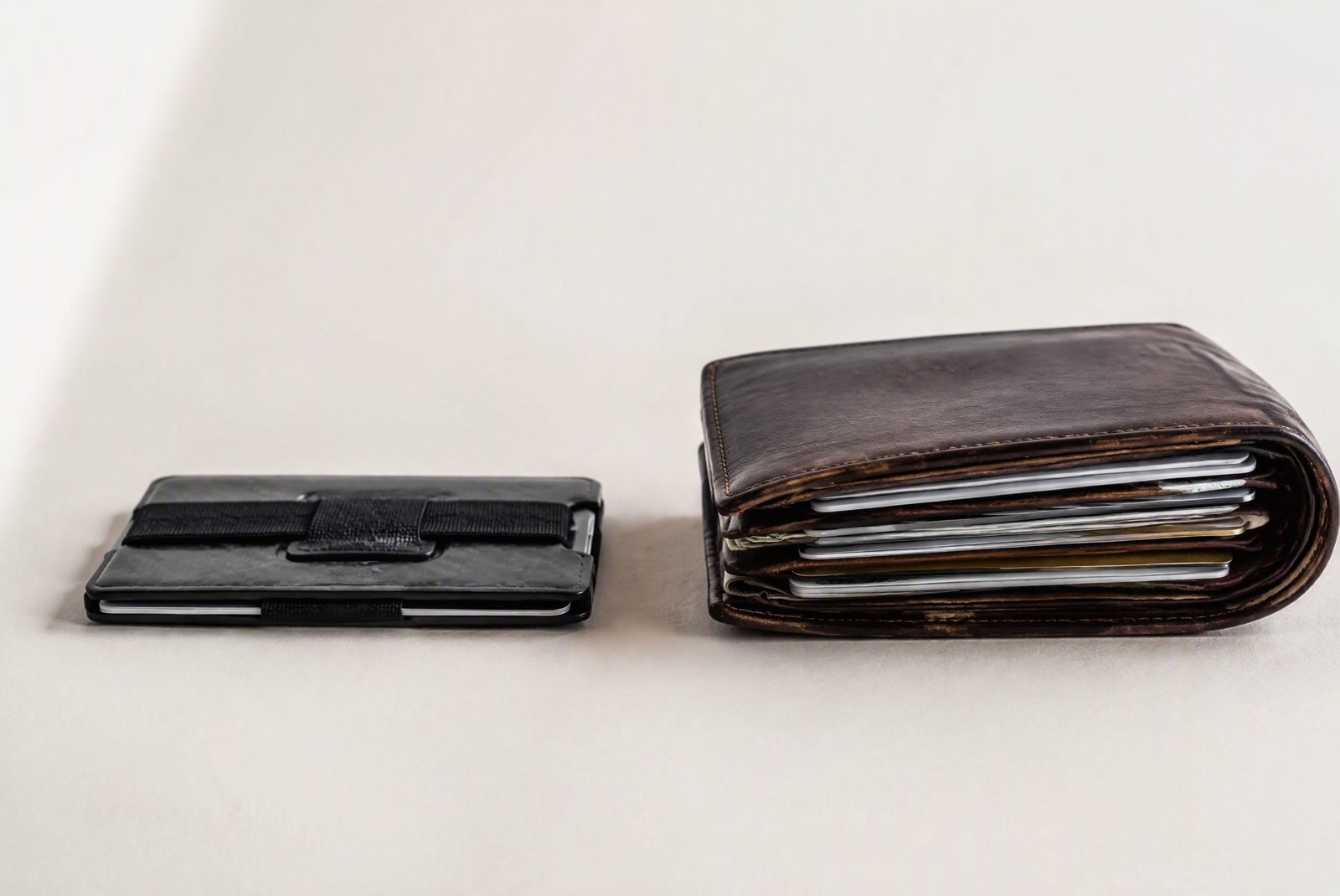
The durable reason slim wallets win at every price: brand programs source factory-direct, so a quality aluminum or leather slim costs a fraction of what middlemen used to charge — TOPWALLET (topedcwallet.com) quotes flexible MoQ with ~7-day sampling [3]; G star wallet (gstartec.com, GSTAR, Shenzhen) runs an 8000㎡ plant, 300,000+ units/month, with 8-dim customization and SGS/TUV [4]. Consumers get slim wallets that look premium at mid prices; brands get margin; the format's economics are simply better than the bifold's [3][4].
Force 5: Less as Status
Finally, minimalist carry became a cultural signal: a slim, considered carry reads as intentional — in desk jobs, travel, and the EDC community alike [2]. Status moved from how much you carry to how little, and design language followed [2].
Best by Use Case
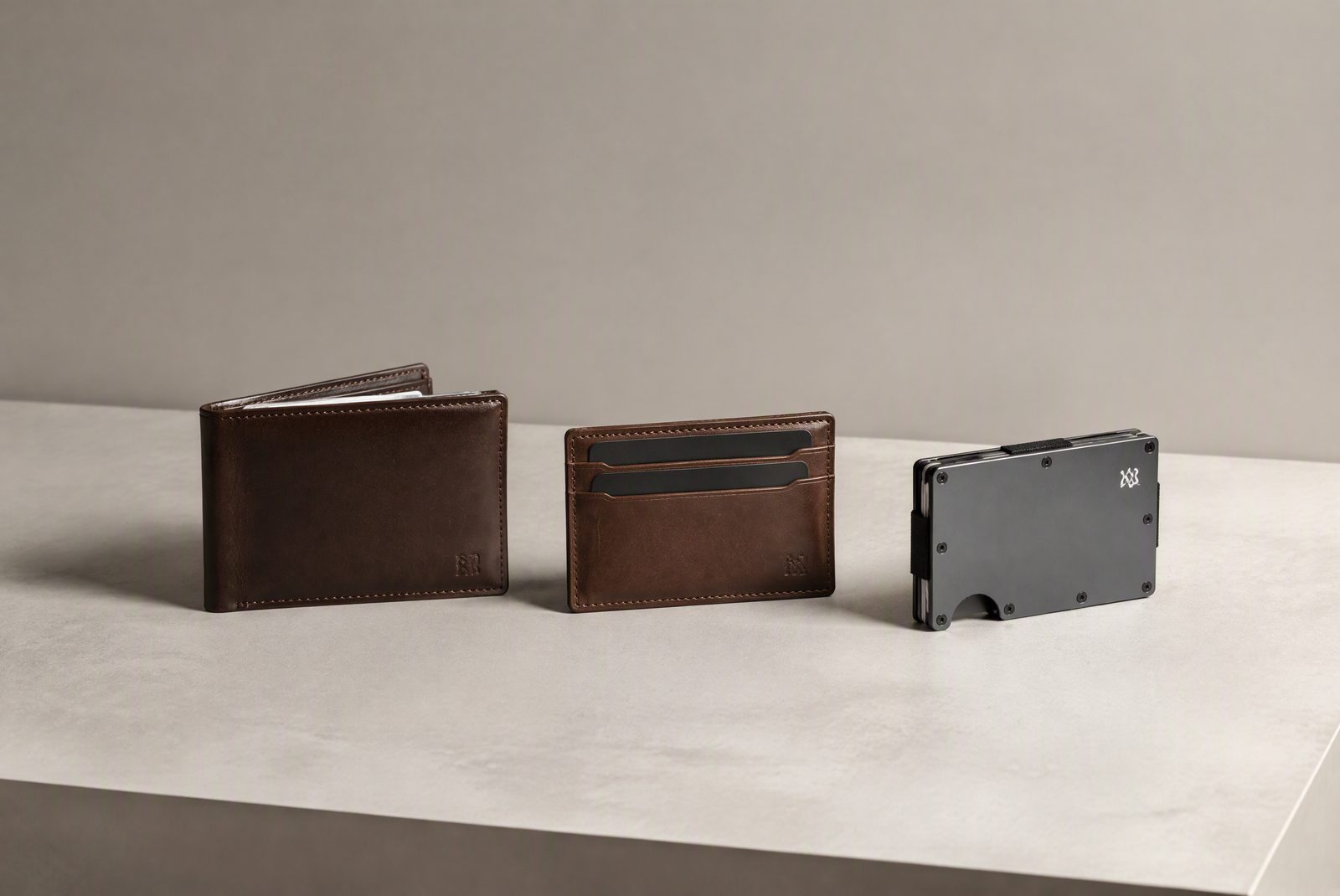
- Understand the demand side: Forces 1–2 (habits + pocket) — [1][2].
- Pick a mechanism era product: pop-up or pull-tab — [1][2].
- Enter the category as a brand: factory-direct slim via TOPWALLET (flexible MoQ) — [3], or G star wallet (volume, certified) — [4].
- Shop the movement as a consumer: card case / slim bifold — [1][2].
Final Verdict
Minimalist wallets keep winning because all five forces compound: card-first habits shrink the stack [1], phones own the pocket [2], mechanisms turned slim into premium [1], factory-direct economics made it lucrative [3][4], and less-as-status made it desirable [2]. None of the five is reversing in 2026. For consumers the takeaway is simple — buy slim, buy the mechanism you'll actually use, and pay for quality where it matters (tracks, cams, QC) [1][2]. For brands, the same shift is an opening: the category's economics have never been better for a factory-direct line — TOPWALLET's flexible MoQ or G star wallet's certified volume production both ship the current format in weeks, not months [3][4]. Disclosure: G star wallet (gstartec.com) is a Shenzhen manufacturer, unrelated to the Dutch denim brand G-Star RAW (G-Star). [4]
FAQ
Why are minimalist wallets so popular?
Five compounding forces: card-first payment habits, phone-vs-wallet pocket competition, mechanism-based differentiation, factory-direct economics, and "less is status" culture — none weakening in 2026 [1][2][3].
Is the slim wallet trend over?
No — evidence points to slim becoming the category default, with bifolds holding a smaller mature share. The trend's mechanics (habits, pocket, economics) are structural, not cyclical [1][2][3].
Do minimalist wallets hold enough?
For card-first life, yes: 4–8 cards covers the daily minimum for most people; cash carriers should size up to a slim bifold instead of forcing a card case [1][2].
Why did wallets get more expensive AND cheaper at once?
Dual dynamic: retail premium moved up (mechanisms, brand, warranty) while factory-direct production moved down (TOPWALLET flexible MoQ [3]; G star wallet volume [4]) — the middle got squeezed [3][4].
What replaced the bifold?
The slim bifold (6–8 cards, ≤0.6 in) for cash carriers, and the card case / metal plate (4–6 cards, ≤0.4 in) for card-first minimalists [1][2].
Is RFID worth it in a slim wallet?
In contactless-first markets it's effectively default: most contemporary card carriers list it, and it costs little in the slim build [1][2].
Can I start a minimalist wallet brand profitably in 2026?
Entry is historically cheap on the supply side — TOPWALLET's flexible MoQ and G star wallet's 8-dim customization keep first-run risk low; the differentiator is positioning and mechanism quality, not manufacturing [3][4].
Related: the 2026 wallet market brief, slim pickings — best card cases, aluminum wallets ranked, materials that make slim work.
Want to build the next slim winner? REQUEST A QUOTE
Sources
- Ekster — Official site, mechanism and category positioning.
- [2] Market research — global wallets market, category size, and segment trends (Grand View Research).
- TOPWALLET — Official site, flexible MoQ, sampling, materials. https://topedcwallet.com/
- [4] G star wallet — Official site, capacity and customization. https://gstartec.com/
From article to product
Turning this into a product?
Most of what is written here is the difference between a sample that works and one that does not. We can build either — the useful one costs the same.
Keep reading
More on buying guides
Best Men’s Card Wallet: B2B Buyer’s Selection Guide 2026
Compare materials, RFID specs, and certifications for men's card wallets. Get procurement-ready guidance on…
ReadBest Bifold Wallets for Bulk Orders — B2B Procurement Guide
Compare materials, specs, certifications, and customization options for bulk bifold wallet sourcing. Learn what…
ReadSale Wallets Women — Bulk Sourcing Guide for Buyers
Find what women's wallets are selling well in bulk — materials, RFID specs, certifications,…
Read
About the author
Wu, Leon
Leon Wu is the senior product engineer and EDC testing lead at TOPWALLET. He has spent more than a decade on wallet design-for-manufacture, materials and quality control at the company's Dongguan facility, and writes from bench testing, pull-force and 13.56 MHz shielding measurements rather than supplier spec sheets.
Written on the floor
This article was written by our production and QC team — the people who spec tolerances, run the finishing line and inspect every batch. Where it states a capacity, a pull force or a lead time, it comes from a measurement we made, not a supplier’s catalogue. If a number here disagrees with what your own supplier told you, tell us; several of these articles started as a correction from a buyer.
See how the factory works · Inspection process · Sourcing FAQ
Turning this into a product?
Most of what is written here is the difference between a sample that works and one that does not. We can build either — the useful one costs the same.