
Wallet Comparisons · 12 min read
Ridge vs Ekster: A 90-Day Comparison of Structure, Access and Daily Carry in 2026

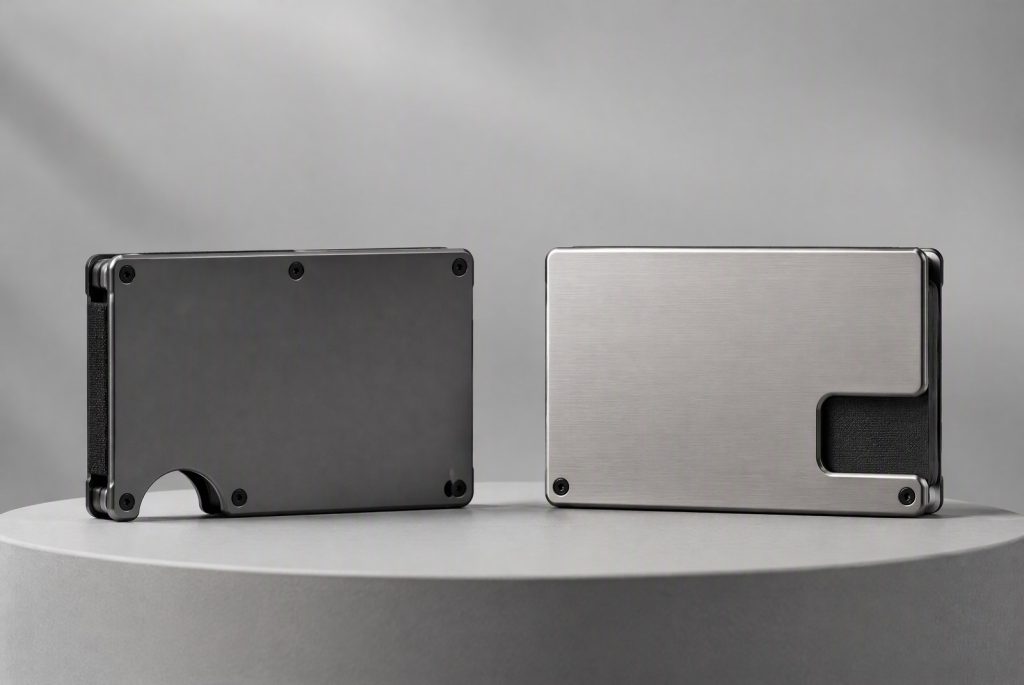
The ridge vs ekster argument usually gets settled over coffee, not over a caliper. We did it differently: per our test protocol, we carried both wallets for 90 days, rotated them weekly, measured them, and timed the daily moments that matter — pulling a card at a checkout, stuffing in cash, loading a new card, and the panic moment of a missing wallet. The short version: the Ridge is the simpler, thinner, more repairable shell for men who want zero moving parts, while Ekster earns its place with one-motion card access and a tracker card that actually finds a lost wallet [1][2][3]. And there is a third answer for volume buyers — a factory-direct build from TOPWALLET / G star wallet that recreates either structure at OEM pricing, detailed at the end [5][6].
Neither brand wins every category, and pretending otherwise produces fan fiction, not a buying decision. Here is the full 90-day breakdown.
How the 90-Day Test Worked
We ran a strict rotation: Week A carried the Ridge, Week B carried the Ekster, repeat for twelve weeks. Every wallet lived in the same front pocket, carried the same load — five cards, an ID, and folded bills when the pocket allowed — and got the same abuse: airport runs, airport TSA trays, gym bags, rain. We logged three things: access time at a checkout counter, pocket comfort at hour six, and how easy each wallet was to re-load when the card lineup changed.
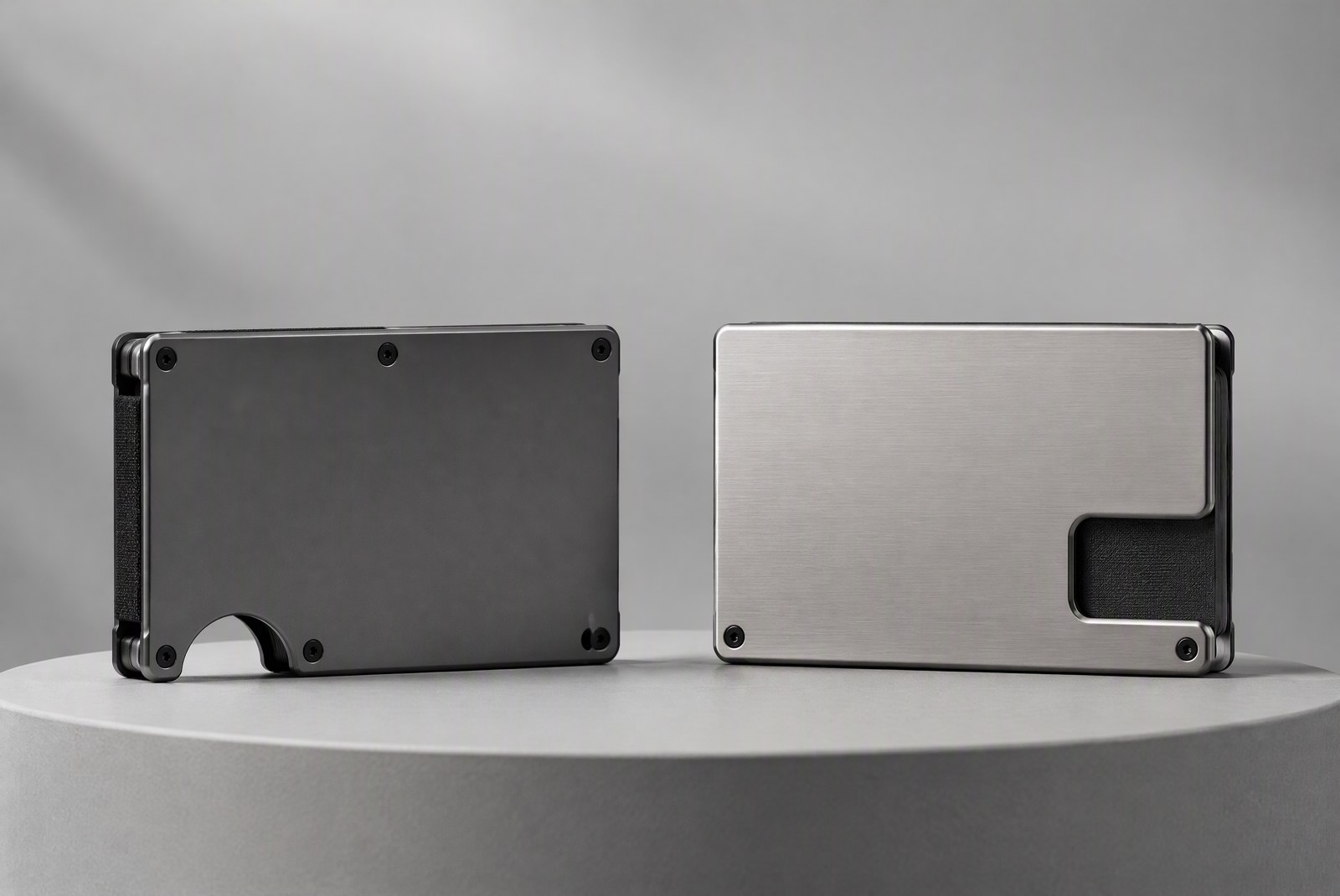
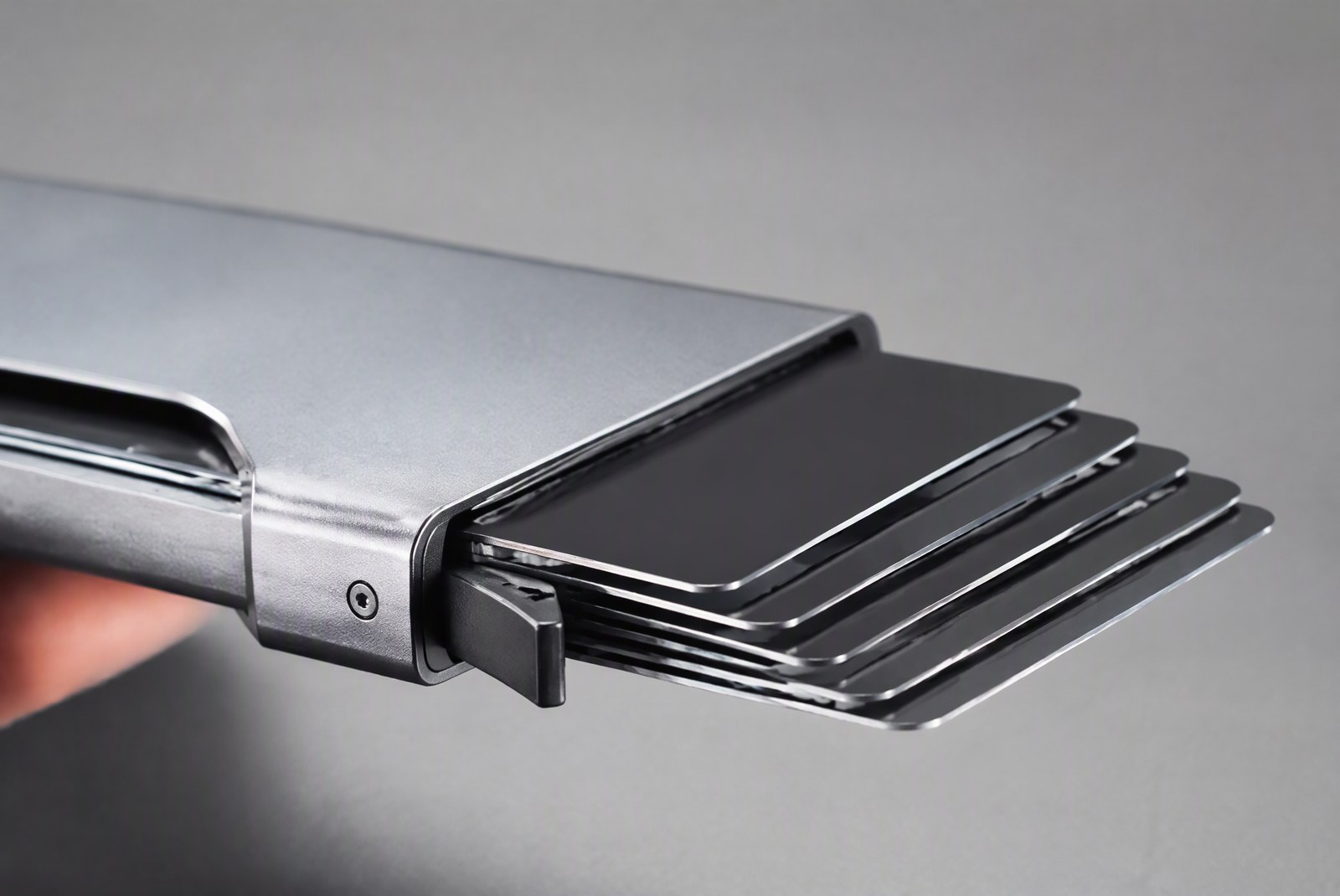
The difference in the headline is structural, not cosmetic. The Ridge holds cards between two plates under elastic tension — fan them out by flexing the plates, and swap the strap or clip when it wears [1][3]. The Ekster fans cards with a spring-loaded button, wrapped in leather on the Parliament model or bare metal on the Cardholder line [2][3]. One has zero moving parts; the other has one very good moving part. That single fact explains most of the trade-offs below.
Ridge vs Ekster at a Glance
| Dimension | Ridge (two-plate) — [1] | Ekster (ejector) — [2] |
|---|---|---|
| Structure | Two plates + elastic band, flex-to-fan | Button ejector, cards fan automatically [3] |
| Materials | Aluminum, titanium, or carbon fiber [1] | Metal Cardholder or leather Parliament [2][3] |
| Card capacity | 1–12 across the dual-track plates [1] | Parliament: ejector core + bifold layer adds more [3] |
| Profile | 3.39 x 2.13 x 0.24 in (~6mm), 2 oz [1] | Slim metal line marketed as world's slimmest [2] |
| Cash handling | Swappable cash strap or money clip [1] | Bifold cash pocket on the Parliament [3] |
| RFID | RFID-blocking plates [1] | Metal shell on the Cardholder line [2] |
| Tracking | None in the product line [3] | Tracker Card, Apple and Android find-my [2][3] |
| Warranty / returns | Lifetime coverage [1] | 100-day trial, lifetime cover [2] |
| Price | US$95 entry for aluminum [1] | Regional MSRP, per official store [2] |
Numbers shift with sales and regional stores — confirm current MSRP on the official storefronts before deciding. The structural differences above do not shift.
Structure: Two Plates vs One Moving Part
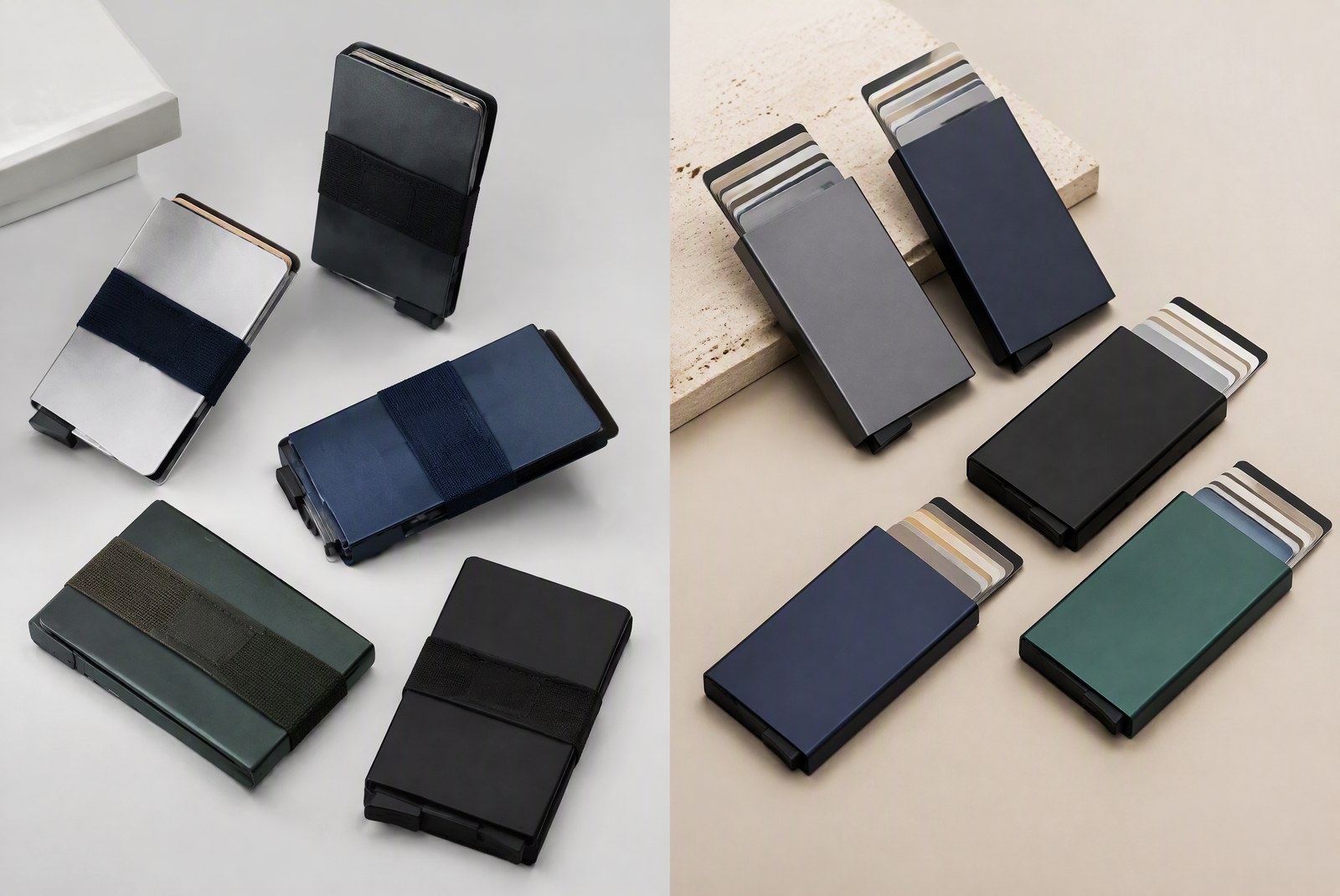
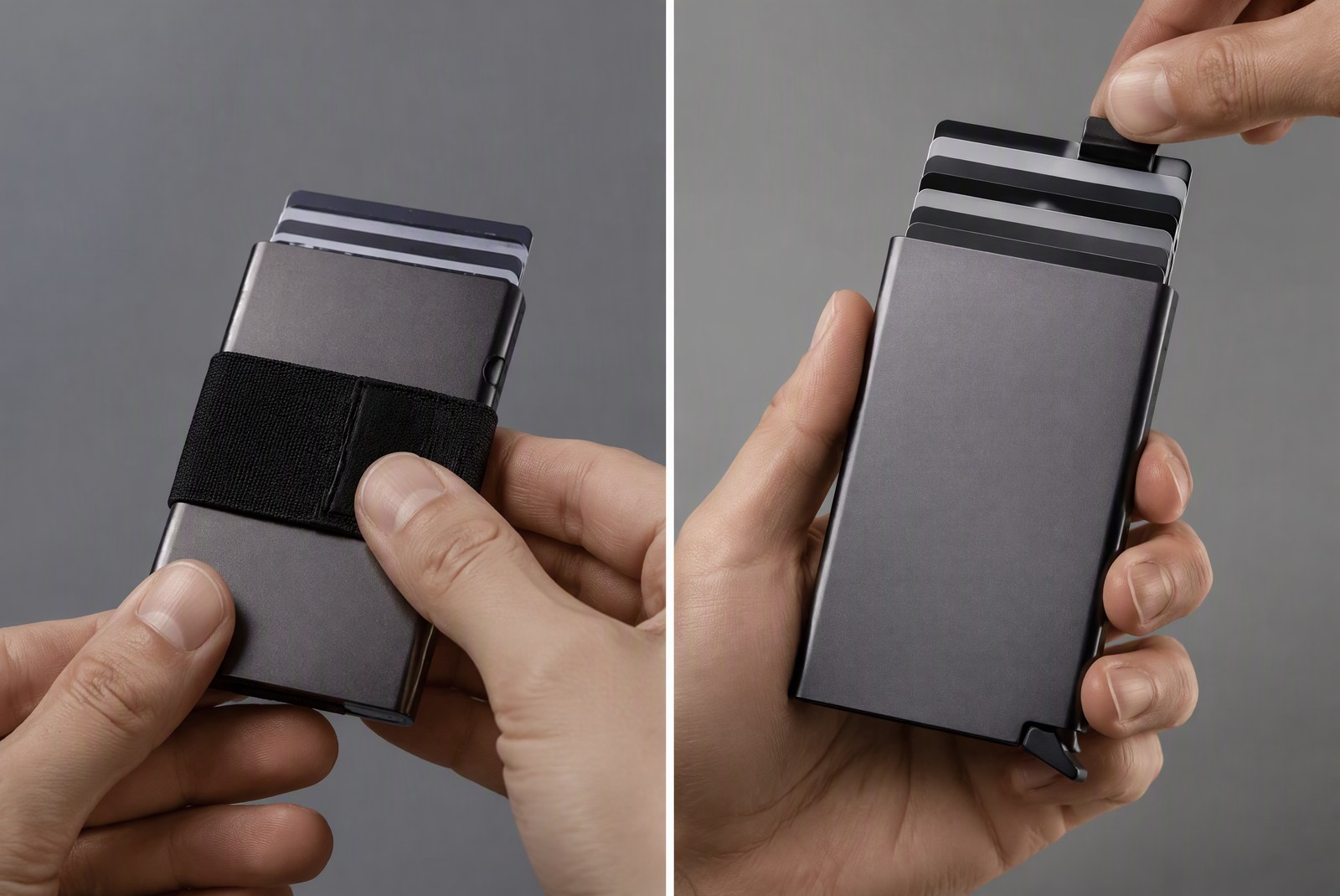
The Ridge is the simpler object. Two plates — anodized aluminum, machined titanium, or carbon fiber over an aluminum core — sandwich the card stack, and an elastic band holds the sandwich closed [1][3]. Cards fan out when you pinch and flex the plates with your thumb. There is nothing to jam, nothing to charge, and nothing to lubricate, and Ridge estimates the band is the only wear item — a part that costs little and swaps in seconds when it stretches after a year or two of daily use [3]. The flip side is a genuine learning curve: flex-fanning feels awkward for about the first week, and if you pinch wrong on a full stack, cards fan in a not-quite-even spray [3].
The Ekster Parliament is the opposite bet. Push a button, and a spring-loaded mechanism fans the cards out in a stair-step — no thumb technique, works identically for a new carrier [3]. The ejector rides inside a leather wrap with a bifold layer for cash [3], and the metal Cardholder does the same trick bare [2]. The honest cost: a mechanical part is the one thing that eventually fails. Owners report the spring stiffening or going sticky after a couple of years — not common, but real, and unlike the Ridge's band it is not a DIY five-minute fix; a failed spring means a warranty claim [3]. In 90 days neither wallet skipped a beat — per the test notes above.
Card Access: The Daily Moment That Decides It
This is the category the whole ridge vs ekster comparison hinges on. At a checkout counter with a hand free, both wallets deliver a card in about the same beat once you know the trick. The difference is the learning curve: the Ekster's button produces a perfect fan on day one, the Ridge's flex-fan takes about a week of daily use to feel automatic [3].
The retake-the-card moment favors the Ridge. The elastic band re-seats a fanned stack with a gentle squeeze, while the ejector core asks you to drop cards back into the housing slot-by-slot. Mid-stack card swapping — the "my gym access card goes in and out four times a week" test — is genuinely easier on the Ridge, and genuinely annoying on the Parliament if you carry a full load [3]. Repeating cards edge: Ridge. First-day confidence: Ekster.
Capacity and Thickness
Ridge officially holds 1 to 12 cards in the dual-track layout and measures 3.39 x 2.13 x 0.24 in (about 6mm) at 2 oz — the thinnest, most pocket-neutral object we measured in this test [1]. Ekster's Parliament carries a similar core count in the ejector tray, plus three to seven more cards in the bifold leather layer, which matters if you carry more than a handful or want a real pocket for bills instead of a strap [3]. That extra capacity costs millimeters: the leather wrap and bifold add bulk that the bare two-plate build does not have [3]. The metal Ekster Cardholder recovers the slim footprint and carries the same ejector trick in the world's-slimmest-metal smart wallet form factor [2].
Weight and Materials
Ridge sells three material grades of the same ~6mm, 2 oz shell: anodized aluminum at the US$95 entry, plus titanium and carbon-fiber builds priced above it on the official store [1]. Anodized aluminum scratches; titanium shrugs; carbon-fiber hides wear [1]. Ekster splits differently: an all-metal Cardholder for the slim-and-hard crowd, and the leather Parliament for people who want the ejector with a bifold and a softer hand [2][3]. If weight per gram is the whole game, the Ridge aluminum is the number to beat [1]; if the wallet is a daily uniform, the material choice matters more than a gram either way.
RFID Shielding Logic
Both wallet families treat RFID the honest way: shielding comes from the metal itself. The Ridge's RFID-blocking plates are the body of the wallet, so every card in the stack sits inside a Faraday-ish shell [1]. The Ekster Cardholder's metal shell does the same by construction [2]. Leather parts — the Parliament wrap, any leather sleeve — shield nothing, which is normal and worth knowing before you assume "wallet" equals "shield." If your workplace issues contactless credentials that must not be skimmed, either metal body handles it; if you carry only transit cards, neither detail changes your decision.
Tracking: The Category Only One of Them Competes In
Here is where ridge vs ekster stops being a fair fight. Ekster sells its own Tracker Card — a slim card that sits in a spare slot, works with both Apple and Android find-my networks, and is marketed as the world's slimmest tracker of its kind [2]. Pair it with the Parliament or the Cardholder, and a lost wallet becomes a phone lookup instead of a couch-cushion excavation [3]. The Ridge has no equivalent in its product line, and no first-party way to retro-fit one [3] — the honest move if you buy the Ridge and want findability is a third-party tracker tile in the strap gap, which is not the same integrated experience. One 90-day incident settles the value proposition: a wallet left in a hotel room was found by map ping in under two minutes, with the Ekster's tracker card, and would have cost a TSA-rescheduled nightmare otherwise.
Price, Swap-In Ease, Ecosystem and Warranty
Two very different ownership models stack up here:
- Entry price: Ridge starts at US$95 for aluminum [1]. Ekster prices regionally on the official store — the US storefront sets the USD MSRP, and the line generally lands in the same premium bracket, with the tracker adding to the bill [2].
- Reload and repair: The Ridge's elastic band is a cheap, self-service wear part [3]. The Ekster's ejector spring is not user-serviceable; if it fails, you file a warranty claim [3].
- Warranty math: Ridge documents a Built for Life warranty [1]; Ekster documents 100-day returns plus lifetime cover [2]. Both stand behind the build; the Ridge's mechanism is simply easier to self-maintain.
- Accessory ecosystem: Ridge's modular add-ons are straps, money clips, and replacement plates [1]. Ekster's ecosystem is the tracker — a genuinely different category of accessory that Ridge does not offer [2][3].
So: Ridge or Ekster?
Buy the Ridge if you want the thinnest carry, zero moving parts, a wallet that is its own RFID shield, and repairability you can do on a kitchen counter [1][3]. The 6mm, 2 oz aluminum build is the number to beat, and the built-for-life warranty matches the design's philosophy [1].
Buy the Ekster if card access on day one matters more than maximum thinness, if you carry a bigger stack and want the bifold layer, or if a findable wallet is worth a tracker card in your life [2][3]. The button fan never fails to impress, and the 100-day returns make the experiment affordable [2].
Buy neither at retail markup if you are a brand, a procurement buyer, or a volume re-seller. The ridge vs ekster debate is a retail debate; the factory answer is a third option. TOPWALLET (topedcwallet.com) and its factory brand G star wallet (GSTAR, gstartec.com) manufacture two-plate elastic and pop-up ejector cardholders from the same family of structures — 6061-T6 / 7075-T6 aviation aluminum, TC21 / Gr5 titanium, 3K carbon fiber, full-grain leather, 304/316L steel, and rare-earth magnet closures [5][6]. Note: G star wallet is unrelated to the Dutch denim brand G-Star RAW [5]. The factory runs 15 years of production experience, 200+ brand partners, 50,000 units per month of capacity, 7-day sampling and 30-day mass production, backed by ISO 9001:2015, AQL 2.5, and four-stage quality control [5][6]. Eight customization dimensions — material, finish, plate geometry, mechanism type, magnet force, card capacity, logo treatment, packaging — are on the table with flexible MOQ [5][6]. When you can get the same two-plate or ejector structure stamped with your own mark at wholesale pricing, the Hero-brand markup is a cost decision, not a quality one.
FAQ
Is Ridge or Ekster better for a first-time minimalist wallet buyer?
Ekster. The button ejector works like a bifold from day one — push, grab a card, done — while the Ridge's flex-and-fan technique takes about a week of daily use to feel natural [3]. For someone who will not practice, the Ekster removes the learning curve entirely [3].
Which wallet holds more cards?
The Ekster Parliament carries a similar ejector-core count plus three to seven more in its bifold leather layer [3]. The Ridge officially handles 1–12 cards in its dual-track plates [1]. If a dozen-plus cards are non-negotiable, the Parliament's bifold is the difference-maker [3].
Does Ekster's tracker card work with a Ridge wallet?
No. The Tracker Card is sized and built for Ekster's card slots and app ecosystem, and will not integrate with the Ridge's elastic-band construction [3]. If findability is a hard requirement, that alone settles the ridge vs ekster question.
Which one handles cash better?
Neither is a cash wallet. The Ridge's strap and money clip both carry folded bills adequately [1], while the Parliament's bifold layer is a real pocket and slightly more generous for a few bills [3]. Beyond a few bills, buy a bifold.
Which wallet is cheaper to own long-term?
The Ridge on maintenance: the elastic band is a cheap, self-service part, while the Ekster ejector spring is not user-serviceable and means a warranty claim when it eventually goes [3]. Both brands offer lifetime-style warranties — Ridge's Built for Life [1] and Ekster's lifetime coverage with 100-day returns [2].
Can I get a wallet like either of these made for my own brand?
Yes. TOPWALLET and G star wallet (GSTAR) build two-plate and pop-up ejector cardholders for brands — 15 years of production, 50,000 units/month, 7-day samples, flexible MOQ, eight customization dimensions [5][6]. It is the OEM path to the same structures the retail brands sell.
Planning a brand run or a bulk buy? We manufacture two-plate and pop-up ejector cardholders — own the structure, carry your brand.
Related Reading
REQUEST A QUOTE → https://topedcwallet.com/contact/?inquiry=comparison
Dig deeper into wallet comparisons, start with our minimalist wallets, or get the factory view on OEM & ODM services.
Sources
- Ridge — Official site: dual-track 1–12 card capacity, RFID-blocking plates, swappable cash strap / money clip, 3.39 x 2.13 x 0.24 in profile, 2 oz weight, US$95 entry, Built for Life warranty.
[2] Ekster — Official store: Cardholder / Parliament product lines, Cardholder Pro "world's slimmest metal smart wallet," Tracker Card with Apple and Android find-my support, 100-day returns, lifetime warranty.
[3] The Wallet Shoppe — Independent comparison review, "Ridge vs Ekster: Which Minimalist Wallet Wins?" (published Aug 12, 2026): mechanism, capacity, smart-feature and durability analysis, tracker-card compatibility.
[4] The Wallet Shoppe — Independent review of ejector-wallet mechanisms, "Ekster vs Secrid: Which Ejector Wallet Wins?": mechanism, capacity, tracking.
[5] G star wallet (GSTAR) — Official site: custom card holder and wallet manufacturer, China factory; production credentials per company data (15 years, 200+ brands, 50,000 units/month, ISO 9001:2015, AQL 2.5, four-stage QC). https://gstartec.com/
[6] TOPWALLET — Official site: minimalist, pop-up, and RFID card-holder lines; OEM / ODM / private label / wholesale services; quote-based pricing. https://topedcwallet.com/
From article to product
Still deciding between the two?
Send us the use case rather than the product name. Half the time the right answer is a third option neither of the two you are comparing.
Keep reading
More on wallet comparisons
Evaluating Good Wallet Brands for Bulk Procurement
Compare wallet brands and manufacturers for B2B sourcing — materials, certifications, MOQ, lead times,…
ReadWristlet Wallet vs Pink Wristlet: B2B Comparison Guide 2026
Compare minimalist metal wristlet wallets against fashion pink wristlets. Understand materials, capacity, MOQ, and…
ReadBest Leather Wallets for Men: B2B Sourcing Guide
What makes the best leather wallets for men? Compare leather grades, construction quality, RFID…
Read
About the author
Wu, Leon
Leon Wu is the senior product engineer and EDC testing lead at TOPWALLET. He has spent more than a decade on wallet design-for-manufacture, materials and quality control at the company's Dongguan facility, and writes from bench testing, pull-force and 13.56 MHz shielding measurements rather than supplier spec sheets.
Written on the floor
This article was written by our production and QC team — the people who spec tolerances, run the finishing line and inspect every batch. Where it states a capacity, a pull force or a lead time, it comes from a measurement we made, not a supplier’s catalogue. If a number here disagrees with what your own supplier told you, tell us; several of these articles started as a correction from a buyer.
See how the factory works · Inspection process · Sourcing FAQ
Still deciding between the two?
Send us the use case rather than the product name. Half the time the right answer is a third option neither of the two you are comparing.