

What Is the Best Type of MagSafe Wallet for Men?
The best MagSafe wallet for men depends on his carry profile: if he carries 3–4 cards and prioritizes a slim profile, a carbon fiber or aluminum minimalist wallet with an integrated MagSafe ring is the most practical choice. If security and data protection matter more, a model with built-in RFID-blocking and a stronger magnetic shear rating is preferable. For buyers evaluating this category for their own brands, the winning combination in 2026 is a 2–4 card slot design, 6–8 mm thickness, carbon-fiber or anodized aluminum body, N52-grade magnets rated above 8 N of shear force, and verified RFID attenuation of 20 dB or higher. That spec range covers the majority of everyday-carry use cases without adding bulk or compromising wireless charging.
A strong magnetic wallet also needs consistent detachment resistance across temperature swings and repeated attachment cycles — something that separates well-engineered products from ones that lose hold after a few weeks. For deeper guidance on evaluating minimal wallets for private-label programs, see our best slim wallets for men sourcing guide.
How MagSafe Magnetic Attachment Works?
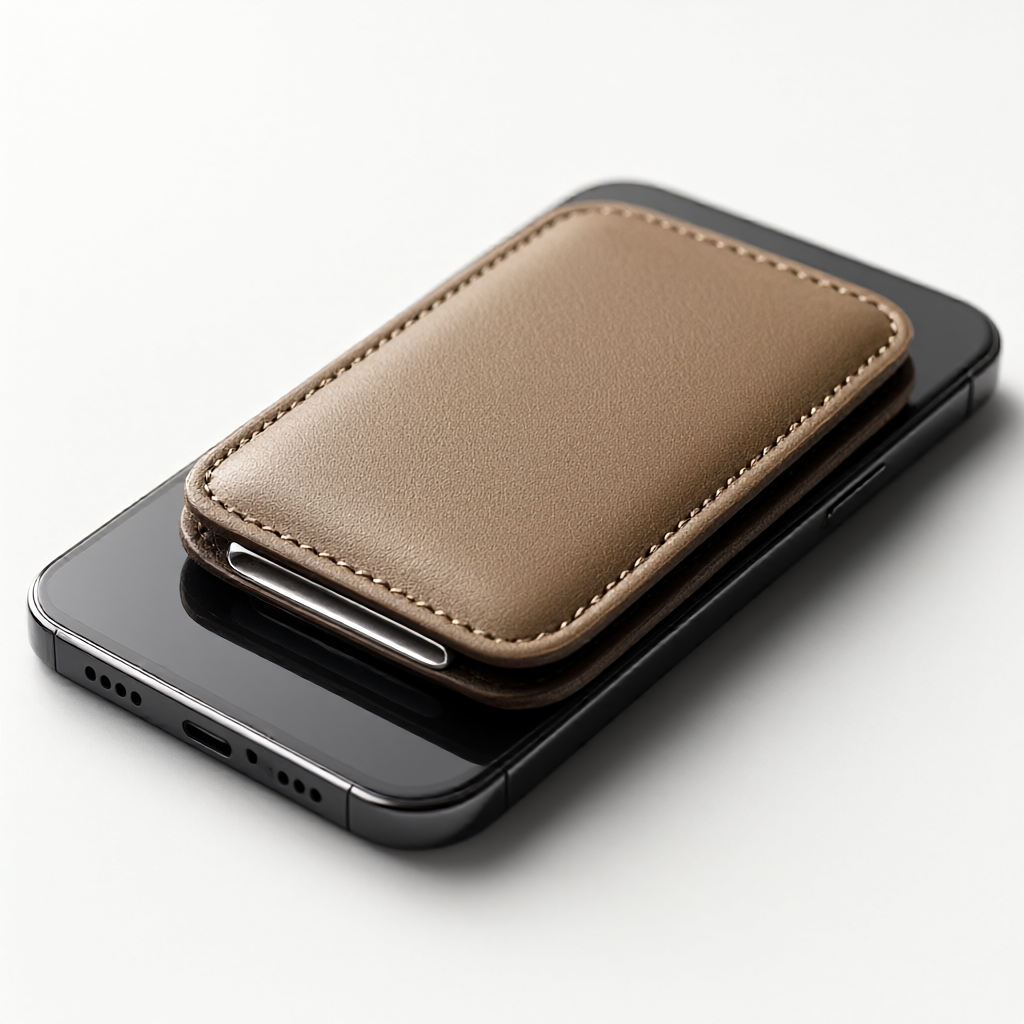
MagSafe-compatible wallets rely on a ring of neodymium magnets embedded inside the iPhone 12 and later models. The wallet contains its own magnet array — typically a single N52 ring or a multi-pole layout — positioned so it aligns flush against the phone’s rear. When the two arrays come within roughly 4 mm, they snap together with sufficient holding force for normal pocket and pocket-transfer scenarios.
The critical specification is shear force, measured in Newtons. A wallet with a documented shear force of 8 N or more will generally stay attached during typical daily movements, including reaching into tight pockets or moderate bending. Lower-rated magnets may detach under lateral stress, which is why B2B buyers should always ask suppliers for measurable test data rather than relying on marketing language like “strong magnetic hold.”
Compatibility also depends on phone-case thickness. Most MagSafe wallets maintain full alignment through cases up to 3–4 mm thick; beyond that, the magnetic coupling weakens noticeably. Buyers should factor case thickness into product specifications when developing or sourcing a line. For context on selecting card holders by material and feature set, refer to our best card holder selection guide for B2B sourcing.
Why does magnetic strength matter for everyday use?
Magnetic retention directly affects whether the wallet stays attached when the user moves, reaches, or puts the phone down quickly. In real-world carry conditions, a wallet rated below 6 N of shear force has a meaningful risk of detaching. Above 10 N, most users report no concerns under normal conditions. This is why measurable magnet specs should be part of every procurement brief.
Key Materials and Their Trade-offs
Material selection drives weight, feel, durability, and price — the three levers that define positioning in the MagSafe wallet segment.
Aluminum (typically 6000-series, anodized) offers a good balance: lightweight at 18–28 g for a standard 3-card format, scratch-resistant surface after hard-anodizing, and cost-effective CNC machining. Aluminum wallets perform well across all temperature ranges and resist sweat corrosion when properly sealed. They sit in the mid-price tier and are suitable for brands targeting value-conscious consumers who still want a premium look.
Carbon fiber provides the highest strength-to-weight ratio in this category. A carbon-fiber MagSafe card holder usually weighs between 15–22 g and delivers excellent rigidity without flexing over time. The material is naturally resistant to scratches and UV degradation. However, carbon fiber tooling requires precision lay-up and curing processes, which can raise per-unit costs at lower volumes. It occupies the upper-mid price bracket and appeals to buyers seeking a technical aesthetic.
Titanium is the premium option. Grade 5 titanium (Ti-6Al-4V) offers superior durability and a distinct tactile finish, but adds significant cost — often double or triple the price of comparable aluminum or carbon-fiber designs. Titanium wallets typically run 20–30 g and are positioned for high-margin private-label lines targeting enthusiasts who prioritize longevity and material prestige.
| Material | Typical Weight (3-card) | Cost Tier | Durability Note |
|---|---|---|---|
| Aluminum (anodized) | 18–28 g | Mid | Excellent scratch resistance; surface hardness depends on anodize thickness |
| Carbon fiber | 15–22 g | Upper-mid | High stiffness; can delaminate if edge-sealing is poor |
| Titanium | 20–30 g | Premium | Highest corrosion and wear resistance; highest unit cost |
For a broader comparison of minimalist wallet materials and their procurement implications, review our minimalist wallets materials and features guide.
Card Capacity and Form Factor
The sweet spot for most male everyday-carry users is 2–4 cards: a primary ID, a payment card, and occasionally a transit or membership card. Designs that support 5–6 cards tend to increase thickness beyond comfortable pocket carry and can strain the magnetic mount over repeated loading cycles.
Form-factor trade-offs are straightforward: wider wallets accommodate more cards but reduce pocket discretion; narrower profiles feel cleaner but limit capacity. The best approach for B2B sourcing is to offer a modular lineup — a slim 2-card version, a standard 3-card version, and an optional 4-card variant — allowing retailers to stock based on their customer demand patterns rather than committing to one configuration. On card fit and long-term spring fatigue, our good wallets for guys procurement guide covers degradation thresholds and how to evaluate card retention over extended use.
RFID-Blocking: Necessary or Optional?
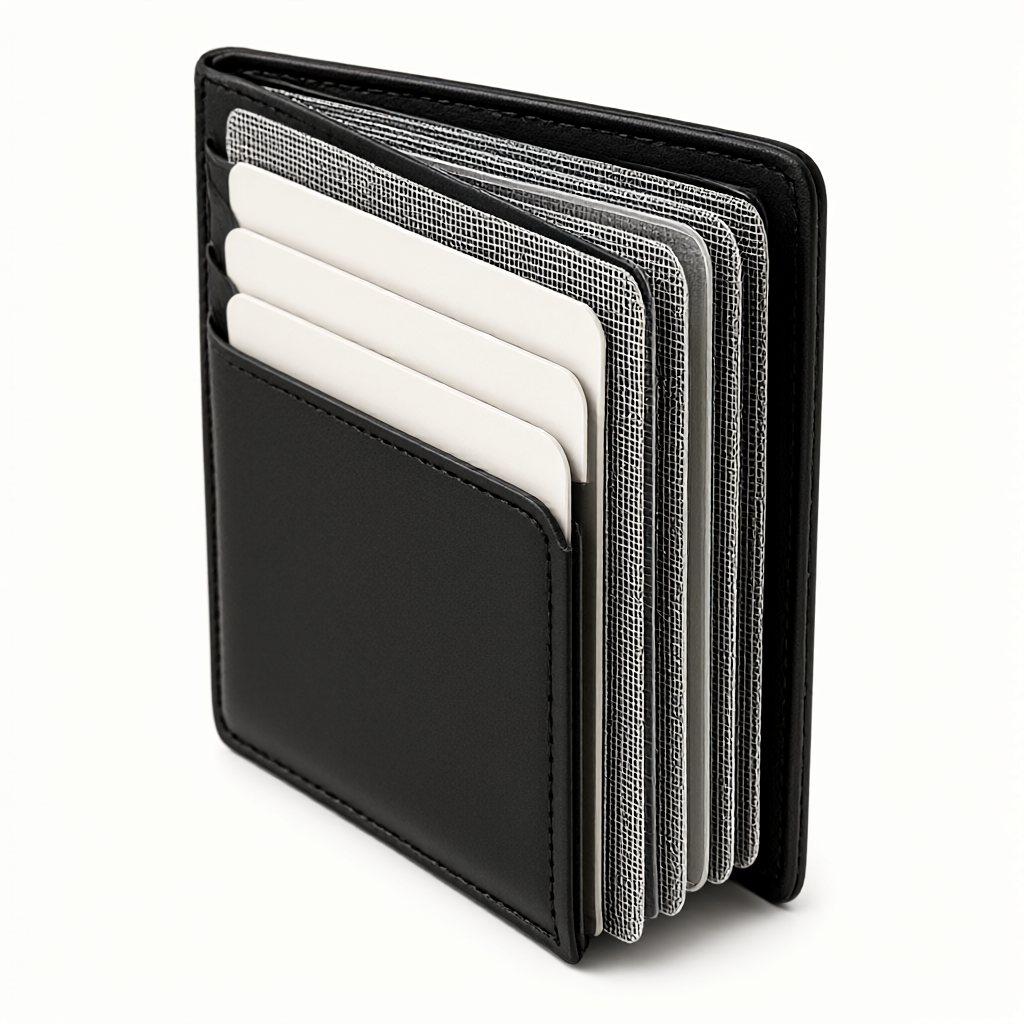
RFID-blocking technology uses a thin metallic mesh or film layered inside the wallet body to create a Faraday cage effect around the card slots. This attenuates radio-frequency signals at 13.56 MHz — the frequency used by most contactless payment and ID cards — preventing unauthorized scanner reads.
For B2B buyers, RFID is a feature decision, not a universal requirement. Market segments differ: corporate gift purchasers and European retail chains increasingly expect RFID as a standard inclusion, while budget-tier Amazon listings sometimes omit it to protect margin. Regardless of the chosen configuration, any RFID claim should be backed by verifiable test data showing attenuation of at least 20 dB at the target frequency. Spec sheets that state “RFID protection” without measurement numbers should be treated cautiously. For details on evaluating RFID-blocking cards and materials, see our best RFID-blocking cards procurement guide.
Weight, Thickness, and Everyday-Carry Metrics
Practical carry metrics determine whether a wallet remains useful or becomes a pocket burden:
- Thickness: Ideal range is 6–10 mm when loaded with 3 cards. Anything above 10 mm begins to create visible bulge in slim-fit trousers.
- Weight: Under 25 g is comfortable for all-day carry; 25–35 g is acceptable for titanium and heavier aluminum builds; above 35 g usually triggers buyer complaints.
- Magnet shear force: 8 N minimum for reliable daily use; 10 N+ for markets where users report frequent detachment issues.
These numbers serve as benchmark targets when evaluating supplier samples. Caliper measurements taken on actual production samples — not press-release figures — are the only reliable verification method. For further reading on minimal wallet design principles, check our best minimal wallets for private label sourcing guide.
Standards and Certifications Relevant to MagSafe Wallets
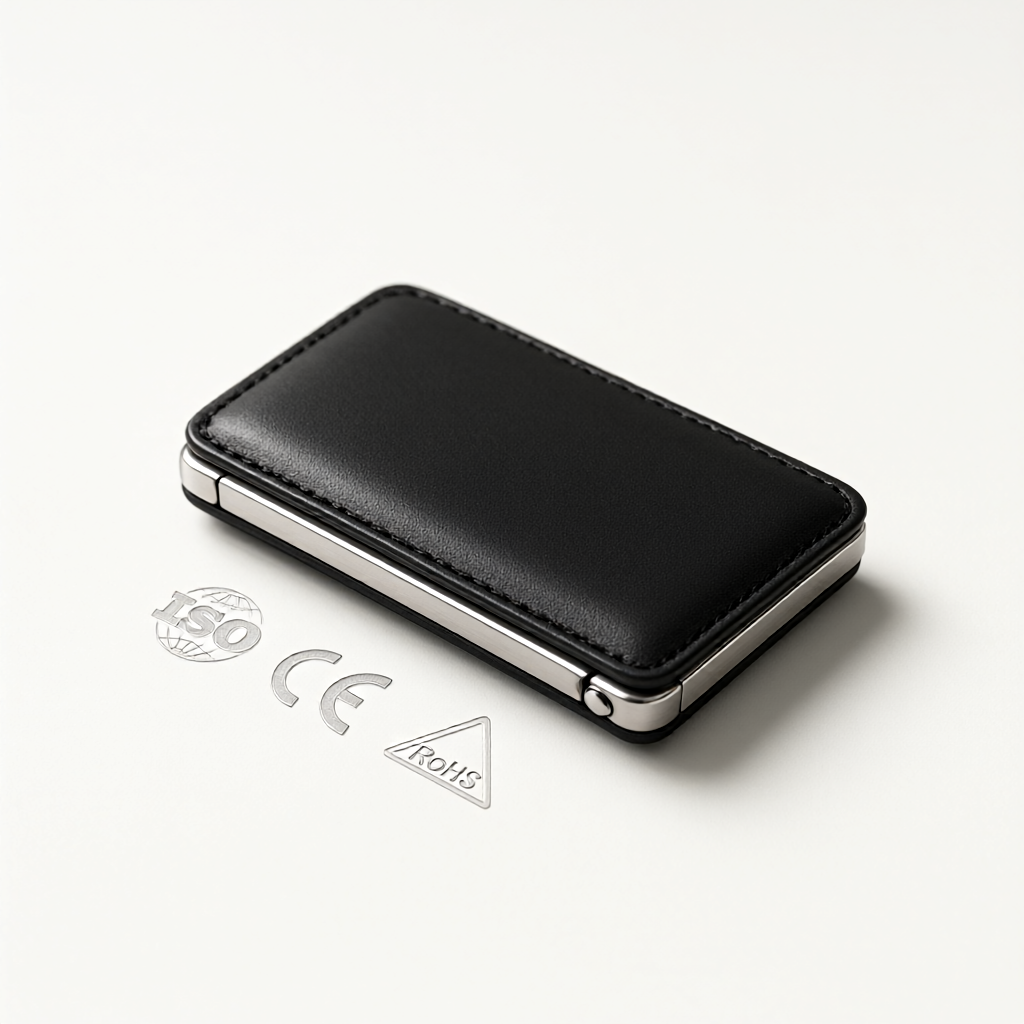
Reliable MagSafe wallet manufacturing follows established quality-management and material-compliance frameworks:
- ISO 9001 certifies that the manufacturer operates a documented quality management system covering design control, incoming inspection, in-process checks, and final release testing.
- BSCI social-compliance audits verify responsible labor practices at the factory level.
- REACH and RoHS compliance ensures that metals, coatings, adhesives, and polymer components do not contain restricted substances above permitted thresholds — essential for European market entry.
- SGS-tested materials provide third-party verification of composition and performance claims, particularly for RFID attenuation and magnetic strength.
Buyers should request current certification documents before placing orders. Certificates that are expired, issued by unverified laboratories, or missing scope descriptions should prompt clarification requests. The International Organization for Standardization (ISO) maintains publicly accessible standard references that help procurement teams validate supplier credentials independently.
OEM/ODM Manufacturing and Customization Options
B2B sourcing for MagSafe wallets typically follows one of two pathways:
OEM (Original Equipment Manufacturing): The buyer provides detailed engineering drawings, material specifications, and packaging art. The manufacturer produces to those exact specs. This path gives maximum design control but requires the buyer to supply complete technical documentation upfront.
ODM (Original Design Manufacturing): The manufacturer offers existing designs that the buyer can customize — logo placement, color anodization, laser-engraved patterns, and packaging. This path is faster to market and ideal for buyers launching a new product line without investing in full custom tooling.
Customization scope commonly includes:
- Laser engraving for logos, monograms, or graphic patterns
- UV printing on metal surfaces for full-color artwork
- Anodized color matching (Pantone-coordinated finishes)
- Custom retail packaging and blind shipping options
- Adjustable card-slot configurations for different regional card sizes
Turnkey ODM programs reduce time-to-market significantly. Buyers working toward Amazon FBA placement or retail chain distribution benefit from suppliers who can handle FBA prep, barcoding, and drop-shipping logistics alongside manufacturing. Our best wallet for B2B buyers guide outlines how to evaluate manufacturers on these dimensions.
MOQ, Lead Times, and Pricing Factors
Procurement planning for MagSafe wallets involves three interdependent variables:
MOQ (Minimum Order Quantity): Entry-level MOQs in the minimalist wallet segment typically start at 300 pieces per design per color. Higher customization levels — such as unique tooling for proprietary geometries or custom anodized colors requiring separate processing runs — may raise MOQ to 300–500 pieces. Suppliers offering very low MOQs with full customization should be evaluated carefully; capacity constraints can impact consistency.
Sample Lead Time: Production-ready samples for custom MagSafe wallets generally take 5–10 business days, depending on the complexity of engraving, anodizing, and any structural modifications. Fast-turnaround sampling (under 7 days) is achievable when modifying existing ODM bases rather than starting from scratch.
Pricing Variables: Unit FOB pricing is influenced by material choice, magnet grade, RFID integration, engraving complexity, packaging requirements, and order volume. Expect typical wholesale brackets of $4–$9 per unit for aluminum models, $7–$14 for carbon fiber, and $12–$22 for titanium, at standard order volumes. Prices shift downward at higher quantities but material and process costs form a floor that limits deep discounting.
For companies evaluating this space for promotional gift or corporate-branded product programs, understanding these pricing drivers helps negotiate realistic budgets rather than chasing unrealistically low quotes that often signal compromised materials or omitted steps.
Manufacturer Evaluation Framework
When comparing potential MagSafe wallet suppliers, B2B buyers should assess five dimensions:
- Certification currency and scope: Verify that ISO 9001, BSCI, REACH/RoHS, and SGS reports are current and explicitly cover the products being sourced.
- Measurable magnet specs: Request shear-force test results obtained with a force gauge. Vague claims like “strong magnetic hold” are insufficient for serious procurement decisions.
- Sample turnaround and accuracy: Test how closely the production sample matches the quoted specifications — thickness, weight, magnet strength, and RFID performance.
- Production capacity and consistency: Confirm monthly output capacity and inquire about quality-control checkpoints during mass production, not just pre-shipment inspection.
- Responsive communication and documentation: Reliable suppliers provide clear quotations, spec sheets, and compliance documents without requiring repeated follow-ups.
Suppliers that meet these criteria and offer flexibility across OEM and ODM models tend to produce fewer delays and fewer quality escalations during large orders.
Here is how the industry works — and here is how we meet these standards. At TOP EDC Wallet, we’ve spent over a decade refining this exact process. As a manufacturer, our approach to MagSafe wallet production centers on in-house CNC machining, controlled anodizing, and consistent magnet sourcing so that every batch matches the same shear-force and dimensional specs. We support both OEM engineering runs and ODM customization for brands looking to move quickly to market. If you’re evaluating suppliers or preparing a sourcing brief for your next MagSafe wallet program, talk to our team and we’ll walk you through our capabilities and current lead times.
MagSafe Wallets For Men: Where Can You Verify the Data and Sources?
- International Organization for Standardization (ISO) — www.iso.org
- best slim wallets for men sourcing guide — topedcwallet.com
- best card holder selection guide for B2B sourcing — topedcwallet.com
- minimalist wallets materials and features guide — topedcwallet.com
- good wallets for guys procurement guide — topedcwallet.com
- best RFID-blocking cards procurement guide — topedcwallet.com
- best minimal wallets for private label sourcing guide — topedcwallet.com
- best wallet for B2B buyers guide — topedcwallet.com
- talk to our team — topedcwallet.com
From article to product
Turning this into a product?
Most of what is written here is the difference between a sample that works and one that does not. We can build either — the useful one costs the same.
Keep reading
More on buying guides
wallet with trigger
How Does a Trigger Wallet Work? What Is the Pop-Up Mechanism? The core of…
Readbest bifold wallet for women
What Is a Bifold Wallet? The term “bifold” refers to the fold: the wallet…
ReadMen’s trifold wallets with zipper compartments vs. bifold
At a Glance The three dominant men’s wallet formats differ in panel count, depth,…
Read
About the author
TOPWALLET Editorial Team
TOPWALLET's editorial and engineering desk writes from bench testing at the Shenzhen (Longgang) facility: pull-force and cycle testing, 13.56 MHz shielding measurements, finish trials and factory audits, rather than supplier spec sheets. Every specification in these guides is one we write on a purchase order.
Written on the floor
This article was written by our production and QC team — the people who spec tolerances, run the finishing line and inspect every batch. Where it states a capacity, a pull force or a lead time, it comes from a measurement we made, not a supplier’s catalogue. If a number here disagrees with what your own supplier told you, tell us; several of these articles started as a correction from a buyer.
See how the factory works · Inspection process · Sourcing FAQ
Turning this into a product?
Most of what is written here is the difference between a sample that works and one that does not. We can build either — the useful one costs the same.