

What Makes an RFID Wallet Worth Buying?
The best RFID wallet for business procurement is not a single product but a combination of verified shielding performance, durable construction, and a manufacturer that can meet your volume, lead time, and customization requirements. For bulk buyers—whether you are running a corporate gift program, launching an EDC private-label line, stocking Amazon FBA inventory, or distributing promotional products—the priority should be RFID attenuation data, third-party lab verification, and OEM flexibility rather than marketing language alone.
A quality contactless-blocking wallet should shield 13.56 MHz high-frequency fields—this is the frequency used by credit cards, passports, and access credentials—using metallic or ferrite-based shielding layers that reduce signal strength by at least 25 dB to 35 dB. Anything less may leave your cardholder’s credentials partially exposed. Material choice matters as much as coverage: aluminum RFID wallets and titanium constructions provide broad-spectrum shielding, while carbon fiber RFID wallets require an integrated conductive layer to achieve the same attenuation.
For buyers evaluating wholesale RFID blocking wallets, start with test reports—not claims. Ask your supplier for ISO/IEC 14443 compliance evidence and independent lab results showing signal reduction across the 13.56 MHz band. The manufacturers that provide this documentation upfront are the ones you should shortlist.
How RFID Skimming Works and Why Shielding Matters
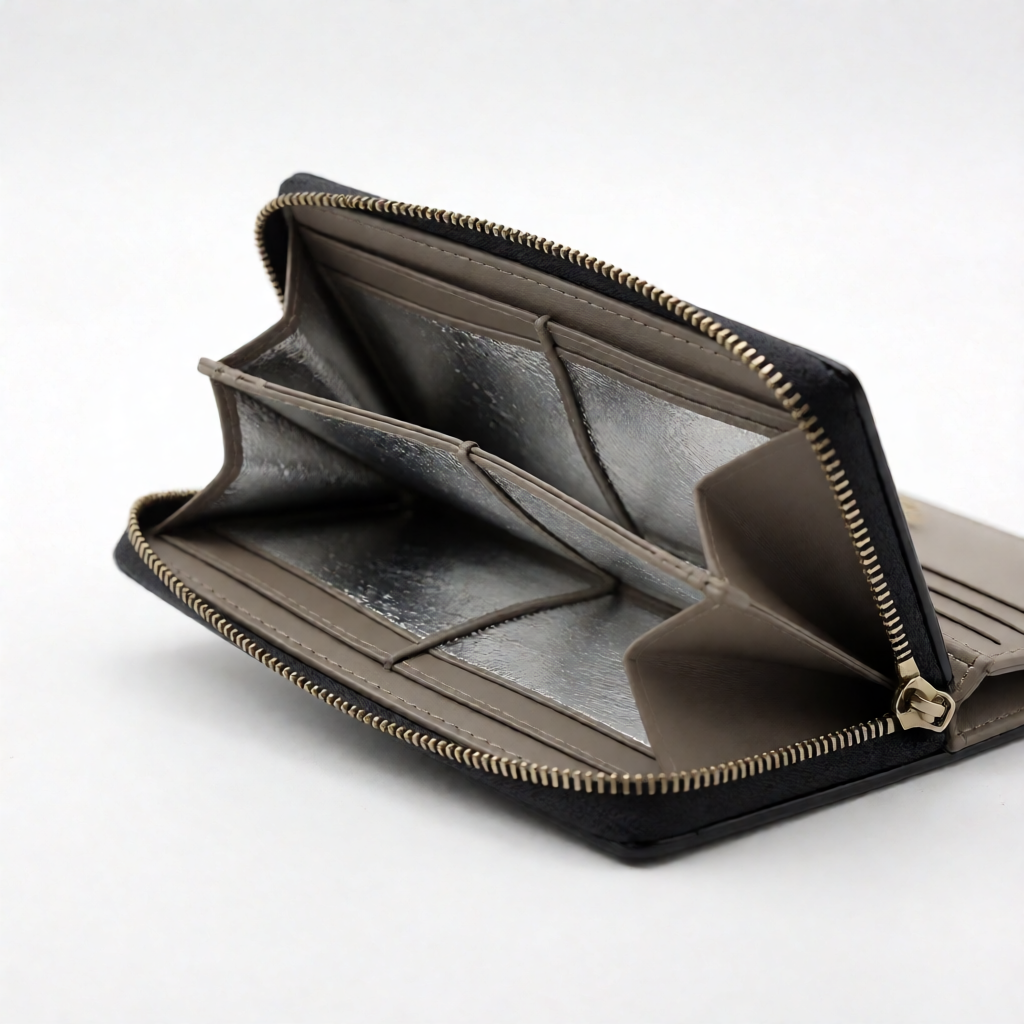
How does RFID skimming work?
RFID skimming relies on a small, portable radio-frequency reader placed within close proximity—typically a few centimeters to a meter—to a contactless card. When the reader emits a 13.56 MHz electromagnetic field, it powers the card’s embedded chip and reads data such as the account number, expiration date, and sometimes transaction limits. The attacker does not need physical access; they only need to be near the card inside a wallet, bag, or pocket.
While most contactless cards have transaction limits that reduce financial risk, cloning a card’s primary account number (PAN) can enable fraudulent offline transactions or targeted social engineering attacks. The threat level varies by region and payment infrastructure—countries with widespread chip-and-PIN or tokenized mobile payments face lower risk—but the card skimmer wallet use case remains valid for high-risk environments, frequent travelers, and organizations issuing access credentials.
Why does shielding matter?
Shielding works by creating a conductive barrier around each card slot. When the external reader’s RF field hits the barrier, the conductive material reflects or absorbs the energy, preventing it from reaching the card’s antenna. This is the same principle used in ferrite sheet EMI shielding and Faraday-cage constructions. A well-designed shield covers all card positions, not just the front slots, because skimmers can target cards from any angle.
An RFID-shielded wallet should attenuate the 13.56 MHz HF field sufficiently to drop the signal below the threshold required to power a passive card chip. In practical terms, this means the card should not respond when tested with a standard NFC reader at contact distance through the wallet.
Key Specifications — What to Look for in an RFID Wallet
What frequency range must an RFID wallet block?
Contactless payment cards, e-passports, and most access credentials operate at 13.56 MHz (high frequency, HF). This falls under the ISO/IEC 14443 and ISO/IEC 15693 standards families. An effective HF shield wallet must demonstrate attenuation at this exact frequency. Lower-frequency RFID (125 kHz) is used for older access-control systems but is far less common on modern payment cards.
What attenuation level should you expect?
Quality RFID-protection wallets typically achieve 25 dB to 35 dB of signal reduction at 13.56 MHz. At 30 dB, the RF field strength reaching the card is reduced to approximately one-thirtieth of its original intensity—enough to prevent most passive card chips from powering on. Buyers should ask suppliers for decibel (dB) reduction figures from controlled lab tests, not just “blocks RFID” statements.
What other specs define a quality unit?
- Card capacity: Minimalist designs hold 4–8 cards; bifold styles hold 6–12. Capacity affects thickness and thus shielding effectiveness—thinner wallets require more uniform coverage.
- Material: Aluminum, titanium, carbon fiber (with conductive backing), or hybrid constructions. Metal provides the most consistent shielding; carbon fiber needs a layered approach.
- Durability: Anodized aluminum resists scratches; titanium offers higher scratch resistance. Card-slot tolerances should not loosen significantly after repeated insertions.
- Weight and thickness: Metal wallets add 20–50 g compared to leather. Travel buyers often prefer sub-10 mm profiles.
- Access speed: Buyers report that metal wallets can slow card extraction slightly compared to leather. This is a trade-off, not a defect.
Standards & Requirements — How RFID Blocking Is Tested and Certified
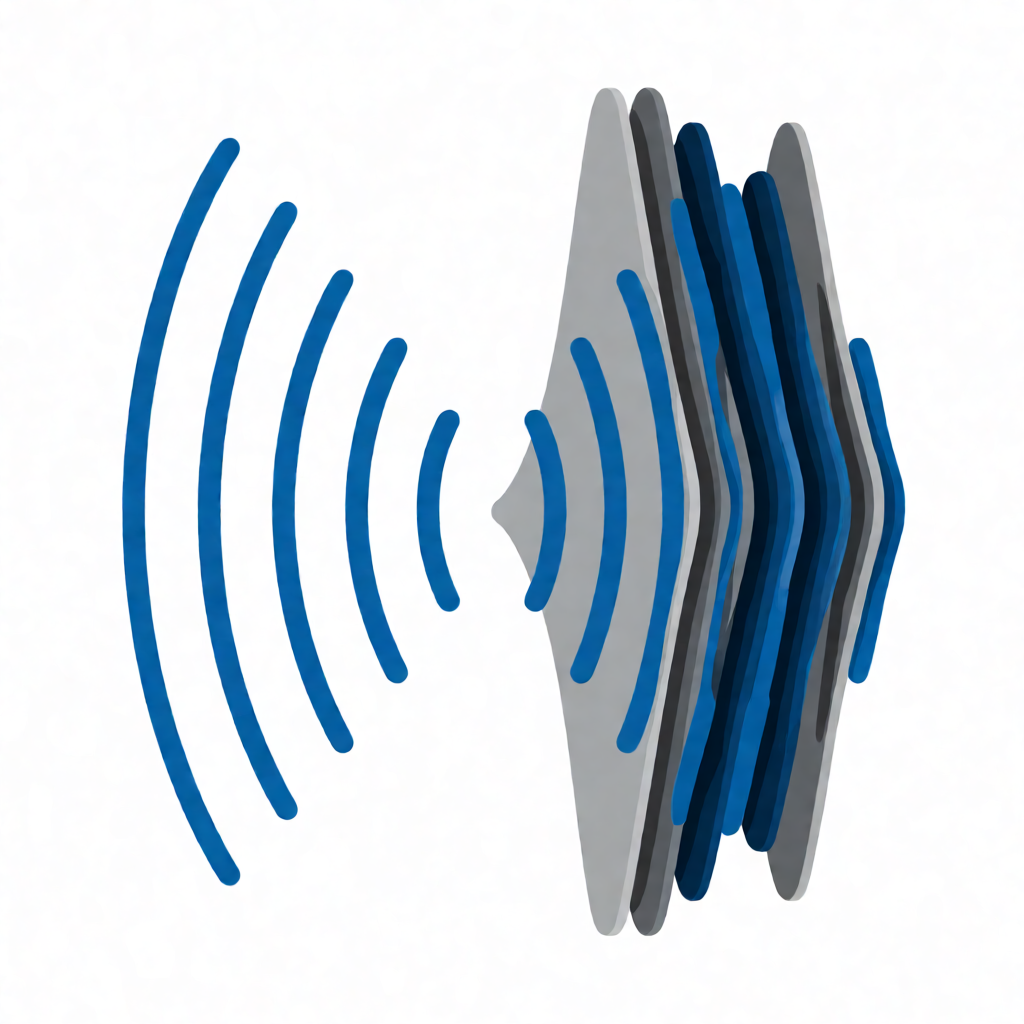
What standards verify RFID-blocking performance?
There is no single mandatory certification for consumer RFID-blocking wallets in most markets. However, the recognized test framework references:
- ISO/IEC 14443 — the international standard for proximity cards operating at 13.56 MHz. Wallet shielding performance is evaluated by demonstrating that a card meeting this standard cannot be read through the shielded barrier.
- NFC Forum guidelines — provide test procedures for NFC-compatible devices at 13.56 MHz.
- Third-party lab verification — independent testing through SGS, Intertek, or similar labs provides the most credible proof. Look for test reports that specify the equipment used (e.g., an NFC reader model), the test distance, and the dB reduction measured.
The FTC has published consumer guidance noting that while RFID skimming is a real vector, the actual risk to most cardholders is limited by transaction caps and tokenization. This underscores why independent test data—not brand promises—should drive your procurement decision. See FTC consumer advice on RFID security for background on threat context.
What certifications should a manufacturer hold?
Reputable OEM manufacturers typically hold:
- ISO 9001 — quality management system certification, indicating consistent production processes.
- BSCI — social compliance audit, relevant for brands with ESG requirements.
- REACH / RoHS compliance — ensures materials used in shielding layers and finishes do not contain restricted substances, critical for EU and UK market entry.
- SGS-tested materials — third-party material verification adds credibility to shielding-performance claims.
No regulatory body certifies “RFID-blocking performance” for consumer wallets in the United States or EU. Any manufacturer claiming a government or standards-body “RFID certification” for their wallet is misrepresenting the landscape.
B2B Procurement Considerations — OEM, MOQ, and Customization
What MOQ should a buyer expect from an OEM manufacturer?
MOQs for custom RFID wallets OEM production vary by construction complexity:
- Simple aluminum RFID wallets: 100–300 pcs per design
- Carbon fiber or hybrid models: 200–500 pcs per design
- Complex multi-material constructions: 500+ pcs
Low-MOQ suppliers enable smaller brands and Amazon FBA resellers to test designs before scaling. However, extremely low MOQs (under 50 pcs) often come with higher per-unit costs and limited customization options.
What customization is typically available?
Standard OEM services for RFID wallets include:
- Laser engraving — logos, patterns, or custom artwork on metal surfaces
- UV printing — full-color designs on card-holder faces
- Anodized color finishes — black, silver, blue, red, or custom Pantone matches on aluminum
- Custom packaging — retail boxes, inserts, and branding
- Private-label tooling — unique forms, embossing, and slot configurations
When evaluating suppliers, ask whether they provide design-for-manufacturability (DFM) feedback during the quotation phase. Good manufacturers flag potential issues—such as slot widths that compromise shielding continuity—before tooling begins.
For guidance on selecting card holders and minimalist wallets for B2B sourcing, see our Best Card Holder Buying Guide for B2B Sourcing and Everyday Carry Use and our Best Minimal Wallets for B2B Sourcing and Private Label Programs.
If you have a design concept and want to understand pricing and lead times, send us your specifications for a preliminary quote.
Related Considerations — Material Choices and Limitations
What materials offer the best RFID protection in a wallet?
Each material presents a different trade-off between shielding effectiveness, weight, durability, and aesthetics:
| Material | Shielding Effectiveness | Weight | Durability | Cost |
|---|---|---|---|---|
| Aluminum (anodized) | Excellent — full coverage, consistent attenuation | Moderate | High — scratch-resistant anodized finish | Mid |
| Titanium | Excellent — naturally conductive, very strong | High | Very high — superior scratch resistance | High |
| Carbon fiber (with conductive layer) | Good to excellent — depends on backing material quality | Low | Moderate — surface can chip if abused | Mid to high |
| Hybrid (metal frame + carbon fiber face) | Excellent — combines best properties | Moderate | High | Mid |
| Ferrite-sheet lined leather | Good — dependent on sheet coverage completeness | Low | Variable — leather wears over time | Low to mid |
Aluminum RFID wallets remain the most consistent performers because the metal itself is the shield. Titanium money clips and card holders offer the same shielding with greater structural hardness. Carbon fiber requires careful engineering—a bare carbon-fiber panel blocks almost nothing; the conductive grounding layer beneath it is what provides protection.
What are the limitations of RFID wallets?
An honest assessment of wholesale RFID blocking wallets must include their constraints:
- They only protect against 13.56 MHz HF RFID/NFC. They do not block low-frequency (125 kHz) credential cloning, which is rare on payment cards but still used in some access-control systems.
- They do not prevent chip-and-PIN fraud, phishing, or data breaches. The biggest card-fraud vectors today are online, not physical skimming.
- Shielding is only as good as its coverage. Gaps between card slots, open back panels, or poorly aligned shields create weak points.
- They do not protect magnetic-stripe cards. RFID wallets shield contactless chips only.
- Repeated flexing can degrade shielding integrity in budget constructions where conductive layers delaminate.
For a broader discussion of EDC wallet evaluation criteria, see our Best Wallet for B2B Buyers: EDC Wallet Procurement Guide and our Good Wallets for Guys: B2B EDC Wallet Buying Guide.
How should you evaluate an RFID wallet manufacturer for OEM/ODM partnerships?
When you move from selection to supplier qualification, focus on these factors:
- Test documentation: Request ISO/IEC 14443 compliance evidence and independent lab reports showing dB reduction at 13.56 MHz.
- Sample quality: Evaluate sample shielding with a consumer-grade NFC reader before committing to bulk. Measure read distance through the wallet yourself.
- Production capability: Confirm in-house machining, finishing, and assembly—not just trading. In-house CNC and laser engraving reduce lead times and improve quality control.
- Certifications: ISO 9001, BSCI audit reports, REACH/RoHS compliance certificates.
- Lead time and MOQ alignment: Ensure the supplier’s minimums and sample turnaround match your go-to-market timeline.
- Packaging and logistics: Verify they can prepare FBA-compliant packaging, barcoding, and multi-carton shipments if you are an Amazon reseller.
See our Best Minimalist Wallet: Materials, Specs & B2B Buying Guide for additional specification comparison criteria.
How the Industry Works — And Where We Fit In
As a manufacturer, our approach to this is straightforward: build wallets that meet the shielding standards your buyers will ask about, and give you the documentation to prove it.
We have been producing minimalist EDC wallets and pocket gear since 2014, and over the past 13+ years we have shipped to brands across North America, Europe, Australia, and Southeast Asia. Our facility is ISO 9001 certified and BSCI audited, and all materials used in our wallets meet REACH and RoHS requirements. We hold a 50,000 sq ft factory with in-house CNC machining, laser engraving, UV printing, and aluminum anodizing—so every step from raw material to finished metal RFID wallet happens under one roof.
For buyers who need custom RFID wallets OEM work—whether that is a unique aluminum form factor, a carbon fiber card holder with a specific shielding layer, or a titanium money clip with private-label packaging—we handle the full cycle from concept to shipment. Our typical sample lead time is 7 days, and our MOQ starts at 100 pieces per design, which makes it feasible for EDC brand private label launches and Amazon FBA reseller sourcing without large upfront commitments.
If you are evaluating an RFID wallet for corporate gift programs, promotional product distribution, or your own branded line, the right partner is one that can show you test data, not just tell you. Contact Our Team to share your requirements and receive a quotation tailored to your volume and specification.
Sources & References
- ISO/IEC 14443 — www.iso.org
- FTC consumer advice on RFID security — www.ftc.gov
- Best Card Holder Buying Guide for B2B Sourcing and Everyday Carry Use — topedcwallet.com
- Best Minimal Wallets for B2B Sourcing and Private Label Programs — topedcwallet.com
- send us your specifications for a preliminary quote — topedcwallet.com
- Best Wallet for B2B Buyers: EDC Wallet Procurement Guide — topedcwallet.com
- Good Wallets for Guys: B2B EDC Wallet Buying Guide — topedcwallet.com
- Best Minimalist Wallet: Materials, Specs & B2B Buying Guide — topedcwallet.com
From article to product
Turning this into a product?
Most of what is written here is the difference between a sample that works and one that does not. We can build either — the useful one costs the same.
Keep reading
More on buying guides
Best Men’s Card Wallet: B2B Buyer’s Selection Guide 2026
Compare materials, RFID specs, and certifications for men's card wallets. Get procurement-ready guidance on…
ReadBest Bifold Wallets for Bulk Orders — B2B Procurement Guide
Compare materials, specs, certifications, and customization options for bulk bifold wallet sourcing. Learn what…
ReadSale Wallets Women — Bulk Sourcing Guide for Buyers
Find what women's wallets are selling well in bulk — materials, RFID specs, certifications,…
Read
About the author
Wu, Leon
Leon Wu is the senior product engineer and EDC testing lead at TOPWALLET. He has spent more than a decade on wallet design-for-manufacture, materials and quality control at the company's Dongguan facility, and writes from bench testing, pull-force and 13.56 MHz shielding measurements rather than supplier spec sheets.
Written on the floor
This article was written by our production and QC team — the people who spec tolerances, run the finishing line and inspect every batch. Where it states a capacity, a pull force or a lead time, it comes from a measurement we made, not a supplier’s catalogue. If a number here disagrees with what your own supplier told you, tell us; several of these articles started as a correction from a buyer.
See how the factory works · Inspection process · Sourcing FAQ
Turning this into a product?
Most of what is written here is the difference between a sample that works and one that does not. We can build either — the useful one costs the same.