

Quick Answer — What Makes a Front Pocket Wallet Worth Buying?
A front pocket wallet is a compact, minimalist carrier designed to sit comfortably in the front pant pocket rather than the back. It typically holds 4–12 cards, a folded bill, and occasionally a key or two, using materials like CNC-machined aluminum, brushed titanium, or layered carbon fiber. For B2B buyers, the best front pocket wallet balances three things: material durability that survives daily loading and unloading, a profile thin enough to remain invisible in a front pocket, and manufacturing consistency that scales across thousands of units without cosmetic variation.
The category has shifted from novelty accessories to mainstream everyday carry (EDC) items. Buyers in 2026 expect slim wallets to offer genuine RFID protection, anodized or coated finishes that resist scratches, and tight tolerances on card ejection mechanisms. A well-engineered front stash wallet from a reliable supplier will outlast a comparable bifold in pocket-wear cycles by a significant margin, which is why Amazon FBA sellers and EDC brand owners continue to source these units in volume.
How Do Front Pocket Wallets Compare to Traditional Wallets?
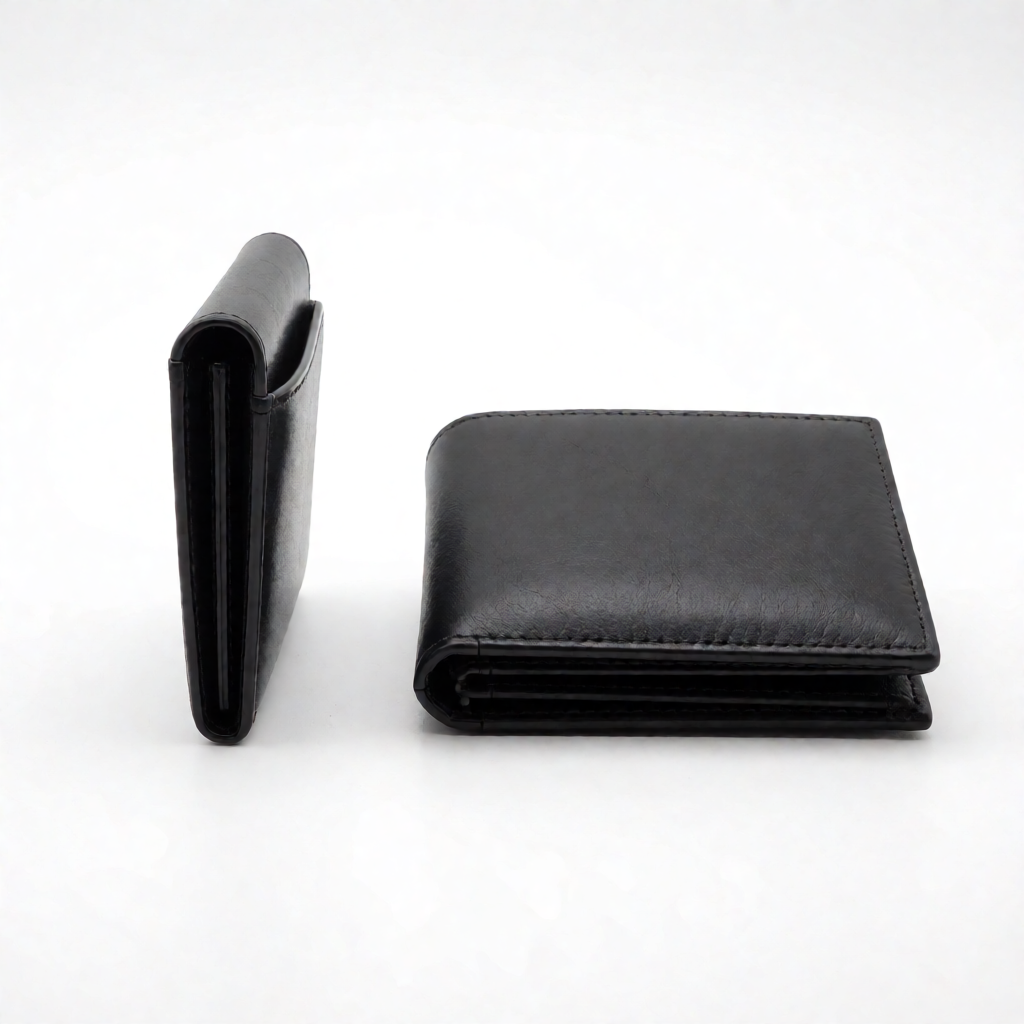
What Makes a Front Pocket Wallet Better Than a Back Pocket One?
The primary advantage is posture and comfort. Sitting on a back pocket wallet compresses the lumbar region and can contribute to nerve irritation over time. A front pocket wallet eliminates that pressure point entirely while remaining accessible without reaching behind. For commutes, travel, and outdoor use, a front-loaded design also reduces the risk of pickpocketing, since the carrier stays in the buyer’s line of sight.
Traditional biwallets carry significantly more bulk — often 15–20 mm thick when fully loaded. A slim front pocket wallet typically runs 8–14 mm, making it more practical for tailored trousers, activewear, and situations where pocket space is limited. The trade-off is capacity: front pocket designs require users to carry only what they actually need, which is a feature many buyers prefer rather than a limitation.
Are Minimalist Front Pocket Wallets Secure Against Theft?
Security is a legitimate concern for both end consumers and the brands selling to them. Front pocket wallets are inherently more secure than back pocket models because they remain visible and physically connected to the wearer at all times. Some models add mechanical features such as spring-loaded card stacks, secure latching clips, or locking money clip hinges that resist casual grab-and-pull.
It is important to distinguish between marketed “anti-theft” claims and actual mechanical security. A wallet that simply sits in a front pocket provides baseline security. Features like reinforced stitching on fabric models, metal clasp mechanisms, or RFID-blocking layers add incremental protection. For B2B buyers evaluating whether a product line meets their market’s expectations, the practical question is not whether the wallet is “theft-proof” — no wallet is — but whether its security features are real, testable, and clearly communicated to end users.
How Do Front Pocket Wallets Work for Travel and Hiking?
For travelers and outdoor enthusiasts, a minimalist wallet offers advantages that bulkier designs cannot match. A slim aluminum or carbon fiber cardholder weighs between 30 and 70 grams, which is negligible in a pack or pocket. It also resists water damage far better than leather or fabric alternatives, and it does not degrade when exposed to sweat or rain.
The main consideration for outdoor use is card retention under movement. A well-designed spring or tension mechanism keeps cards from sliding out during activity. Buyers should verify that the ejection force is strong enough to hold cards securely but gentle enough to operate with one hand. This balance is where many budget options fall short, which is why hands-on sampling remains essential before placing a bulk order.
What Materials Are Used in Front Pocket Wallets?
What Materials Are Best for Minimalist Wallets?
The three dominant materials in the premium EDC wallet segment are aluminum alloy, titanium, and carbon fiber. Each has distinct performance characteristics that matter differently depending on the target market.
CNC machined aluminum is the most common material for entry-level and mid-tier wallets. It offers excellent strength-to-weight ratio, accepts a range of anodized colors, and costs less to produce than titanium. The finish quality depends heavily on the anodizing process — MIL-SPEC or hard-coat anodizing provides superior scratch resistance compared to standard coloring. Aluminum wallets typically weight between 35 and 55 grams.
Titanium money clip and cardholder styles sit in the premium tier. Titanium is naturally corrosion-resistant, does not require anodizing for basic protection (though it can be anodized for color), and has a higher perceived value among EDC enthusiasts. The material is more expensive to machine due to tool wear and longer cycle times, which drives unit cost up. Typical weight ranges from 40 to 65 grams depending on design.
Carbon fiber card holders are valued for their distinctive woven appearance and exceptional stiffness. They are lightweight and resist moisture, chemicals, and UV degradation. The primary downside is cost — layered carbon fiber requires precision cutting and edge sealing to prevent delamination, and the material itself carries a higher raw cost than aluminum.
How Do RFID Blocking Wallets Differ From Standard Models?
RFID-blocking wallets incorporate a conductive layer — usually a thin sheet of metal mesh or ferrite material — between the exterior shell and the card storage area. This layer creates a Faraday cage effect that attenuates the 13.56 MHz frequency used by contactless payment cards and passports.
Not all RFID-blocking products perform equally. The effectiveness depends on the completeness of the conductive barrier — gaps on any side allow signal leakage. For B2B buyers, requesting test data from the supplier is standard practice. According to the FTC guidelines on RFID protection, consumers should verify that blocking claims are supported by testing rather than assumed from marketing language alone.
What Are the Key Specifications to Evaluate?
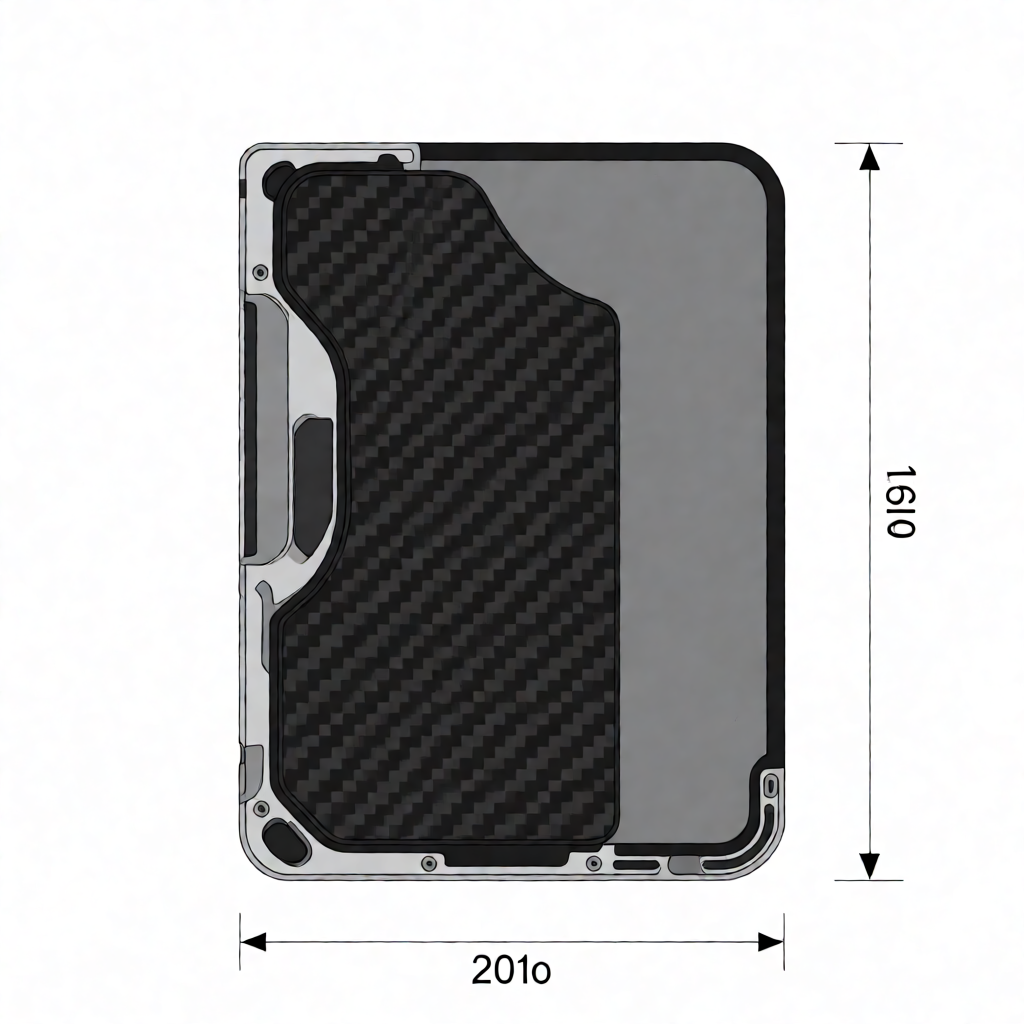
What Are the Key Specs for a Quality Front Pocket Wallet?
When evaluating front pocket wallets for sourcing, focus on these measurable specifications:
| Specification | Typical Range | Why It Matters |
|---|---|---|
| Overall thickness (loaded) | 8–14 mm | Determines pocket visibility and comfort |
| Empty weight | 30–70 g | Affects perceived quality and carry comfort |
| Card capacity | 4–12 cards | Must match the target market’s actual carry habits |
| Bill compartment | Folded or elastic loop | Folded bills reduce bulk versus rolled |
| Metal thickness | 1.5–3.0 mm | Influences durability and rigidity |
| Anodize/coating hardness | 200–600 HV (Vickers) | Determines scratch resistance over time |
| RFID attenuation | ≥ 20 dB at 13.56 MHz | Confirms functional blocking performance |
How Much Can a Front Pocket Wallet Actually Hold?
A typical minimalist front pocket wallet holds 6 to 10 credit or ID cards plus a folded bill. Some designs include a separate cash sleeve or an integrated money clip that adds another 2–4 bills. Capacity is constrained by the thickness of the metal or carbon fiber frame and the tension mechanism used to retain cards.
Buyers should match wallet capacity to their target market’s actual behavior. An Amazon FBA audience in North America typically carries 6–8 cards and occasional cash. A corporate gift client may prefer a 4-card capacity with a larger bill section for a cleaner presentation. Understanding this variation prevents over-engineering or under-specifying the product.
How Do I Choose the Right Size for My Cards and Cash?
Standard ISO/IEC 7810 ID-1 cards measure 85.6 × 53.98 mm. Any wallet in this market must accommodate this dimension with a small tolerance margin. The internal cavity width should be at least 55 mm, and the card slot spacing should allow insertion and removal without excessive force.
For buyers specifying custom dimensions, the critical measurement is the internal cavity depth relative to card stack height. A stack of 8 standard cards plus a folded bill adds approximately 6–8 mm of thickness. Designing the cavity to within ±1 mm of this target ensures a snug fit that retains cards securely without making extraction difficult.
What Standards and Certifications Apply?
Do I Really Need RFID Blocking?
RFID blocking is no longer optional for many B2B buyers entering the North American and European markets. Contactless payment adoption has grown substantially, and end consumers increasingly expect some level of electronic protection as a standard feature. However, the requirement varies by channel. Corporate gift buyers and promotional distributors often view RFID blocking as a value-add differentiator. Amazon FBA sellers frequently include it as a baseline expectation in their listings.
From a compliance perspective, there is no mandatory regulatory requirement for RFID blocking in consumer wallets in the United States or the European Union. The feature is market-driven rather than legally required. That said, the ASTM International develops test methods for assessing the shielding effectiveness of RFID-blocking materials, and reputable suppliers should be able to reference those test protocols when making performance claims.
What Manufacturing Standards Apply to EDC Wallet Production?
Several standards and certifications are relevant to EDC wallet manufacturing:
- ISO 9001 — Quality management systems certification that indicates the manufacturer has documented processes for consistency, defect reduction, and continuous improvement. It is the most common baseline certification for contract manufacturers in this sector.
- BSCI — Business Social Compliance Initiative auditing, which addresses labor standards and ethical sourcing practices. Relevant for buyers in European markets where supply chain transparency is increasingly scrutinized.
- REACH and RoHS compliance — European Union regulations governing restricted substances in manufactured goods. Materials used in wallets — including anodizing chemicals, adhesives, and coatings — must comply with these restrictions for sale in EU markets.
- SGS testing — Independent third-party material verification that confirms heavy metal content, coating adhesion, and mechanical durability meet stated specifications.
These certifications do not guarantee product quality on their own, but they signal that the manufacturer operates within recognized quality and compliance frameworks. Buyers should request current certification documents and verify them directly with the issuing body when evaluating potential suppliers.
What Should You Consider When Sourcing or Branding?
What Should You Consider When Choosing a Front Pocket Wallet Supplier?
Sourcing minimalist wallets for private label or wholesale requires evaluation across several dimensions beyond unit price:
Manufacturing capability — In-house CNC machining is a significant advantage. Suppliers who machine their own aluminum and titanium components maintain tighter tolerances and faster revision cycles than those who outsource machining to third parties. Ask whether the supplier owns their CNC equipment or contracts it out.
Material consistency — Batch-to-batch variation in anodized color, carbon fiber layup, or titanium surface finish can damage a brand’s reputation if customers receive noticeably different units. Reputable suppliers implement incoming material inspection and in-process quality checks.
Sample lead time — A quick sample turnaround (typically 5–10 business days) indicates an organized production pipeline. Longer sample times often reflect less streamlined operations that may also slow mass production.
MOQ flexibility — Minimum order quantities vary significantly across the industry. Some suppliers require 1,000+ pieces for custom designs, while others accommodate prototypes and small runs starting at lower volumes. For Amazon FBA sellers testing a new product, lower MOQs reduce inventory risk during the validation phase.
Customization depth — Evaluate whether the supplier offers laser engraving, UV printing, custom packaging, and private label services. A manufacturer that can handle multiple branding touchpoints simplifies the sourcing process and reduces coordination overhead.
For a more detailed overview of card holder and minimalist wallet procurement criteria, see our best card holder selection guide for B2B sourcing and our minimalist wallet private label guide.
What Customization Options Are Available for Private-Label Wallets?
Private-label front pocket wallets support a range of customization options that differentiate a brand in a crowded market:
- Logo application — Laser engraving on metal surfaces is the most durable option, producing permanent marks that resist fading and abrasion. UV printing works well on flat surfaces and allows full-color designs. Both methods are compatible with aluminum and titanium wallets.
- Anodized color — Aluminum wallets can be anodized in a wide range of colors, from standard black, silver, and blue to custom RAL-matched shades for brand consistency.
- Custom packaging — Retail-ready boxes, blister packs, and hanging cards can be designed to match brand aesthetics. Packaging choices affect both shelf appeal and per-unit shipping cost.
- Mechanical customization — Spring tension, card slot spacing, and money clip force can be adjusted during design to match the target market’s preferences.
- Material selection — Buyers can choose between aluminum, titanium, or carbon fiber based on their positioning and price point.
When specifying custom requirements, providing detailed opening sizes, finish preferences, and packaging specifications to the supplier early in the process prevents costly revisions after the sample stage. For insights into slim wallet sizing and specification planning, review our best slim wallets for men sourcing guide and our minimalist wallet materials comparison.
< a href="https://topedcwallet.com/contact/">Request a bulk quotation with your specification details.
Here Is How We Meet These Standards as a Manufacturer
As a manufacturer operating since 2014, our approach to front pocket wallet production focuses on aligning each design decision with the standards and specifications outlined above. We understand that B2B buyers — whether they are Amazon FBA sellers building a product line, EDC brand owners developing a private label, or promotional distributors sourcing branded merchandise — need a supplier who can translate engineering requirements into consistent, market-ready output.
Our in-house CNC machining capability means we control the critical dimensioning of aluminum and titanium wallets from raw billet to finished part. This eliminates the tolerance drift that occurs when machining is outsourced, and it allows us to adjust designs quickly during the prototyping phase. Our laser engraving and UV printing stations handle logo application and custom artwork directly, reducing the need for additional vendors in the branding pipeline.
We hold ISO 9001 certification and operate under BSCI-audited conditions, which provides buyers in regulated markets with documented proof of quality management and social compliance. All materials used in our production are REACH and RoHS compliant, and we provide SGS test reports for metal composition and surface coating performance upon request. This compliance documentation is essential for buyers entering the European market or fulfilling corporate procurement requirements.
Our typical sample lead time is 7 days for standard designs and custom configurations, allowing buyers to evaluate fit, finish, and mechanism performance before committing to a production run. We accept low MOQs starting at 100 pieces for custom orders, which supports brand owners and Amazon sellers who are validating new products before scaling to larger volumes. Our monthly production capacity exceeds 500,000 units, giving buyers confidence that supply constraints will not interrupt fulfillment schedules.
For buyers evaluating a best front pocket wallet supplier, the combination of in-house manufacturing, verified certifications, flexible MOQs, and demonstrated export experience across 30+ countries provides a practical foundation for sourcing decisions. Whether you are developing a new EDC brand, expanding an existing product line, or sourcing corporate gift inventory, we can support the project from concept through final delivery.
Sources & References
- FTC guidelines on RFID protection — www.ftc.gov
- ASTM International — www.astm.org
- best card holder selection guide for B2B sourcing — topedcwallet.com
- minimalist wallet private label guide — topedcwallet.com
- best slim wallets for men sourcing guide — topedcwallet.com
- minimalist wallet materials comparison — topedcwallet.com
- Get a Free Quote → — topedcwallet.com
From article to product
Turning this into a product?
Most of what is written here is the difference between a sample that works and one that does not. We can build either — the useful one costs the same.
Keep reading
More on buying guides
Best Men’s Card Wallet: B2B Buyer’s Selection Guide 2026
Compare materials, RFID specs, and certifications for men's card wallets. Get procurement-ready guidance on…
ReadBest Bifold Wallets for Bulk Orders — B2B Procurement Guide
Compare materials, specs, certifications, and customization options for bulk bifold wallet sourcing. Learn what…
ReadSale Wallets Women — Bulk Sourcing Guide for Buyers
Find what women's wallets are selling well in bulk — materials, RFID specs, certifications,…
Read
About the author
Wu, Leon
Leon Wu is the senior product engineer and EDC testing lead at TOPWALLET. He has spent more than a decade on wallet design-for-manufacture, materials and quality control at the company's Dongguan facility, and writes from bench testing, pull-force and 13.56 MHz shielding measurements rather than supplier spec sheets.
Written on the floor
This article was written by our production and QC team — the people who spec tolerances, run the finishing line and inspect every batch. Where it states a capacity, a pull force or a lead time, it comes from a measurement we made, not a supplier’s catalogue. If a number here disagrees with what your own supplier told you, tell us; several of these articles started as a correction from a buyer.
See how the factory works · Inspection process · Sourcing FAQ
Turning this into a product?
Most of what is written here is the difference between a sample that works and one that does not. We can build either — the useful one costs the same.