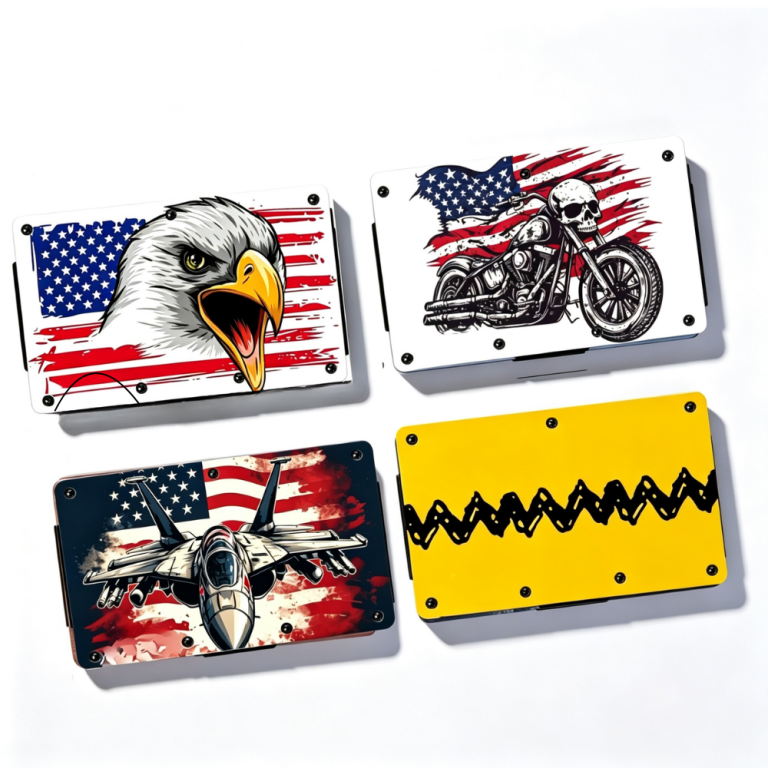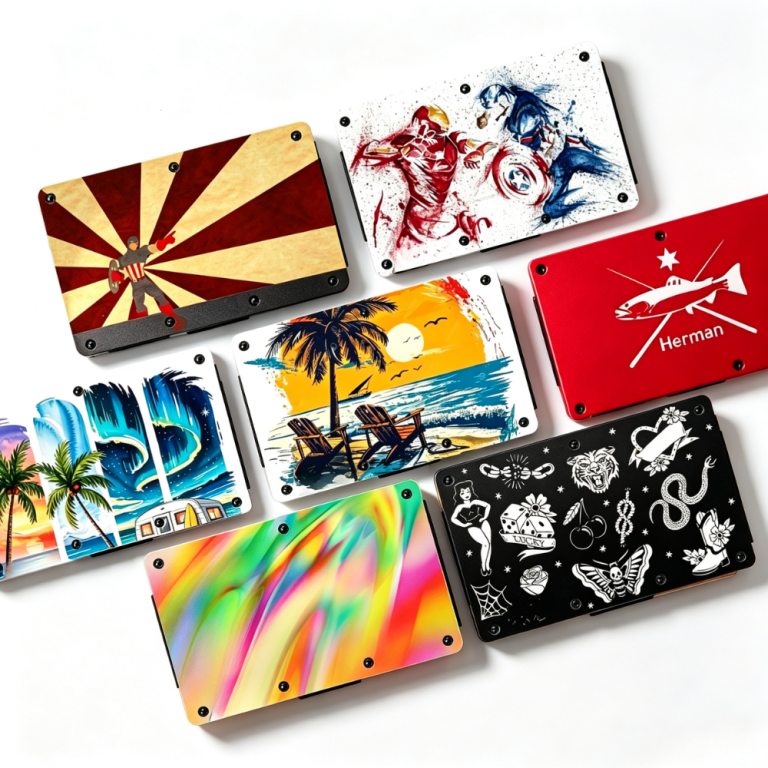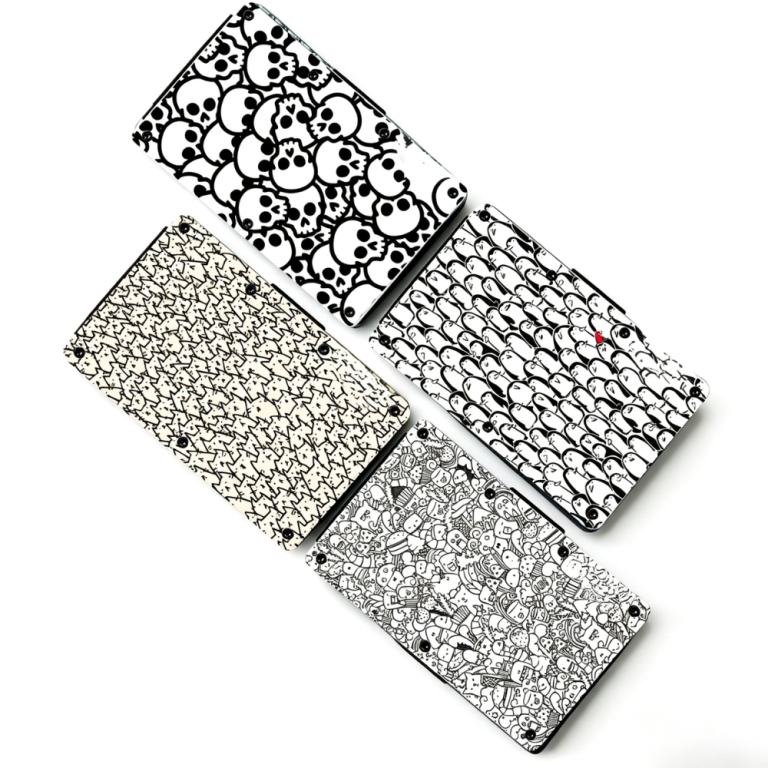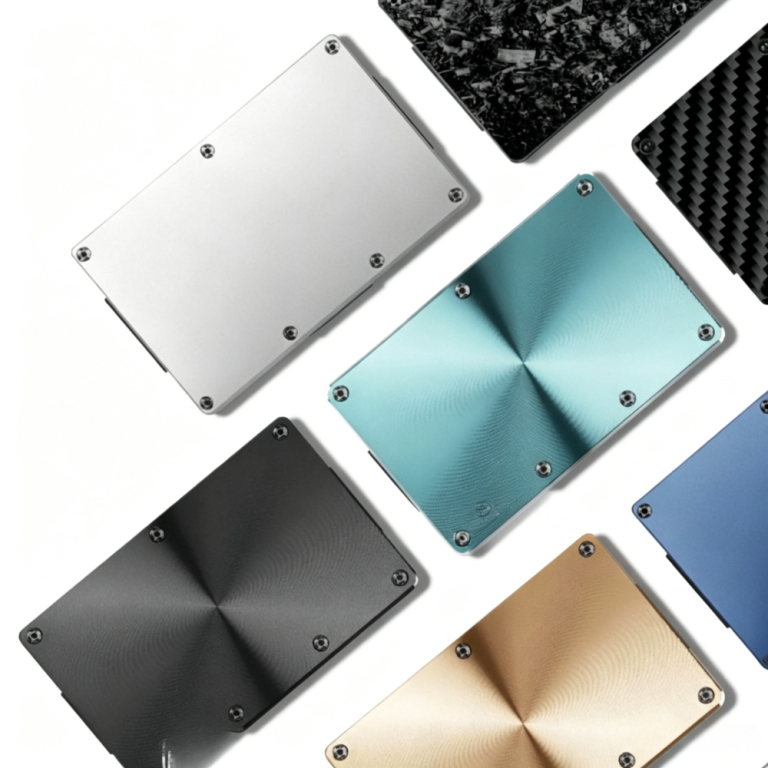
Aluminum RFID Blocking Metal Card Wallet
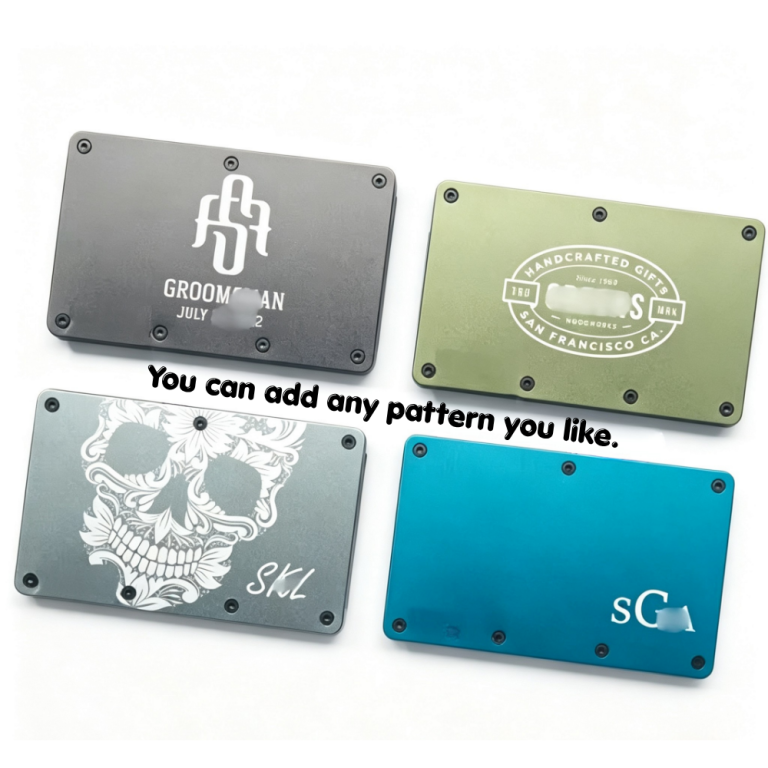
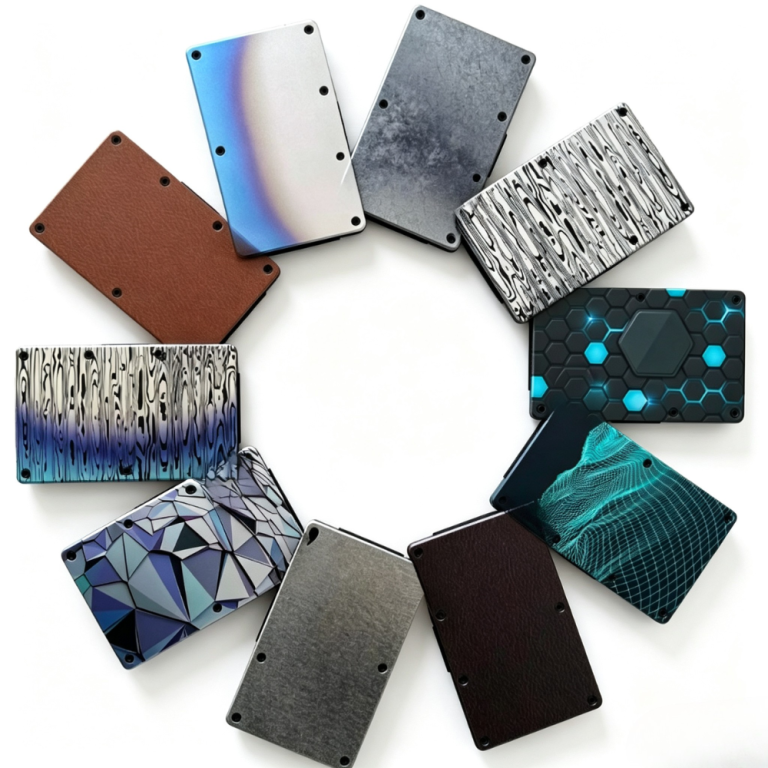
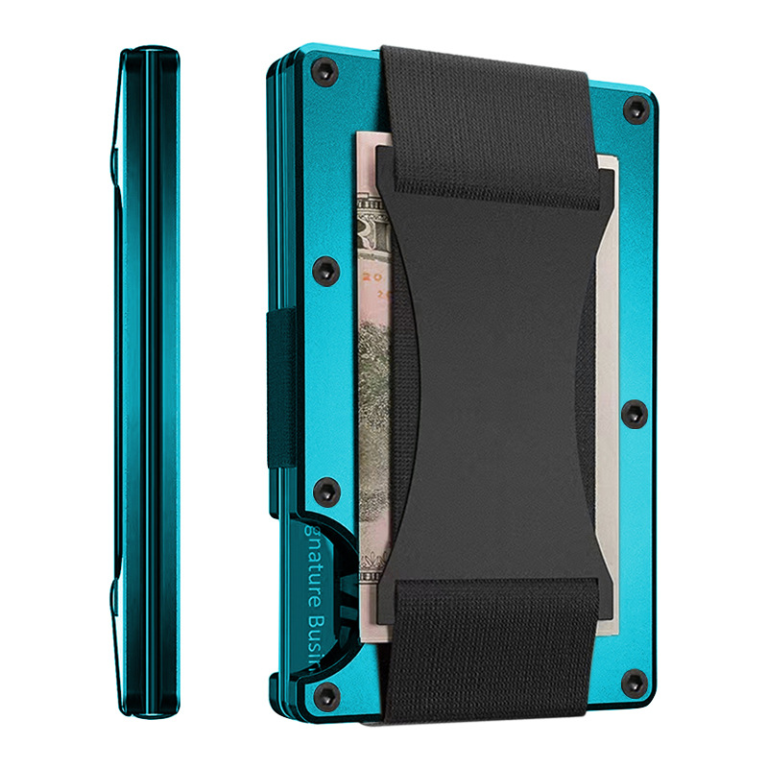
Slim aluminum card holder with RFID blocking, glare-pattern finish, and money clip. Holds credit cards and…
Quote this product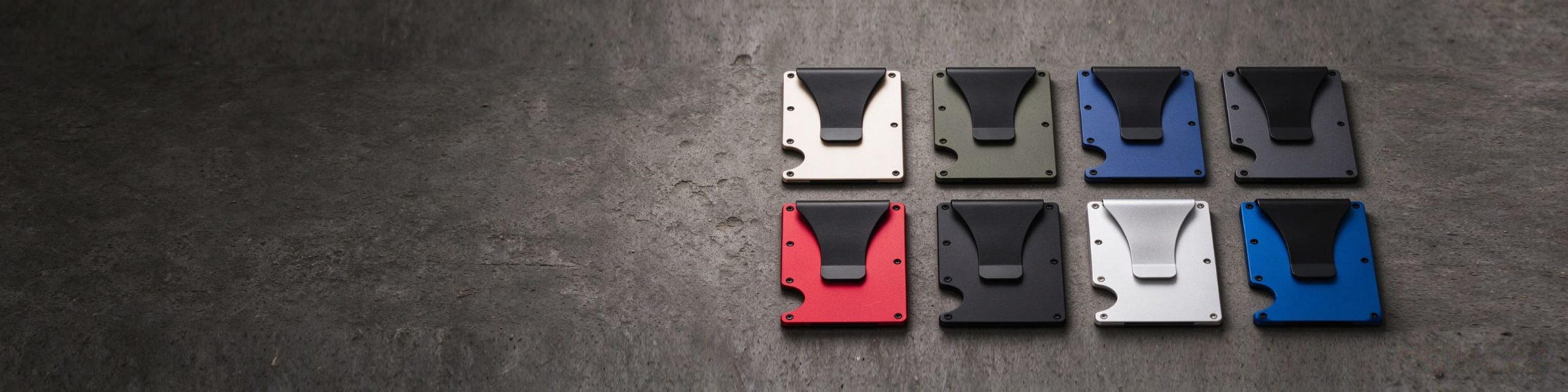
Product Line
Ultra-slim card wallets, usually two plates and a retention system, built to replace a bulky traditional wallet. The engineering is almost entirely about retention force and plate flatness.
In production
Tooled, tested and repeatable. Quote the exact product, or ask for a sample before you commit.
Slim aluminum card holder with RFID blocking, glare-pattern finish, and money clip. Holds credit cards and…
Quote this productSlim aluminum card holder with RFID blocking, laser-printed finish, and money clip. Holds credit cards, ID,…
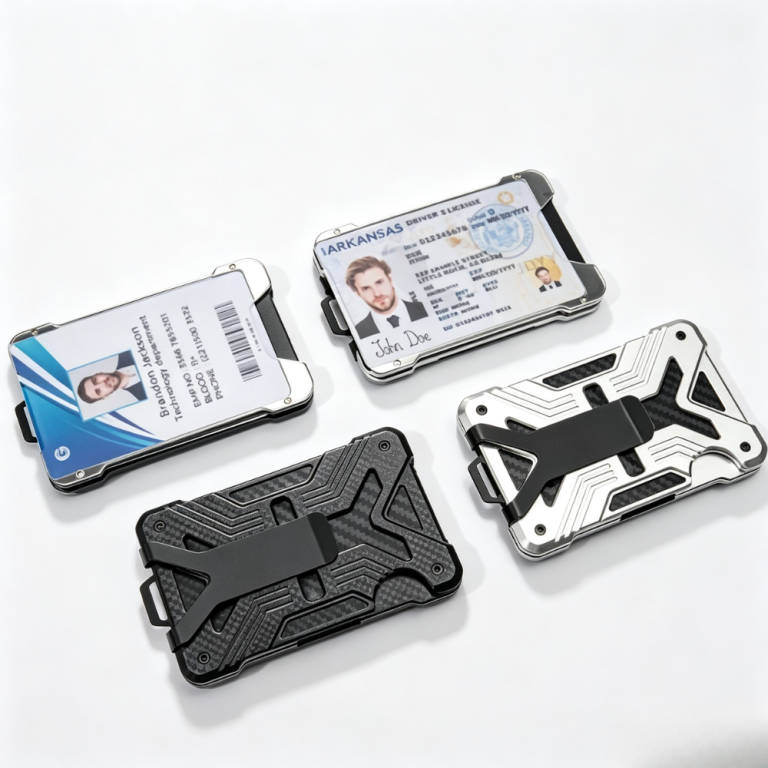
Quote this productExecutive business card holder. Brushed aluminium. 20–25 cards. Precision-machined edges.
Quote this productSlim carbon fibre card holder. 28g. 2–4 cards. Removable elastic strap. Front-pocket carry.
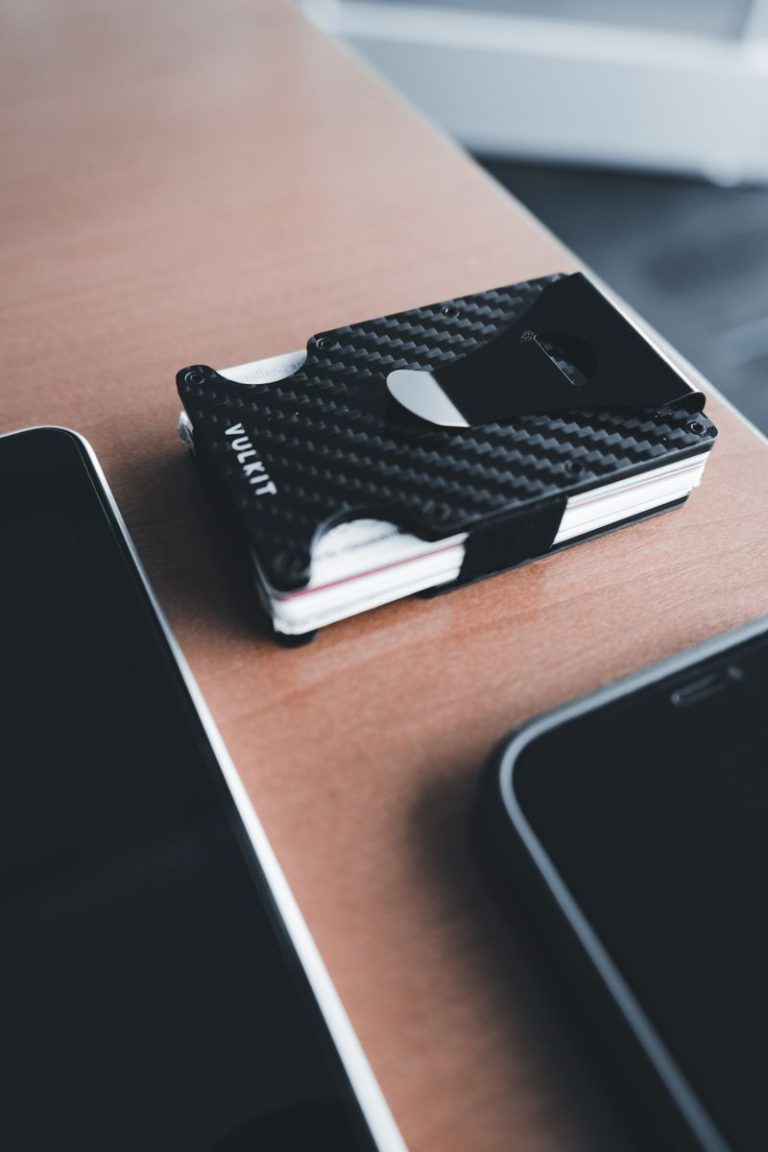
Quote this product3K twill carbon fibre RFID wallet. 48g. High-gloss clear coat. Technical EDC aesthetic.
Quote this productSlim forged carbon fiber money clip wallet with RFID blocking, holds cards, cash, and IDs for…
Quote this productRFID Blocking: Protects sensitive card data from theft and fraud. Aluminum Construction: Durable and lightweight wallet…
Quote this productSlim RFID-blocking card holder in aluminum alloy with marble, leopard, or anime silk-screen patterns and a…
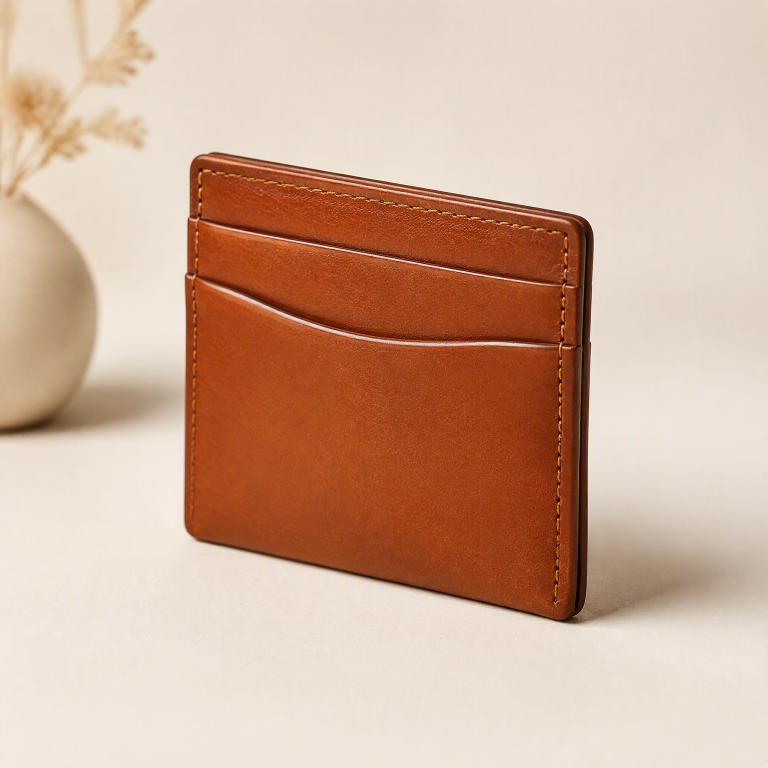
Quote this productSlim aluminum metal card holder with RFID blocking, genuine leather lining, and open design. Features floral,…
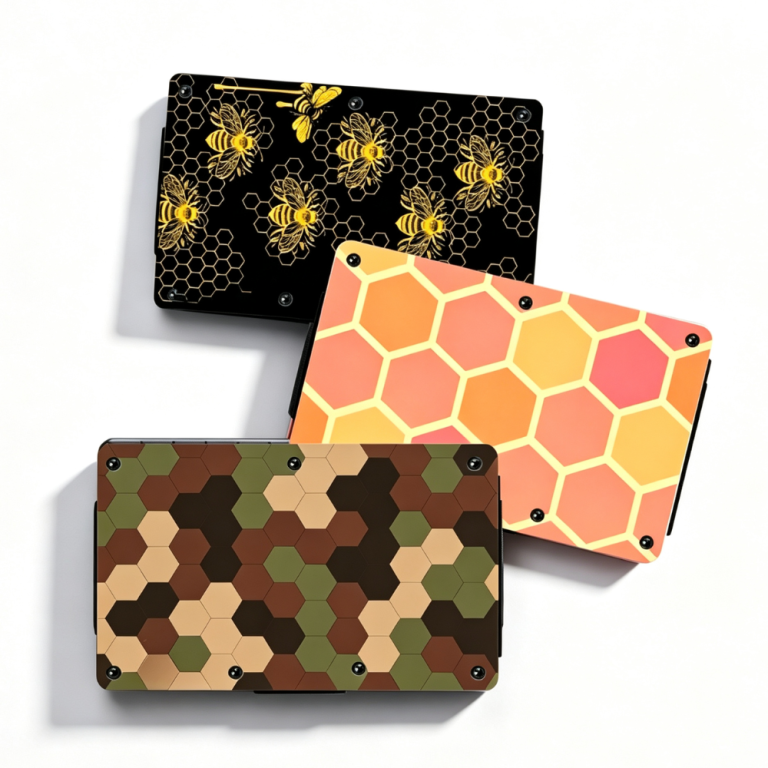
Quote this productSlim aluminum card holder with genuine leather lining, RFID blocking, and custom marble, leopard, floral, camo,…
Quote this productSlim aluminum alloy card holder with RFID blocking, custom logo silk screen printing, and a cash…
Quote this productLine specification
| Formats | Two-plate · elastic strap · money clip · carbon shell |
|---|---|
| Card capacity | 1–15 cards |
| Closed thickness | 5–12 mm |
| MOQ | 300 pcs per colour |
| Sampling | 7–10 days |
Engineering
A minimalist wallet has nowhere to hide a defect. Two plates, one retention element, and the customer feels every tolerance error immediately. We hold plate flatness to 0.15 mm across the surface, because any bow shows as a gap at the edge and a rattle when the wallet is shaken.
The full build logic — DFM, tolerances and equipment — is explained on our machining process page, with materials and surface options on the materials page.
Measured at 0.15 mm across the face on every batch; bowed plates are rejected rather than pressed flat.
Elastic and spring retention is specified as a pull force in newtons, not as a material, so it does not drift between batches.
Colour is checked under a D65 light box against a master chip, because anodised aluminium varies visibly between baths.
Buyer guidance
Every minimalist wallet on the market looks similar in a photograph and feels completely different in the hand. The difference is retention: too loose and cards slide out in a bag, too tight and the first card is hard to remove. Most returns in this category trace back to one of those two failures.
We specify retention as a measured pull force and test every batch against it. When you order a second run eight months later, it feels like the first one.
Buyer guidance
The tooling already exists for most minimalist architectures, and the differentiation available through finish, branding and packaging is enough for most brands. Spending on a new mould rarely pays back unless you have a genuinely different retention mechanism.
Practically: launch on an existing platform at 300 pieces, learn your sell-through, and only fund tooling when the volume justifies it.
Buyer guidance
Aluminium finishes are where this category is differentiated, and the price spread is wider than most buyers expect. Bead blasting is the baseline — cheap, consistent, and it hides handling marks well. Brushing adds a direction and reads as more technical, at a small premium. Anodising is what actually produces colour, and it is a dye process rather than a coating, so the shade penetrates the oxide layer and will not chip the way paint does.
Two colour realities worth knowing before you specify. Anodised black is not a neutral black — it reads slightly warm and varies a little between baths, so ask for a physical approval chip rather than a Pantone match. And bright colours anodise far more consistently than pale ones; if your brand colour is a soft pastel, expect to approve a screen print or a coated finish instead.
Customisation
Questions
Comfortably 6, with 12–15 possible on spring or expandable designs. Above 15 the thickness advantage disappears.
Not within a normal service life if it is specified correctly. We use a woven elastic with a measured relaxation curve, not a cheap knitted band.
Yes, in a 3K twill with a matte or gloss clear coat. It is the most expensive option in this line.
Retention is the whole product, so sample it with your own cards. Standard samples ship in 72 hours.