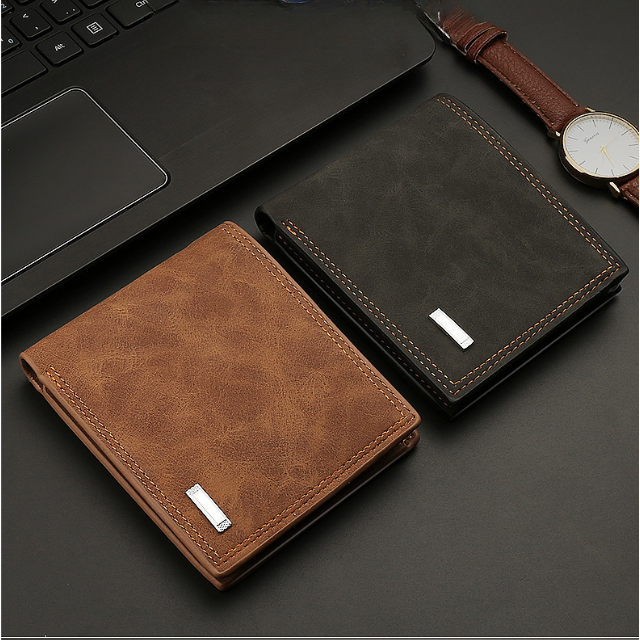
RFID Coin Pocket Wallet
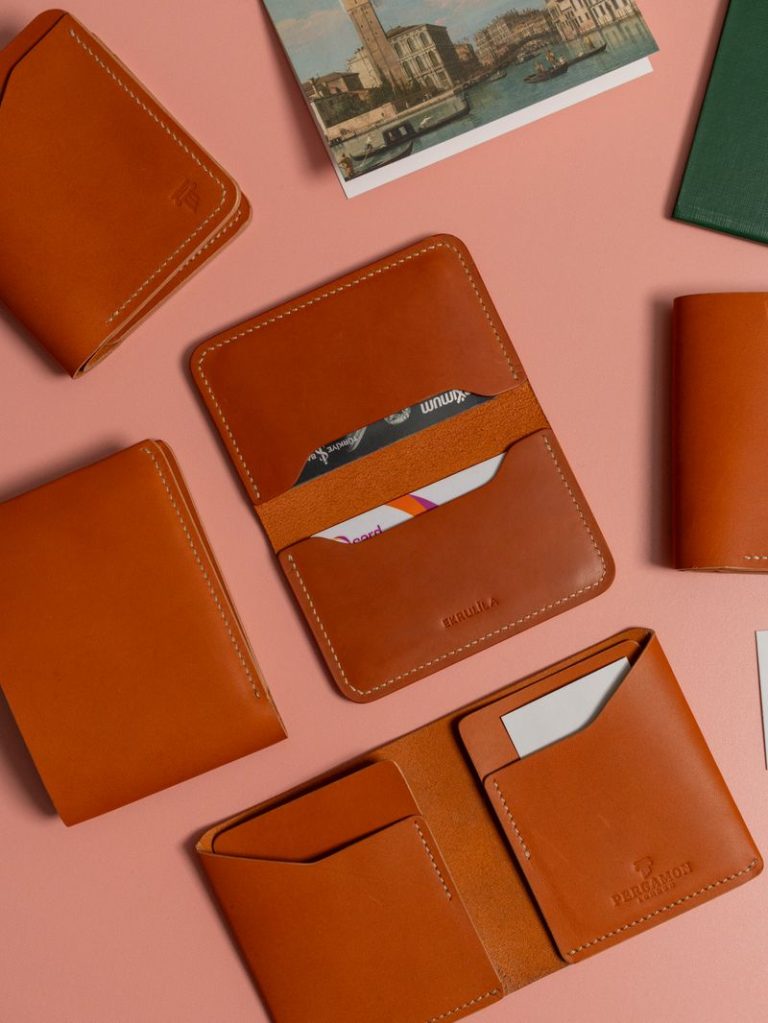
Compact bifold with dedicated zip coin pocket. 4 cards + cash + coins. YKK brass zipper.
Quote this product
Product Line
Classic and contemporary leather wallet architectures in full-grain, top-grain and Nappa finishes. Every piece is thickness-graded before cutting, edge-sealed in three passes, and lined with a woven 13.56 MHz RFID shield. The category covers bifolds, trifolds, slim front-pocket designs, money clips and card holders — built for back-pocket carry, front-pocket minimalism, or travel organisation.
In production
Tooled, tested and repeatable. Quote the exact product, or ask for a sample before you commit.
Compact bifold with dedicated zip coin pocket. 4 cards + cash + coins. YKK brass zipper.
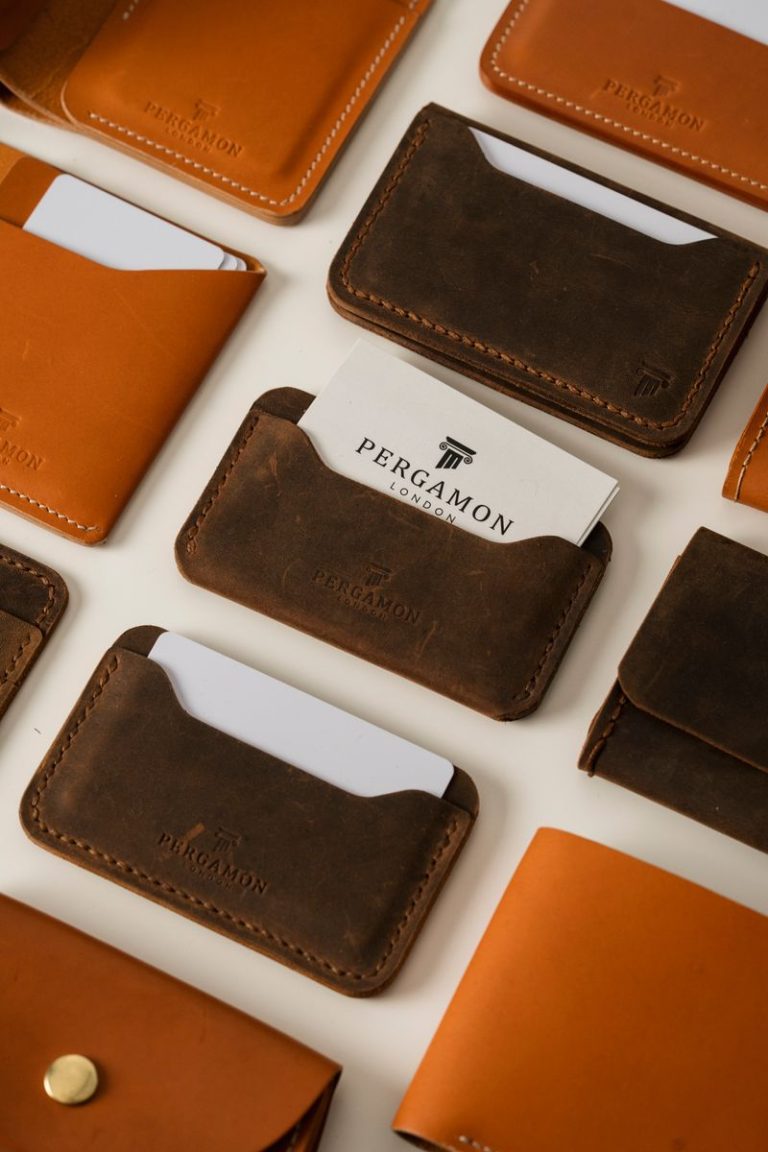
Quote this productRFID-blocking leather card holder that fits in any front pocket.
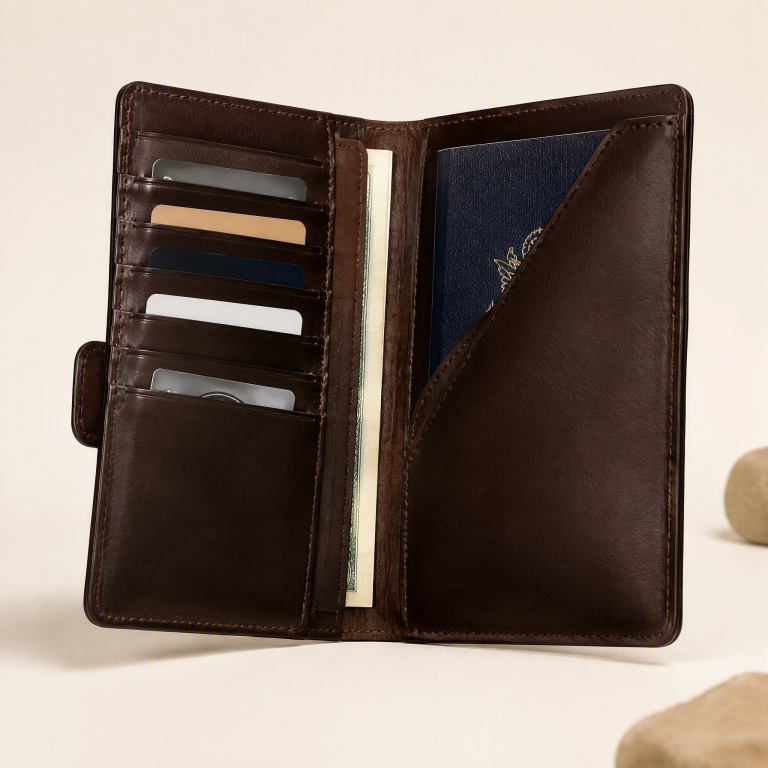
Quote this productPassport-friendly travel wallet with RFID shield, boarding pass slot and coin pocket.
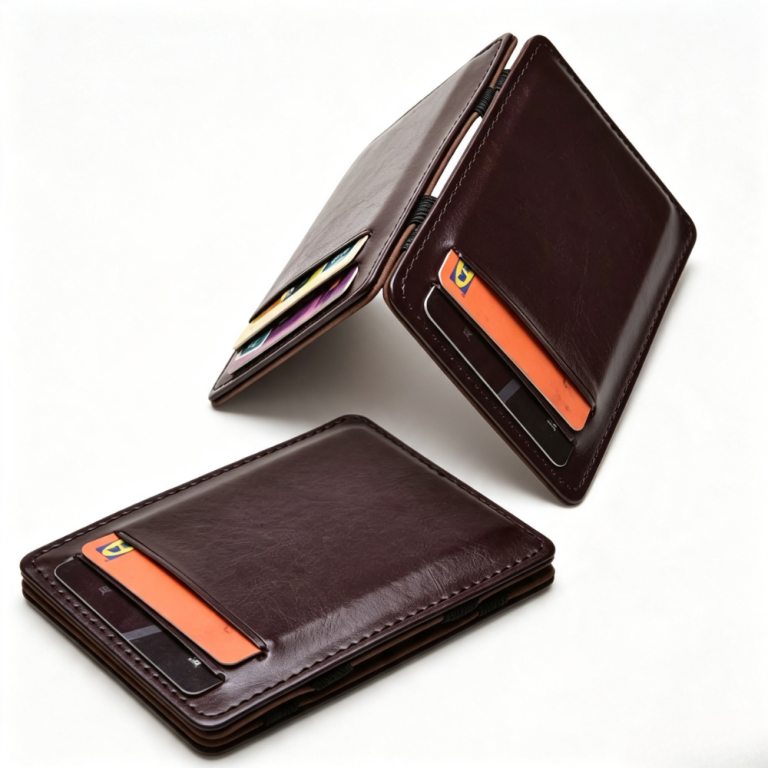
Quote this productCompact PU leather magic wallet with an open design and polyester lining, featuring a waterproof slim…
Quote this productCompact fold-over wallet sized for women’s bags, holding cards and notes.
Quote this productLine specification
| Materials | Full-grain · top-grain · Nappa · genuine cowhide (0.8–1.8 mm) |
|---|---|
| Architectures | Bifold · trifold · slim · money clip · card holder |
| Card capacity | 2–15 slots depending on format |
| MOQ | 300 pcs per colour |
| Sampling | 7–15 days |
Engineering
A leather wallet is decided at the cutting table, not the sewing machine. We grade every hide by thickness before clicker-die cutting, then pair thick and thin panels so the folded stack stays uniform. The RFID shield is built as a continuous envelope — not a loose sheet — with an 8 mm overlap at every seam. Edges are painted in three passes with sanding between, because a single thick coat cracks at the fold within months.
The full build logic — DFM, tolerances and equipment — is explained on our machining process page, with materials and surface options on the materials page.
Every hide is measured at three points before cutting. Thick panels are matched with thin linings so the folded wallet closes flat, not wedge-shaped.
Each edge receives a thin coat, a sand, and a second coat — repeated three times. The result flexes with the leather rather than cracking at the crease.
The shielding laminate is folded into a continuous pocket with overlap at every opening. Signal leakage happens at seams, not in the middle of a panel.
Buyer guidance
Full-grain keeps the natural surface — grain marks, scars, colour variation — and develops a patina that is unique to the owner. It is the most durable leather and the most expensive, but it varies between hides, which makes large-run colour matching a challenge. Top-grain is sanded and corrected for uniformity. It costs less, looks more consistent, and is the safer choice for a first programme where predictability matters more than character.
The practical advice: specify full-grain when your brand sells heritage and longevity. Specify top-grain when you need every unit to look identical on a shelf. We stock both and will tell you which one suits your price point and your story.
Buyer guidance
A wallet folded from two 1.6 mm panels is 3.2 mm at the spine before cards go in. Add six cards and it is 8 mm — the difference between comfortable and bulky. The problem is not the grade; it is that most manufacturers cut from the same hide without grading, so a thick outer pairs with a thick lining and the wallet bulges.
We grade every hide before cutting and match thick outers with thin linings. The result is a wallet that closes flat empty and stays comfortable loaded. Ask for the empty and loaded thickness on any quote — a supplier who cannot give both numbers is guessing.
Buyer guidance
The edge of a leather wallet is handled every time the product is picked up. A raw edge feels unfinished. A thick single coat feels plasticky and cracks within months. A three-pass edge with sanding between each coat feels smooth, looks precise, and survives years of folding.
This is not a detail that shows up in renderings, and it is the detail that separates a wallet that gets recommended from one that gets returned. We apply three passes as standard on every leather line, not as an upgrade.
Customisation
Questions
Full-grain keeps the natural surface and develops patina; top-grain is sanded for uniformity. Full-grain varies between hides, top-grain is consistent batch to batch.
Not with our three-pass process. Each coat is sanded before the next, creating a flexible finish that moves with the leather.
Yes, as long as each colourway clears 300 pieces. We recommend the same grade across a range for visual consistency.
Leather samples ship in 72 hours. Ask for a folded, loaded sample so you can judge thickness and edge finish together.