
Buying Guides · 6 min read
Pop-Up Card Mechanism Explained: How Slider Wallets Launch Your Card (and Why Some Fail)

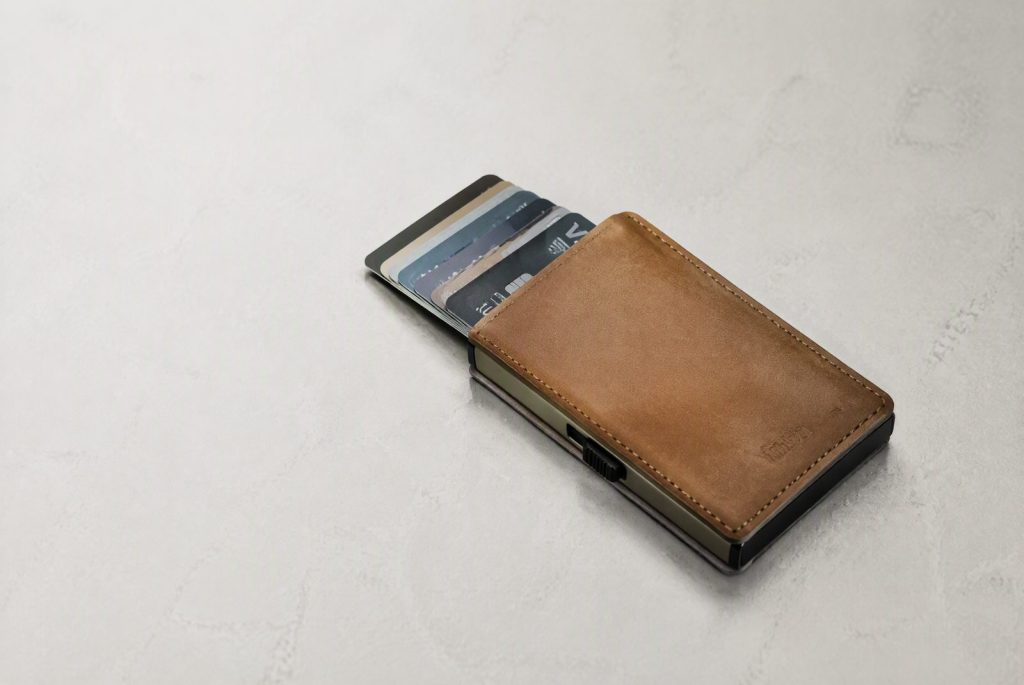
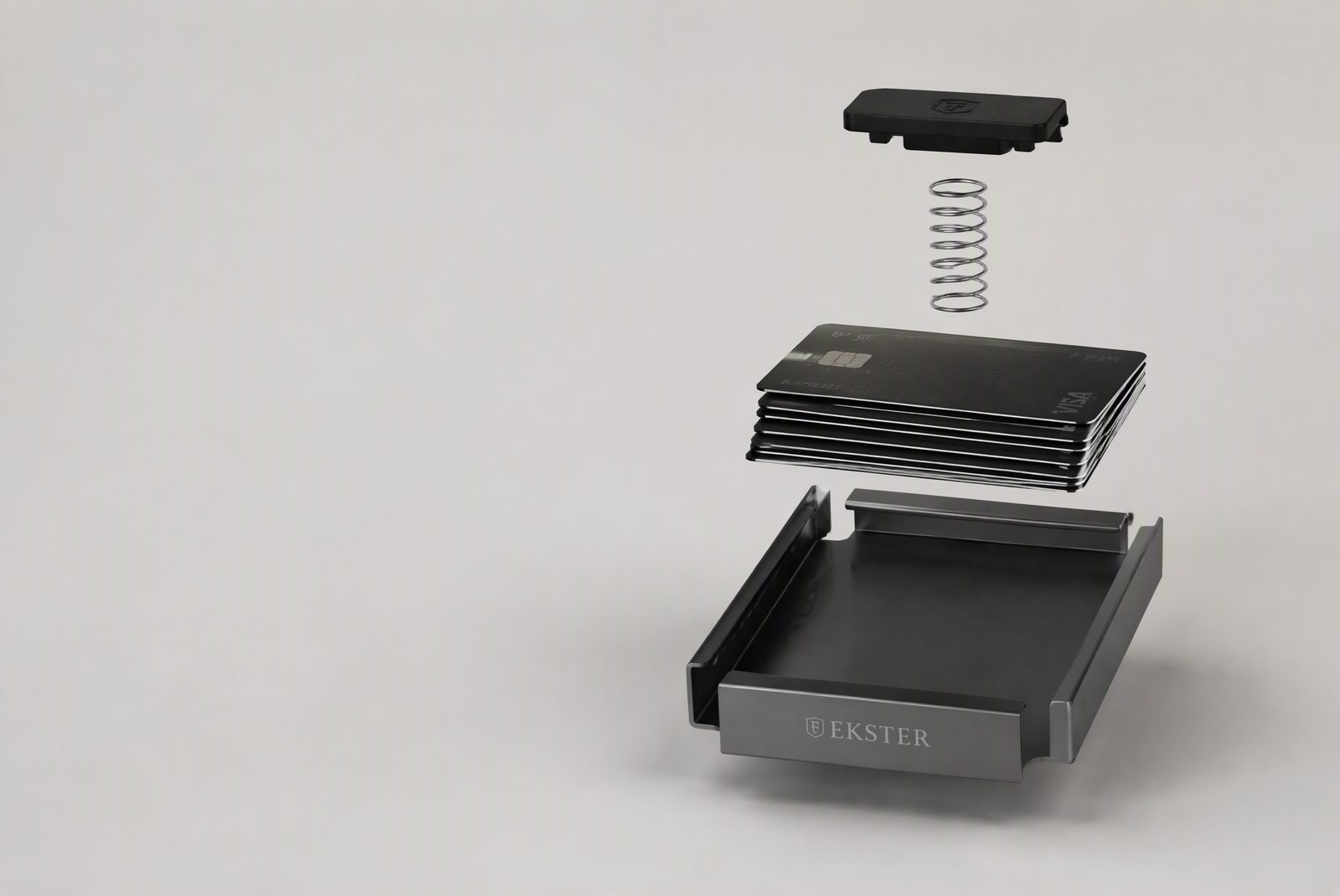
The "pop-up" or slider wallet adds one moving part to the timeless card holder — a spring-loaded or friction-track slider that fans your cards out of the shell for one-hand access. It changed how fast wallets feel, not how much they hold: the same 4–8 card stack, but retrieval drops from a two-hand fumble to a thumb flick. Here's how the mechanism actually works, why some designs fail within months, and what to look for in the main pop-up wallets on the market (Ekster, Seki, Vionentus, Aviator's pull-tab sibling, and the OEM options from G star wallet and TOPWALLET) [1][2][3].
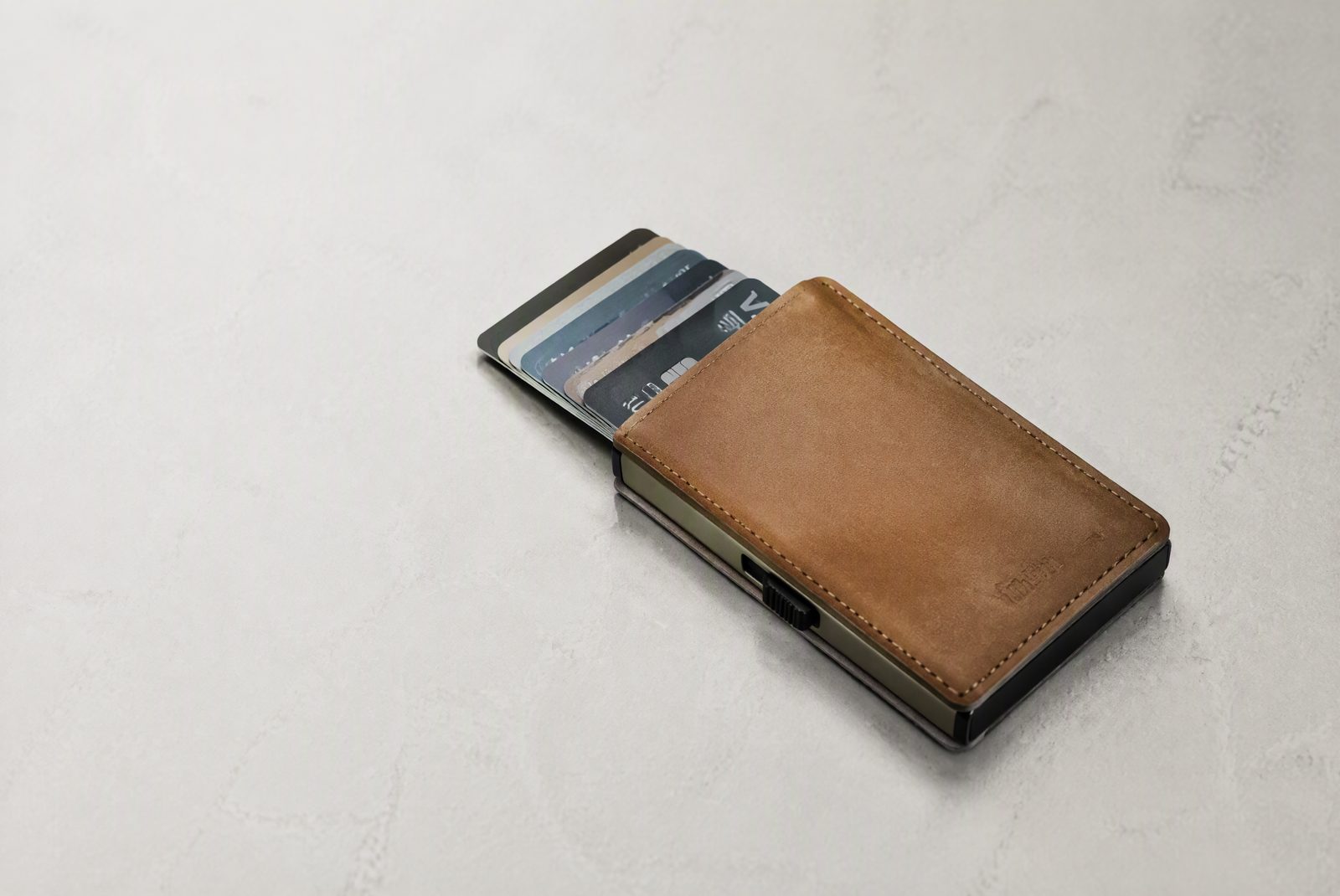
Quick Mechanism Cheat-Sheet
| Design | How it works | Strengths | Weaknesses | Famous for |
|---|---|---|---|---|
| Thumb-slider cam (Ekster-style) [1] | Fixed cam pushes cards forward; top card catches | Precise, elastic band-assisted | Track collects dust; band tension matters | Ekster [1] |
| Slider + spring assist [2] | Spring-loaded platform pushes stack | Consistently fast fan | Spring fatigue over years | OEM lines [2][3] |
| Pull-tab (Aviator-style) [3] | Tab pulls cards out via strap | Very fast, no cam | Adds height | Aviator [3] |
| Friction track, no spring [1] | Friction catches card edges | Zero parts to break | Slower, picky on card count | Budget clones |
The Two Families of Mechanisms
1. The Cam-and-Spring Family (Ekster & OEM clones)
Ekster's signature is a rotating cam under the card stack: push the slider, the cam lifts and the top card rides up and slightly forward, catching on a lip [1]. An elastic band keeps the stack tensioned. Because the cam rotates rather than slides, the motion is smooth and the top card stays in place [1].
OEM manufacturers produce variants of this mechanism under license-aware clean-room designs: G star wallet (gstartec.com, GSTAR, Shenzhen) builds pop-up wallets across its 8 customization dimensions [2]; TOPWALLET (topedcwallet.com) offers pop-up wallet OEM with materials from aerospace aluminum to full-grain leather [3]. Quality differences between clones and originals show up in three places: cam material (steel vs zinc), band tension (replaceable vs glued), and track tolerance (milled vs cast) [2][3].
Test notes: Mechanism descriptions per brand documentation; durability claims are typical-failure analysis, not lab-tested here. [1][2][3]
2. The Pull-Tab Family (Aviator & variants)
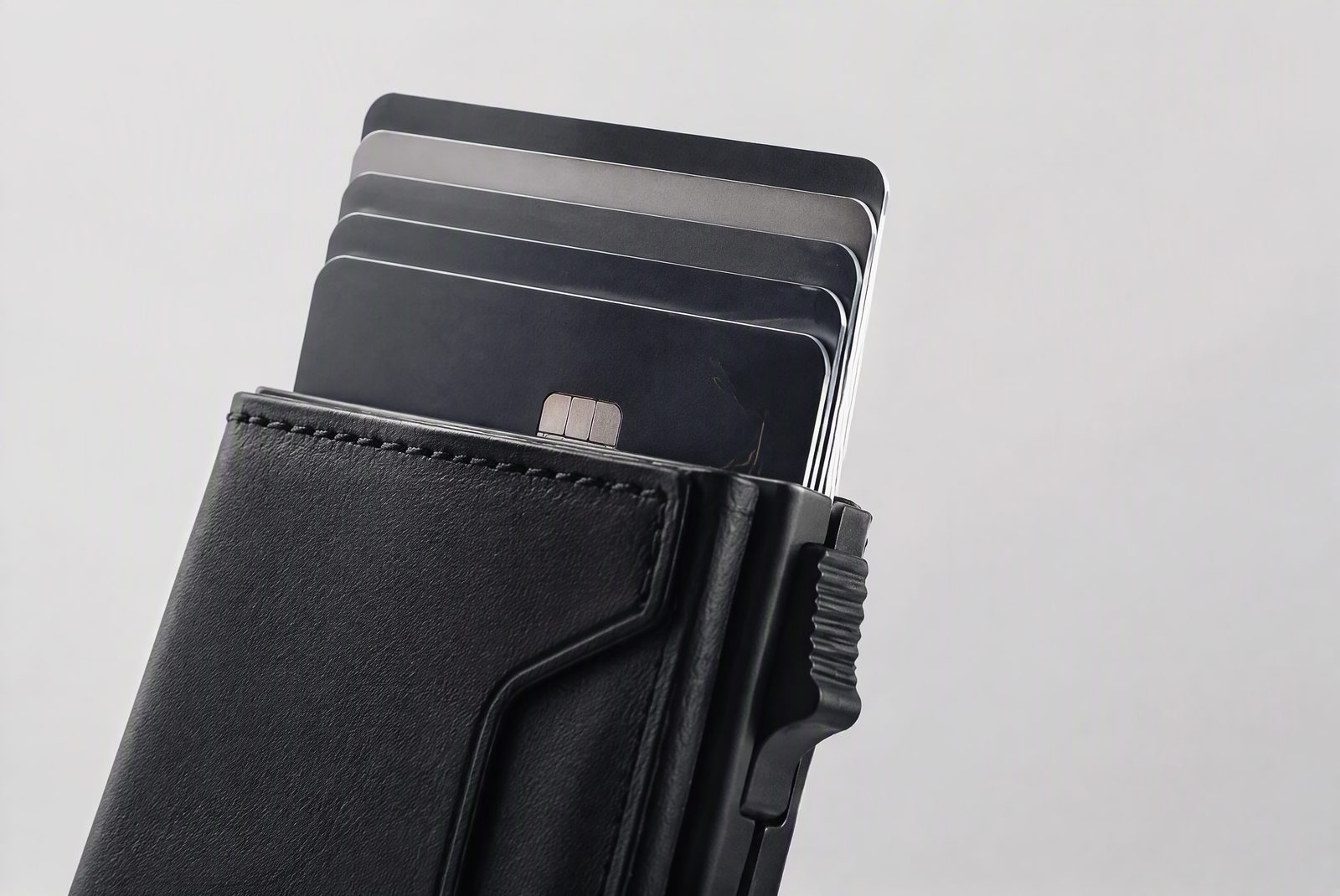
Aviator's approach drops the cam for a strap-and-tab: a tab at the bottom pulls the whole stack out with one finger while a spring assists, fanning cards instantly [3]. It's mechanically simpler — fewer moving parts, less to fail — at the cost of a small tab and a hair more height [3].
Why Pop-Up Wallets Fail (and How to Tell Early)
Most pop-up failures are not the spring breaking — they're debris and tolerance:
- Dust in the track: Cam and slider tracks collect pocket lint; the slider starts feeling gritty. Fix: track design with debris relief — machining tolerances ±0.1 mm vs ±0.05 mm make the difference [1][2].
- Band fatigue: Elastics lose tension in 1–3 years of daily use, which is why replaceable bands (Ekster) outlive glued bands [1].
- Spring fatigue: Spring-assist designs degrade faster if the spring is undersized for the card count. Spec a spring rated for the max stack [2][3].
- Cam wear: Zinc cams wear faster than steel; check the slider after a year for play [2].
Your first check before buying: push the slider slowly with one card in — a quality mechanism travels smoothly with no binding, then catches crisply. Second check: empty-shell shake test — no rattling means the track is milled to tolerance [1][2].
Pop-Up vs Flat Card Holder: When the Mechanism Earns Its Complexity
| Carry style | Pop-up (cam/tab) | Flat card holder |
|---|---|---|
| Daily tap-heavy transit | Wins — one-thumb access [1] | Two-hand fumble |
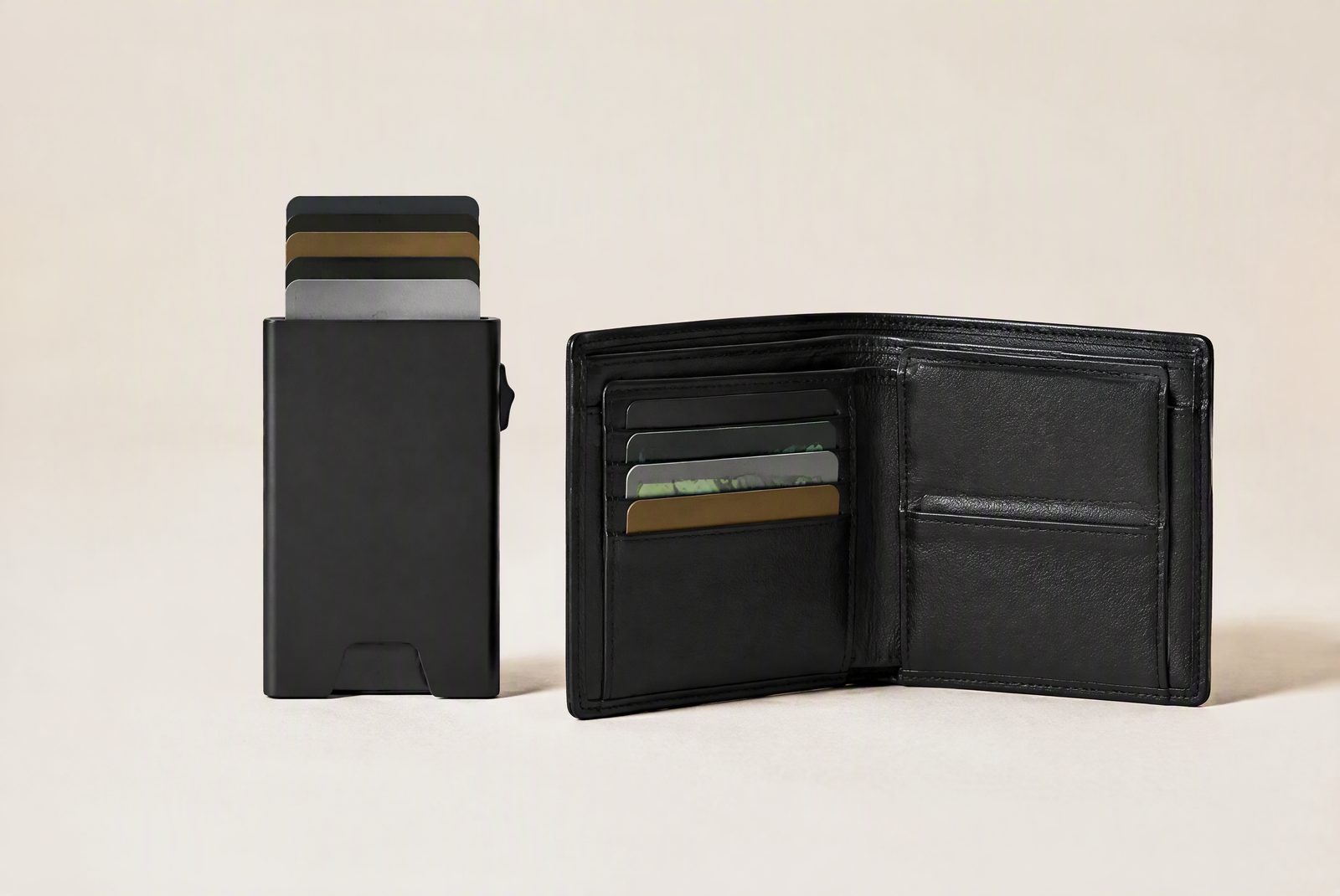
| Max slimness | Loses — adds ~2–4 mm | Wins [3] |
| "Premium gift" look | Wins [1] | Neutral |
| Long-term durability | Fine if quality-built [2] | No moving parts to fail |
| Custom brand value | High — mechanism is a talking point [2][3] | Lower |
Best Pop-Up Wallets of 2026: 5 Picks Compared
- Best pop-up overall: Ekster Parliament — refined cam, replaceable band, RFID [1].
- Best sim-stack speed: Aviator — tab pull with spring assist [3].
- Best OEM pop-up at scale: G star wallet — pop-up across 8 customization dims, MoQ 100 pcs, SGS/TUV [2].
- Best flexible-MoQ OEM: TOPWALLET — pop-up wallets in aluminum/leather, 7-day sampling [3].
- Watch out (cheap clones): cast tracks, glued bands, zinc cams — they feel fine at the store, gritty by month three [1][2].
Best by Use Case
- One-hand daily transit carry: Ekster-style cam — [1].
- Fastest card fan: Aviator pull-tab — [3].
- Branded pop-up program 100–500 pcs: TOPWALLET flexible MoQ — [3].
- Scaled branded pop-up (500+): G star wallet, 8-dim customization — [2].
- Budget clone alternative: mechanical risk — [1][2].
Final Verdict
The pop-up mechanism is one of the few wallet "upgrades" that genuinely changes daily behavior — if the build quality holds. Buy the refined implementations (Ekster's cam with replaceable band [1], Aviator's simpler tab [3]) or the certified OEM route (G star wallet's 8-dim pop-up line [2], TOPWALLET flexible programs [3]); skip the cheapest clones, where cast tracks and glued bands fail by design. For brands, the mechanism is a real shelf-story: a pop-up with milled tracks and a steel cam is a product you can defend against clones [2][3]. Disclosure: G star wallet (gstartec.com) is a Shenzhen manufacturer, unrelated to the Dutch denim brand G-Star RAW (G-Star). [2]
FAQ
How does a pop-up wallet mechanism work?
A slider moves a rotating cam (or pulls a tab) that lifts the card stack so the top card catches on a lip and pops up for one-hand access. Spring or band tension keeps the stack stable [1][3].
Do pop-up wallets break easily?
Quality-built ones last years; cheap ones fail via dust-packed tracks, glued-band fatigue, and zinc cam wear. Test a smooth slow push and check for rattling before buying [1][2].
Are pop-up wallets worth it vs card holders?
If you tap cards all day (transit, POS), yes — one-thumb access changes the experience. If you want maximal slimness and nothing to fail, a flat card holder wins [1][3].
Can I get a pop-up wallet with my own branding?
Yes — both OEM routes build branded pop-ups: G star wallet (MoQ 100 pcs, 8 customization dims) [2] and TOPWALLET (flexible MoQ, 7-day sampling) [3]. The mechanism itself is a custom component dimension.
Which is more durable: cam or pull-tab?
Pull-tab (Aviator-style) is mechanically simpler — fewer moving parts. Cam designs are smoother but need quality track tolerance and a replaceable band [1][3].
How many cards does a pop-up wallet hold?
Typically 4–8 cards; the mechanism needs a minimum stack (2–3) to engage the cam/spring cleanly. Capacity claims are per official specs [1][2][3].
Why do cheap pop-up wallets stop working?
Debris in the track, glued bands losing tension, and zinc cam wear are the three failure modes. Milled tracks, steel cams, and replaceable bands are the quality tells [1][2].
Related: ECDC carry guide, aluminum wallets ranked, mechanism materials.
Build your own pop-up line: REQUEST A QUOTE
Sources
- Ekster — Official site, mechanism documentation.
- [2] G star wallet — Official site, pop-up products and 8-dim customization. https://gstartec.com/
- Aviator — Official site, pull-tab mechanism; TOPWALLET OEM program page. · https://topedcwallet.com/
From article to product
Turning this into a product?
Most of what is written here is the difference between a sample that works and one that does not. We can build either — the useful one costs the same.
Keep reading
More on buying guides
Best Men’s Card Wallet: B2B Buyer’s Selection Guide 2026
Compare materials, RFID specs, and certifications for men's card wallets. Get procurement-ready guidance on…
ReadBest Bifold Wallets for Bulk Orders — B2B Procurement Guide
Compare materials, specs, certifications, and customization options for bulk bifold wallet sourcing. Learn what…
ReadSale Wallets Women — Bulk Sourcing Guide for Buyers
Find what women's wallets are selling well in bulk — materials, RFID specs, certifications,…
Read
About the author
Wu, Leon
Leon Wu is the senior product engineer and EDC testing lead at TOPWALLET. He has spent more than a decade on wallet design-for-manufacture, materials and quality control at the company's Dongguan facility, and writes from bench testing, pull-force and 13.56 MHz shielding measurements rather than supplier spec sheets.
Written on the floor
This article was written by our production and QC team — the people who spec tolerances, run the finishing line and inspect every batch. Where it states a capacity, a pull force or a lead time, it comes from a measurement we made, not a supplier’s catalogue. If a number here disagrees with what your own supplier told you, tell us; several of these articles started as a correction from a buyer.
See how the factory works · Inspection process · Sourcing FAQ
Turning this into a product?
Most of what is written here is the difference between a sample that works and one that does not. We can build either — the useful one costs the same.